
Sophie Vallance Cantor: Soft Moments, Mythic Creatures
In the quiet intimacy of her paintings, Sophie Vallance Cantor constructs a world deeply personal and quietly theatrical. Cats stretch into tigers, lovers appear as mythic figures, and familiar domestic moments take on a cinematic stillness. Rooted in lived experience yet shaped by imagination, her work explores belonging, intimacy, and the subtle tension between observation and participation. In this conversation, Vallance Cantor reflects on painting as a private refuge, the evolution of recurring symbols within her practice, and the tender everyday moments that form the emotional core of her work. Moving between humour, vulnerability, and quiet introspection, she speaks about partnership, identity, and the ways painting continues to accompany her through life’s shifting terrain.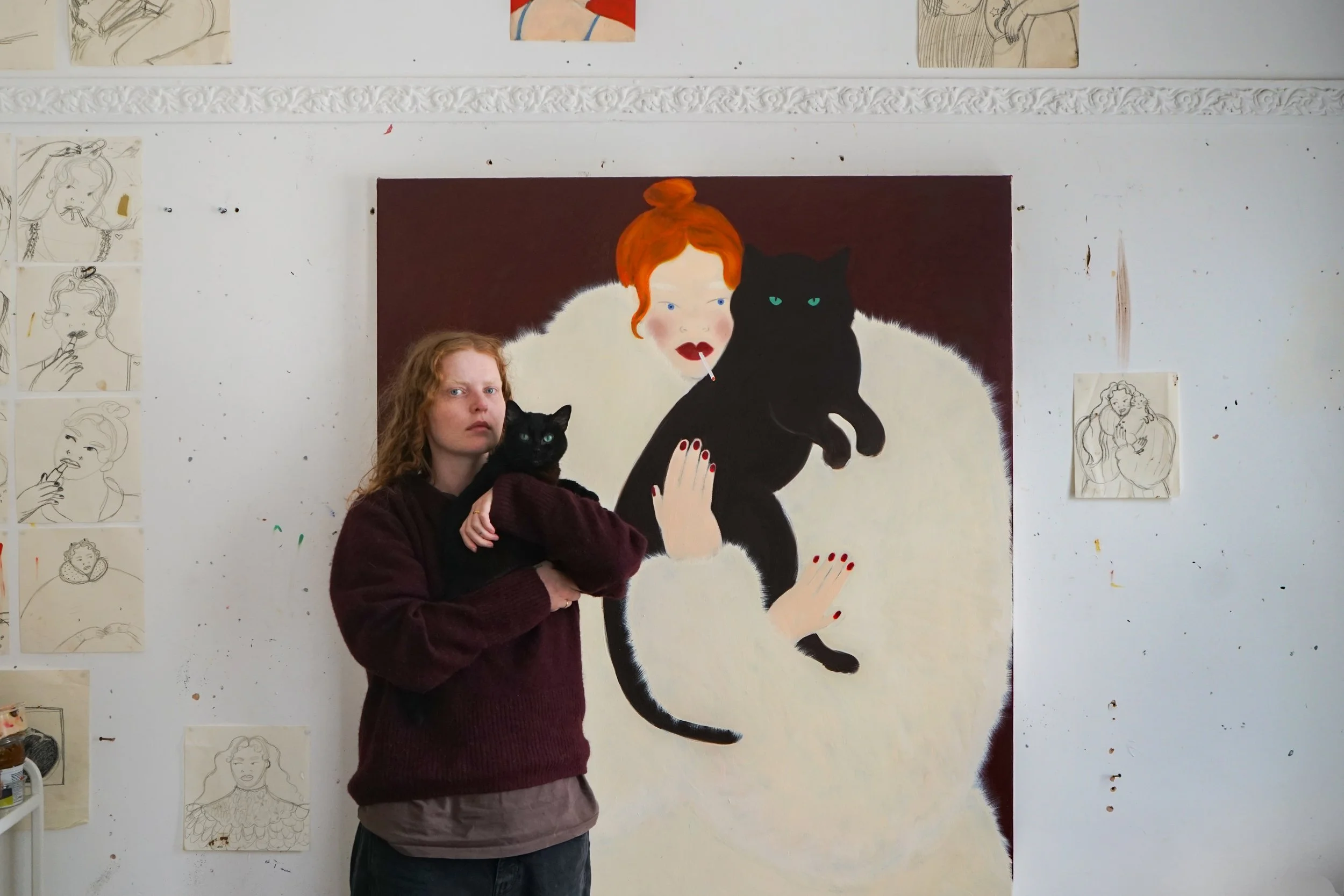
You describe painting as a kind of refuge from everyday life. What does that space allow you to do or feel that the outside world doesn’t?
I think, in essence, painting is something I do for myself, and it isn’t concerned with outside opinions. It’s a space where I can show up and fully be an unmasked version of myself, which isn’t always possible in other areas of my life. It’s also mostly a solitary experience; only my partner Douglas, whom I share the studio with, really gets to see me paint.
When you’re fully unmasked and working as your authentic self, what emotions emerge?
It really depends on the day. Some days feel light and open; on others, emotions can settle in more heavily, anger, anxiety, sadness, or nostalgia that feels difficult to move through. What I’m most grateful for is having a workspace where I can arrive exactly as I am, and where those shifting emotional states can become an active part of the process of making paintings.
In your paintings, reality often slips into imagination: cats become tigers, familiar people turn into characters. How does that transformation begin for you?
I think with many things in my practice the initial seed is rooted in real life. Ten years ago I was in a phase of my life where I was removed from a lot of influences and opinions I once had about my work. I had just left university without graduating and moved to Berlin to stay together with my partner Douglas (UK immigration laws are not fun!). I was essentially starting my life over and I asked myself for the first time, what do I want to paint?
And the answer was, the important things in my life; my cats, my partner, my stories.
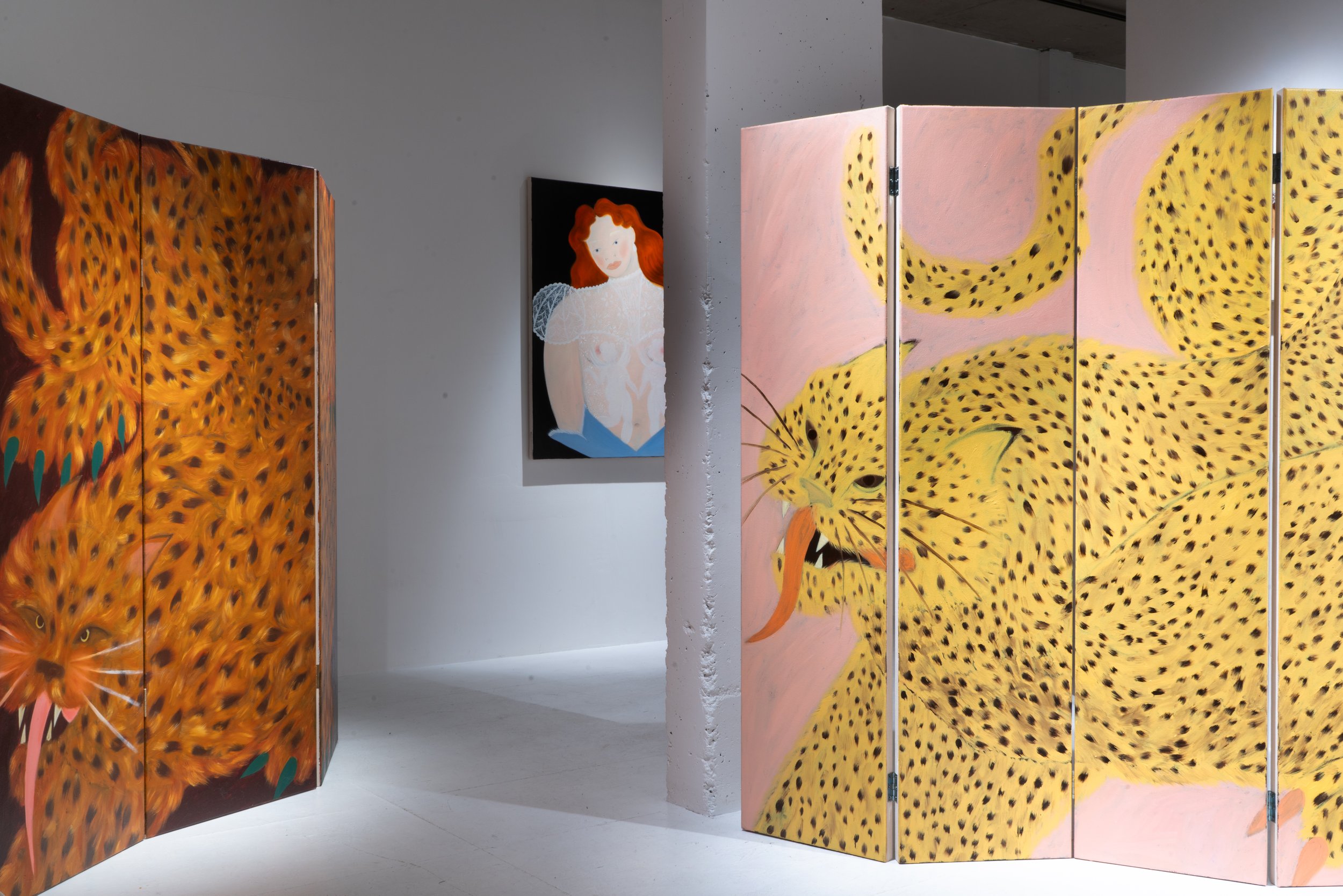
Over time, all of these elements have grown and transformed considerably as my practice has evolved. The big cats particularly grew to become vessels for big emotions. In my most recent solo show, Enemies to Lovers but Me to Myself at Miłość gallery, I chronicled a period of autistic burnout through a series of works in which big cats appeared on three-dimensional room dividers. These figures became large-scale manifestations of autistic meltdowns, snarling, unruly, and physically cutting through the space…creating a tense counterpoint to the softness and stillness of the portraits around them.
How do you approach representing difficult emotional states without becoming overly literal?
I think it’s interesting to have an outlet for exploring ugly topics that can make people uncomfortable, (like the big cats as manifestations of autistic meltdowns) while still maintaining a sense of play. One thing I always find amusing about the big cats is how difficult their expressions can be to read: is it a grimace or a smile? I like leaning into that ambiguity. I’m also keen to keep things open to change, with the possibility of softening or hardening their symbolism as needed.
Would you say there is a sense of confrontation or intensity for you when you work on your portraits?
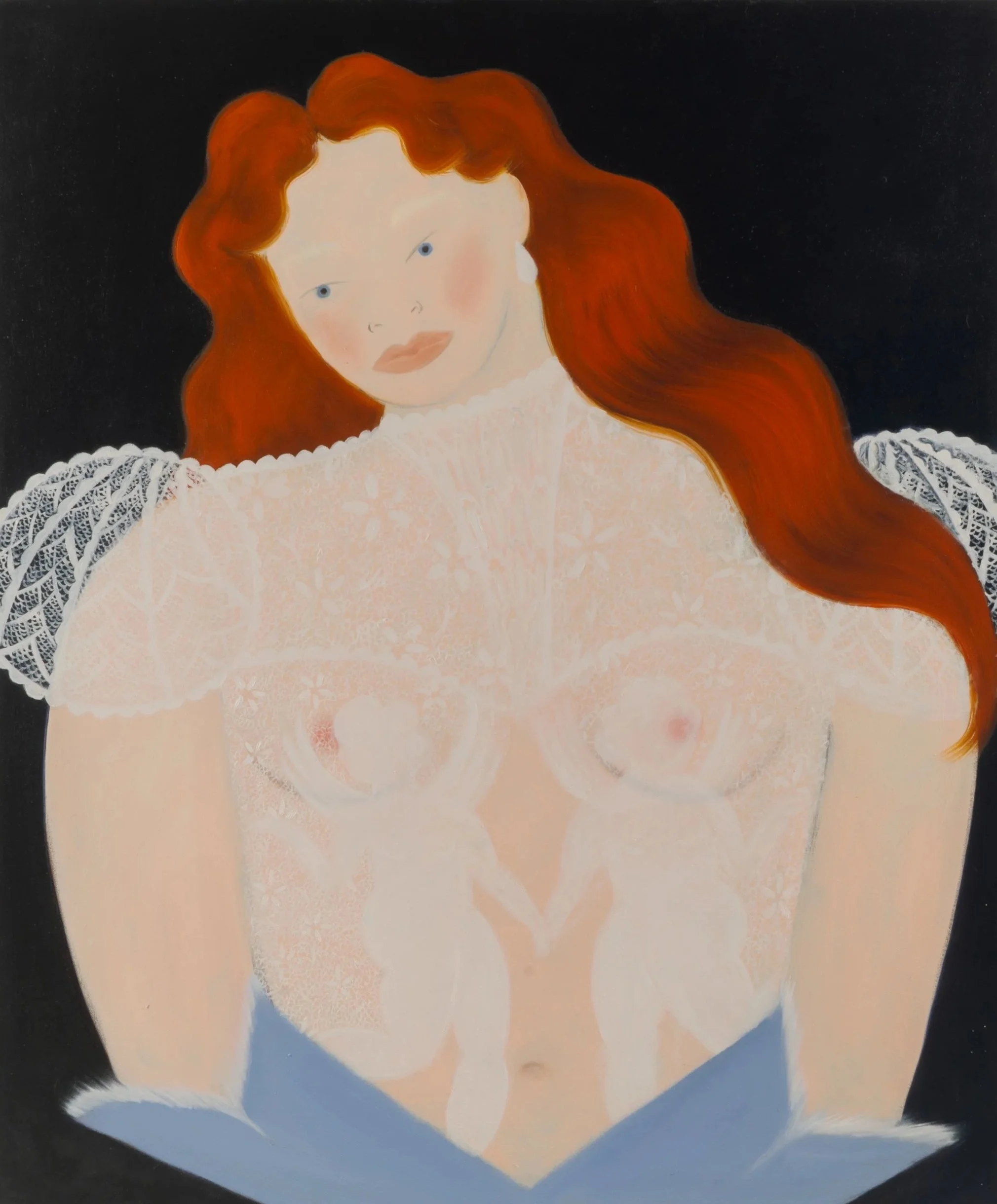
I think it’s more a sense of acceptance at this point, of leaning into a certain simplicity and being okay with it even if there is discomfort at times. For years and years I couldn’t work out how to make small paintings. I always felt ‘there’s nowhere to hide in a small painting’. Through the process of developing these portraits, (which are mostly smaller), I’ve come to enjoy making them more than the large works, which is something I never thought I’d say! I’m never bored by the fact that there’s nowhere to hide in them, and I think that’s probably where their triumph lies.
Looking back at older works, do you recognise different versions of yourself within them, or do they feel like fragments of a continuous search?
To me, my practice feels like a never-ending, ever-evolving process. I think there is a continuous thread running through my work, and even when I look back eight or ten years, I can still see myself in those earlier pieces and trace how I arrived at the work I’m making now. Movement and growth are very important to me; my worst nightmare would be to feel stagnant.
What about them intrigues you & constantly draws you back?
I find that an important aspect of the recurring symbols in my work is the way they become embedded within the practice, and through that process they’re able to evolve and transform.
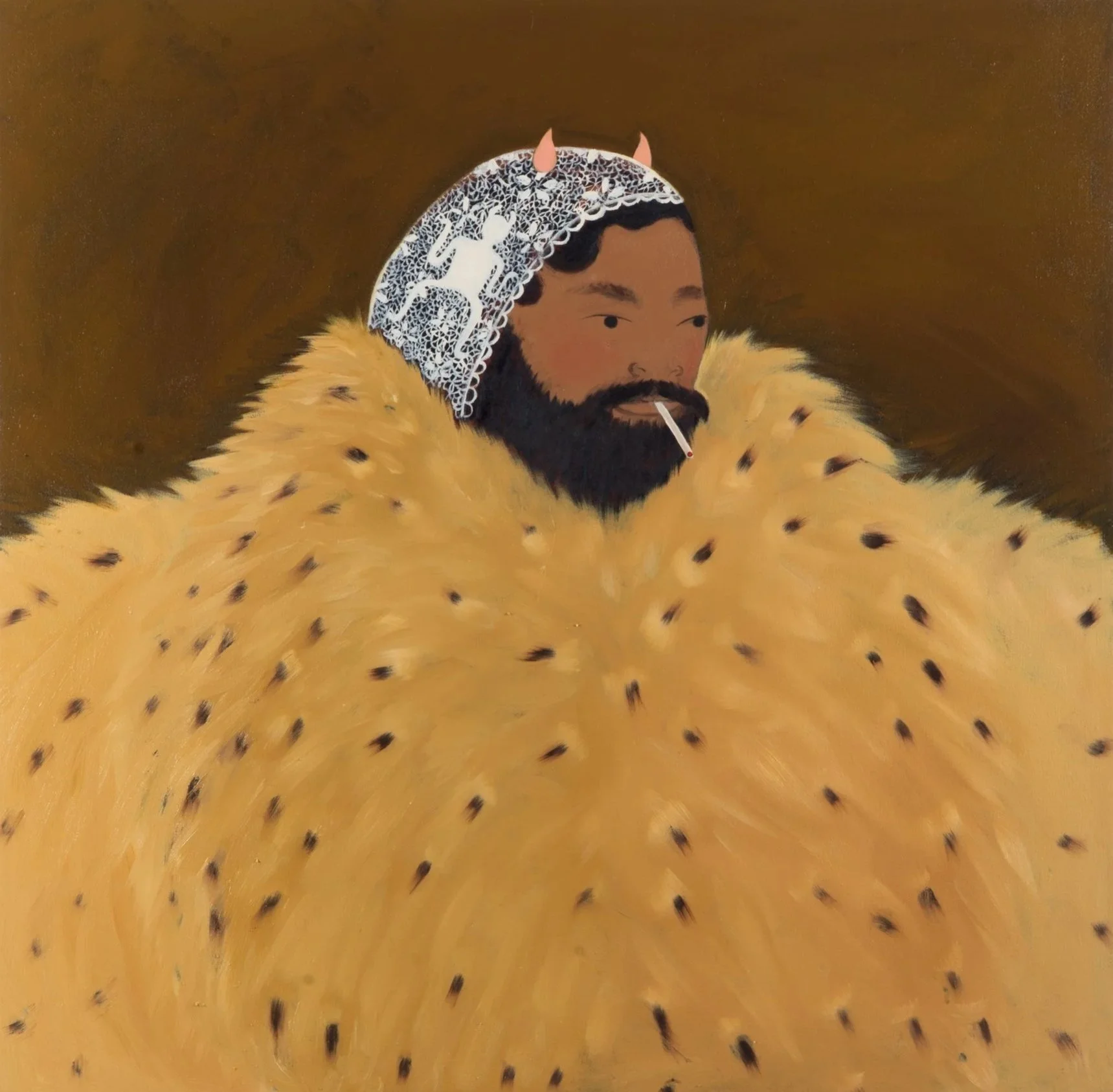
The use of devil horns is particularly significant. It began as a kind of inside joke about my partner Douglas’ experiences as an immigrant. He’s portrayed as El Diablo, with devil horns, but he’s never up to mischief, he appears stoic, calm, and safe in the paintings. In that sense, it started as a commentary on how Western society tends to see immigrants versus the reality of who they really are.
Since that original portrayal, devil horns have appeared many times and in many places throughout my work, and El Diablo has also appeared in Douglas’s work, most notably in the film El Diablo and the Painter.
Through translating your life together onto the canvas, do you ever feel a tension between privacy and openness?
It’s a good question because, as I mentioned earlier, I think of my work as functioning primarily for me. I don’t spend too much time thinking about how it will be received externally; when I’m working in the studio, I almost forget there’s an audience of real people out there.
The film, in particular, has made me feel suddenly exposed at times, less so with the paintings, where there’s more room to hide in plain sight and lean into inside jokes or more ambiguous elements. Ultimately, though, I’m striving for honesty, and if that creates a certain tension between privacy and openness, I’m comfortable with that.
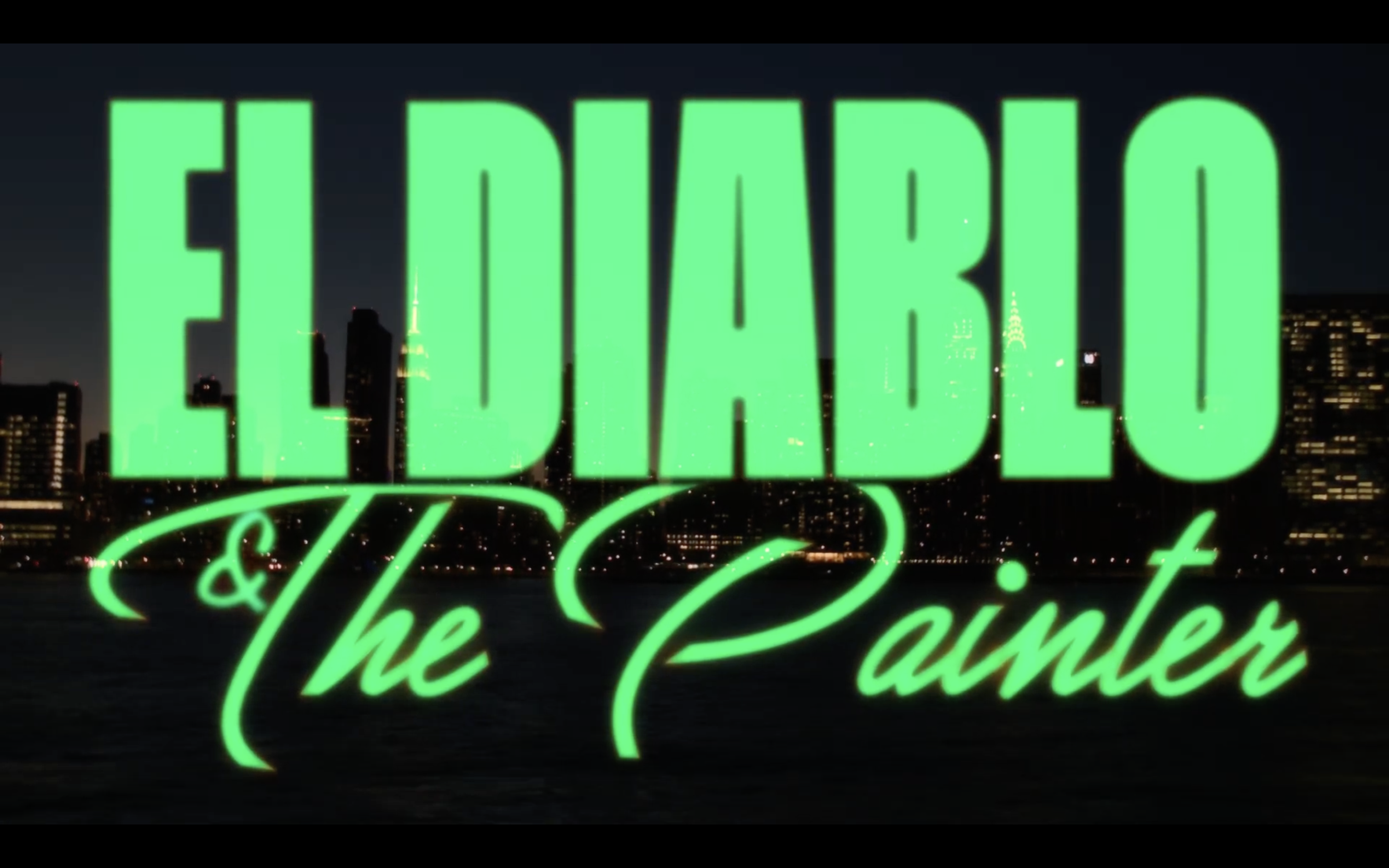
Furthering this idea of privacy vs openness, viewers are often positioned as outsiders, looking in on something intimate. Is that distance protective for you, or is it a way of translating lived experiences of isolation?
I think it’s both. I’ve always felt that the viewer isn’t invited to take part in the world of the paintings, only to observe it, which definitely mirrors a certain experience I have of being autistic. But that same distance also creates space for inside jokes and small, unexplained moments within the paintings, as well as room for the viewer’s own interpretation.
From an aesthetic perspective, do you find that cinematography influences the way you approach framing and composition in your work?
Yes, particularly if you look back two or three years, I think the influence of film on my compositions was much more obvious. I think it’s still there now, but in more subtle, embedded ways. There have been moments when I’ve made direct drawings from scenes in films, but currently it’s more a case of watching a film, internalising its essence, and then creating from that place through my own visual language.
I would never consider myself especially educated about film; I’m more interested in how films leave me feeling. If I feel completely drawn into what I’m watching, that’s the quality I want to borrow and bring into my own work.
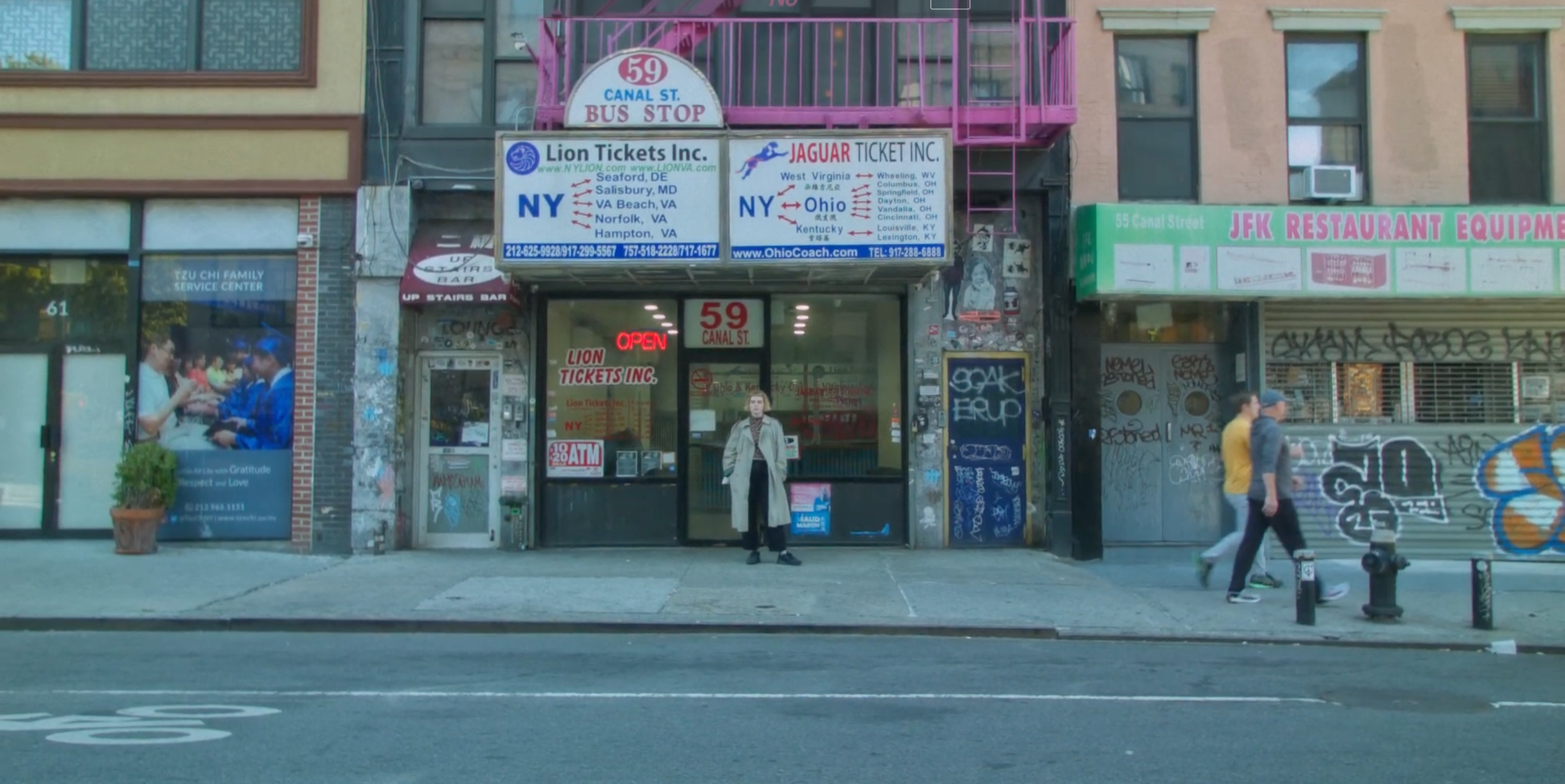
Themes like belonging, loneliness, and love recur throughout your practice. Do these questions feel like something you’re gradually moving closer to understanding, or are they meant to remain unresolved?
I think it mirrors the process of life, learning lessons and then sometimes feeling like you’ve gone back on yourself and unlearned some. I suppose painting is my companion in life and it will continue to keep me company through the twists and turns.
What do you hope painting continues to offer you as your practice evolves?
I hope I can manage to mostly keep showing up honestly and not stray too far from that, and in return I hope painting keeps being a space where I get to be myself and keep growing as a person and as an artist. I’m not sure exactly how that will look, but I look forward to finding out.