
Over the past two decades, Lou Ros has built a distinctive visual language through painting, one that has evolved from expressive portraits and found imagery into luminous landscapes suspended between memory & imagination. Known for his vibrant palettes and atmospheric compositions, his work invites viewers into landscapes untouched by time, human intervention, or geography.Yet behind the striking colour and formal beauty lies a deeper motivation. As concerns about the environment increasingly shape both his life and practice, Lou's paintings have become a way of drawing attention to the natural world without resorting to didacticism. Rather than offering criticism or instruction, he creates spaces for wonder, images that encourage us to look more closely at what surrounds us and what may be at risk of disappearing.In this conversation, Lou reflects on the evolution of his practice, the transition from portraiture to landscape, the role of colour in his work, the challenges of maintaining artistic freedom within the art world, and the importance of remaining curious, experimental, and open to change.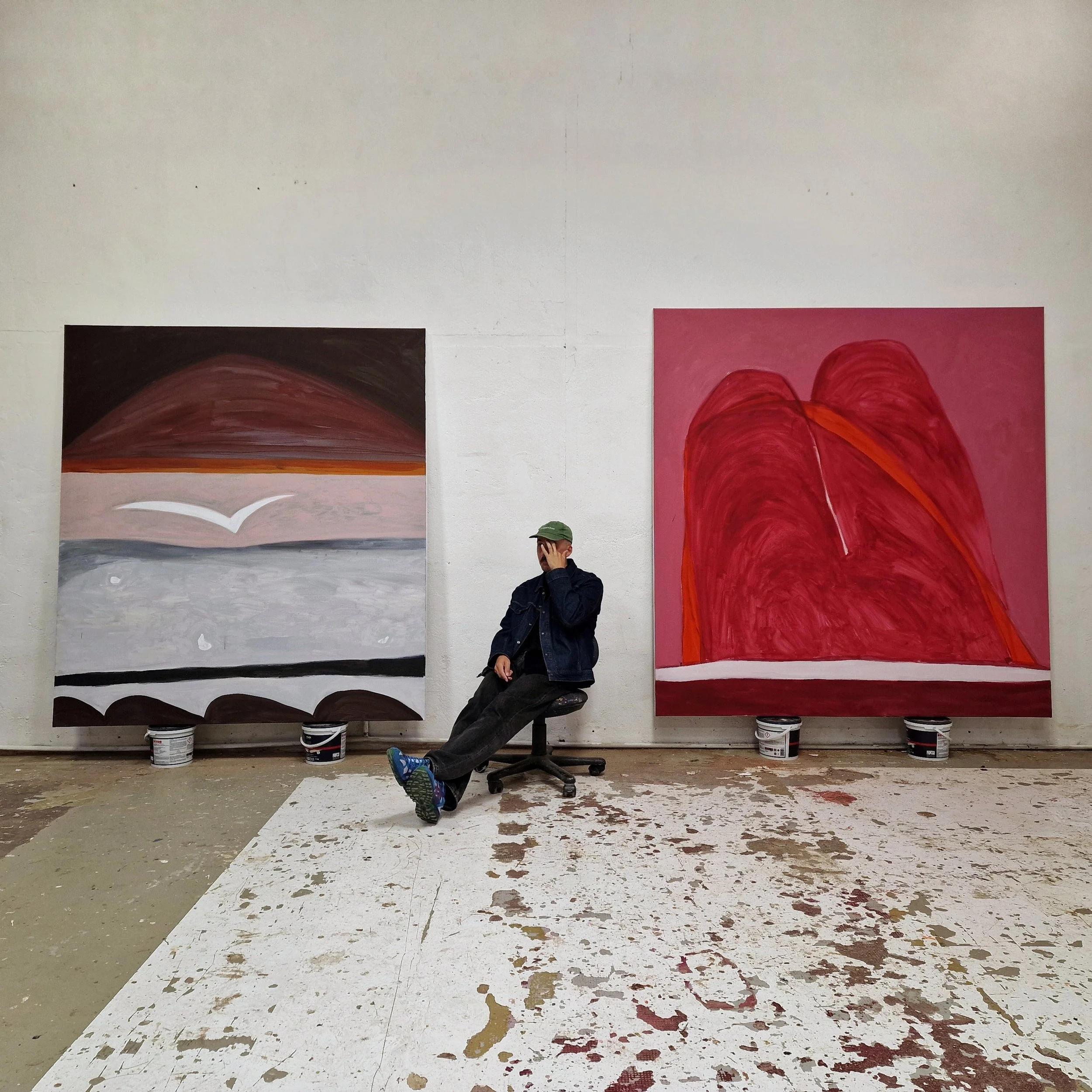
When you look back at your long career in the industry, what has changed most about your relationship to painting? Is it the subjects, the process, or your own expectations of your work?
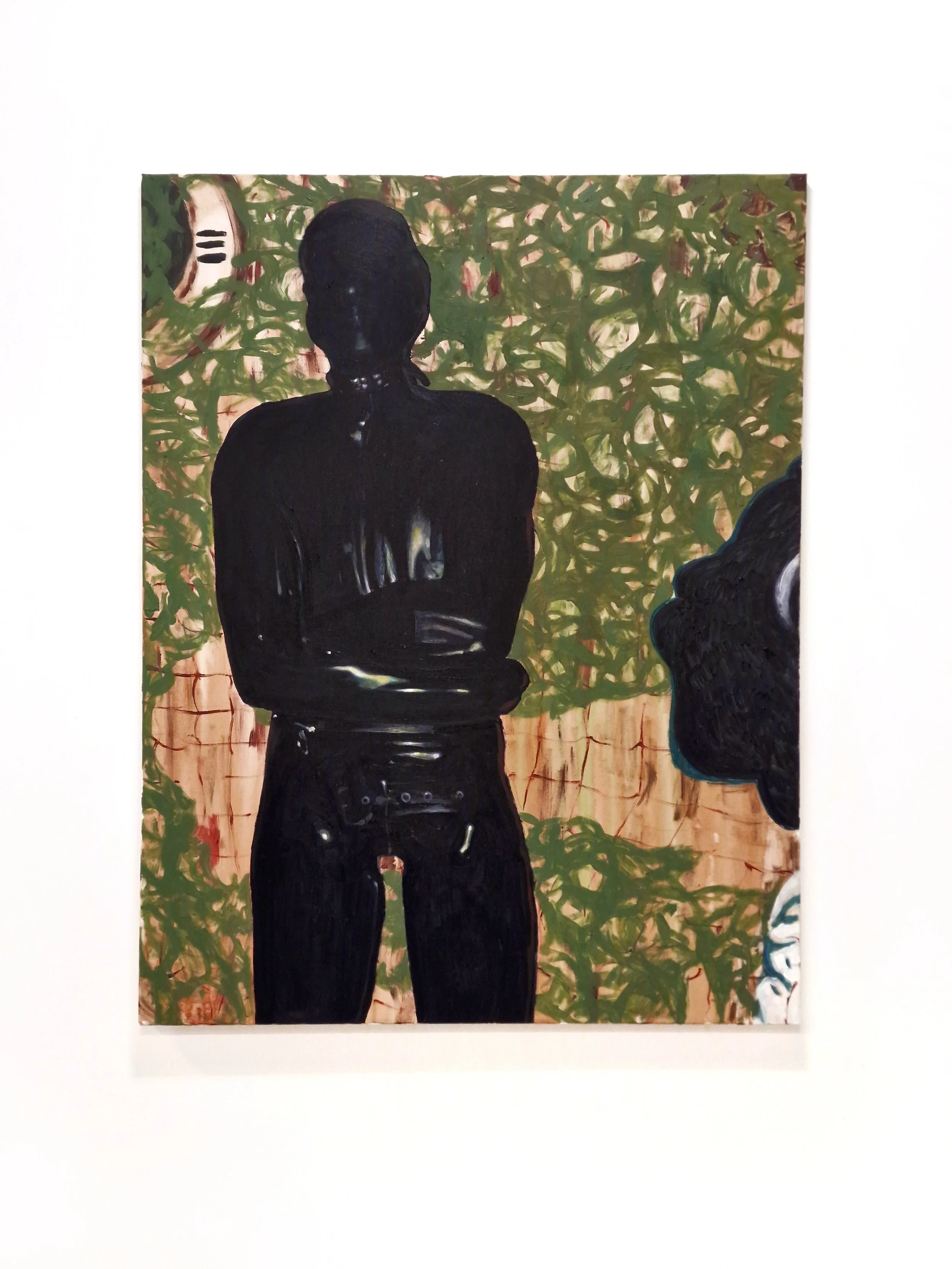
At the beginning, I was always trying to prove that I was capable of producing realistic work. I didn’t go to art school and didn't have formal technical training, so I felt this pressure. When I painted portraits or images of people close to me, I leaned into realism subconsciously, I think, just to prove that I was a "real" painter.
Ironically, I was already looking at artists whose work wasn't realistic at all. So it was a bit contradictory. Even when I was making abstract portraits, there was always a nose or an eye that I would paint almost perfectly. I think it was my way of proving that the rest of the face was distorted on purpose, and not because I didn't know how to paint it '“properly.”
Who did you feel like you had to prove that to? Gallerists? Collectors? Peers?
To everybody, really. When your name is completely unknown, you feel this urge to prove you can “actually” paint. At the start, it wasn't a conscious strategy, it's just what happened. I was painting images without overthinking them beforehand, pictures of friends, pictures I found online. It was mostly human shapes and portraits. My very first series was actually about choreography, because my mother is a choreographer. I started with bodies in motion, and that evolved into portraits, which eventually led me to working with vintage photographs.
What was it about those vintage photographs that caught your attention?
They were mainly in black and white, which allowed me to imagine what the colors could be. I felt completely free to create an entirely new color palette.
But then a shift happened. Computers became capable of automatically colorizing black-and-white images. Suddenly, my process felt a bit redundant. If technology could generate a color image from black and white with a single click, I felt a bit strange continuing to do it manually. So, I shifted focus and started choosing pictures that I found funny or weird; at that time, that joy was the only thing that mattered to me.
Can you talk a bit about the jump from those early processes to the landscapes in your current practice?
I was working with a lot of galleries, my portraits were selling well, and things were going great. But whenever I visited museums or big exhibitions and read all the deep conceptual explanations behind the pieces, I looked at my own work and thought, "I’m just painting images." Now, Francis Bacon used to say that he was just making images, too, but I felt like applying that to myself was a massive oversimplification. I realized many artists spent a lot of time thinking and deeply reflecting before ever touching the canvas.
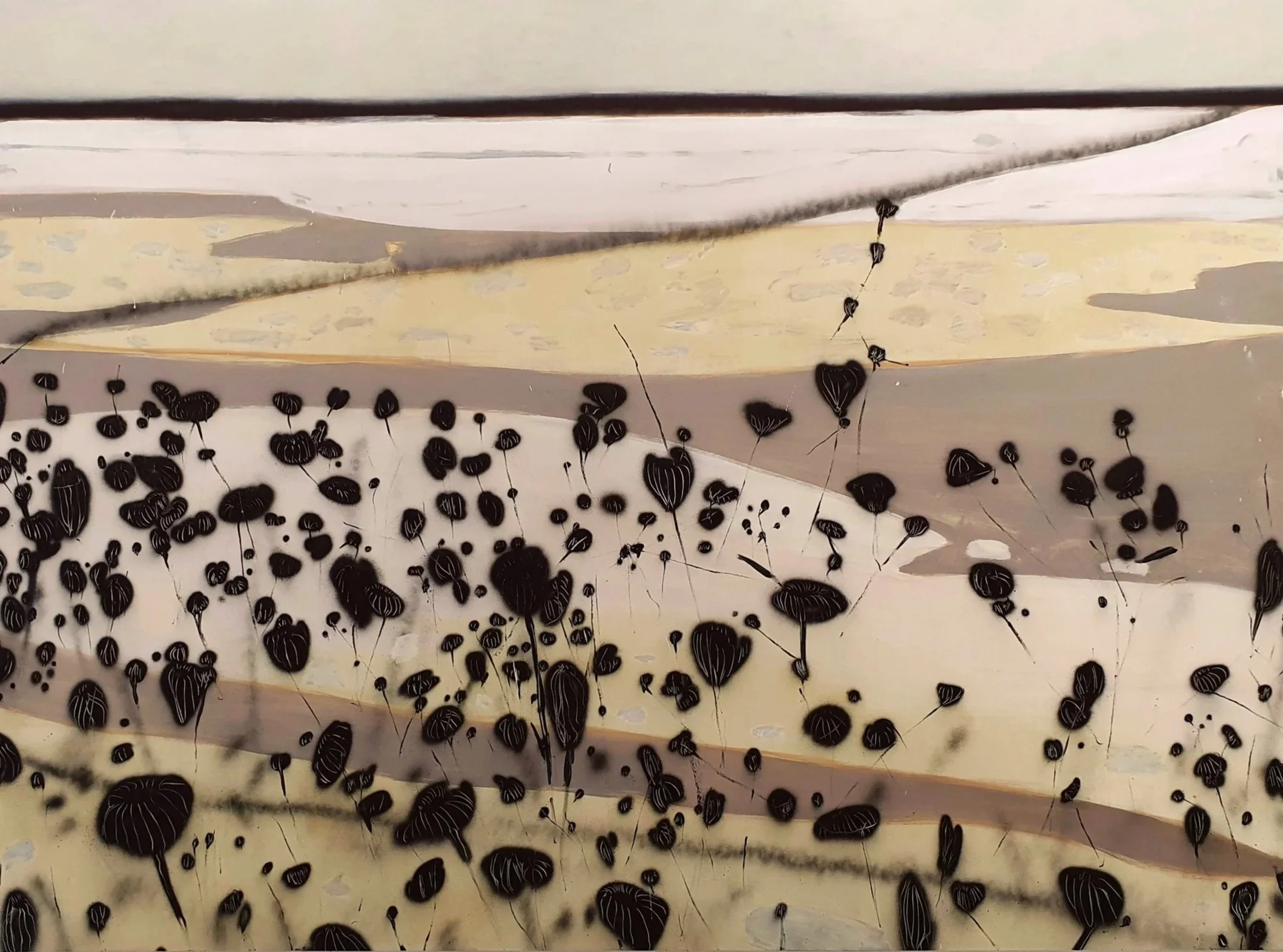
So, I decided to focus on something deeply personal to me. I was already a vegetarian, and I was trying my best to protect nature. I decided to paint what I felt was truly urgent and important at this moment in time. I realized human nature wasn't what I wanted to spend my energy defending. Instead, I wanted to paint something that would remind people of how beautiful the Earth and its landscapes are.
I started working on landscapes that look like they could be from the deep past or the distant future. To achieve that, I never include humans, modern clothing, or architecture. You can't ever really tell where or when these landscapes exist.
So, your core concept with these landscapes is to remind us as humans how beautiful nature is, and how crucial it is to protect it. Is that correct?
Exactly. I try to make paintings where the viewer can step up and just say, "Wow, these colors and shapes are crazy." I am simply reinterpreting what you can see if you walk outside. I try to deliver the message in a very simple, non-judgmental way. Instead of saying "You need to take better care of this," I just show how beautiful nature is and suggest, "Maybe let's take a bit of care of it."
It's been rewarding because people will look at my work and say, "That mix of color is wild!" And I get to reply, "That’s actually just a tiny fraction of what you can find naturally in the wild."
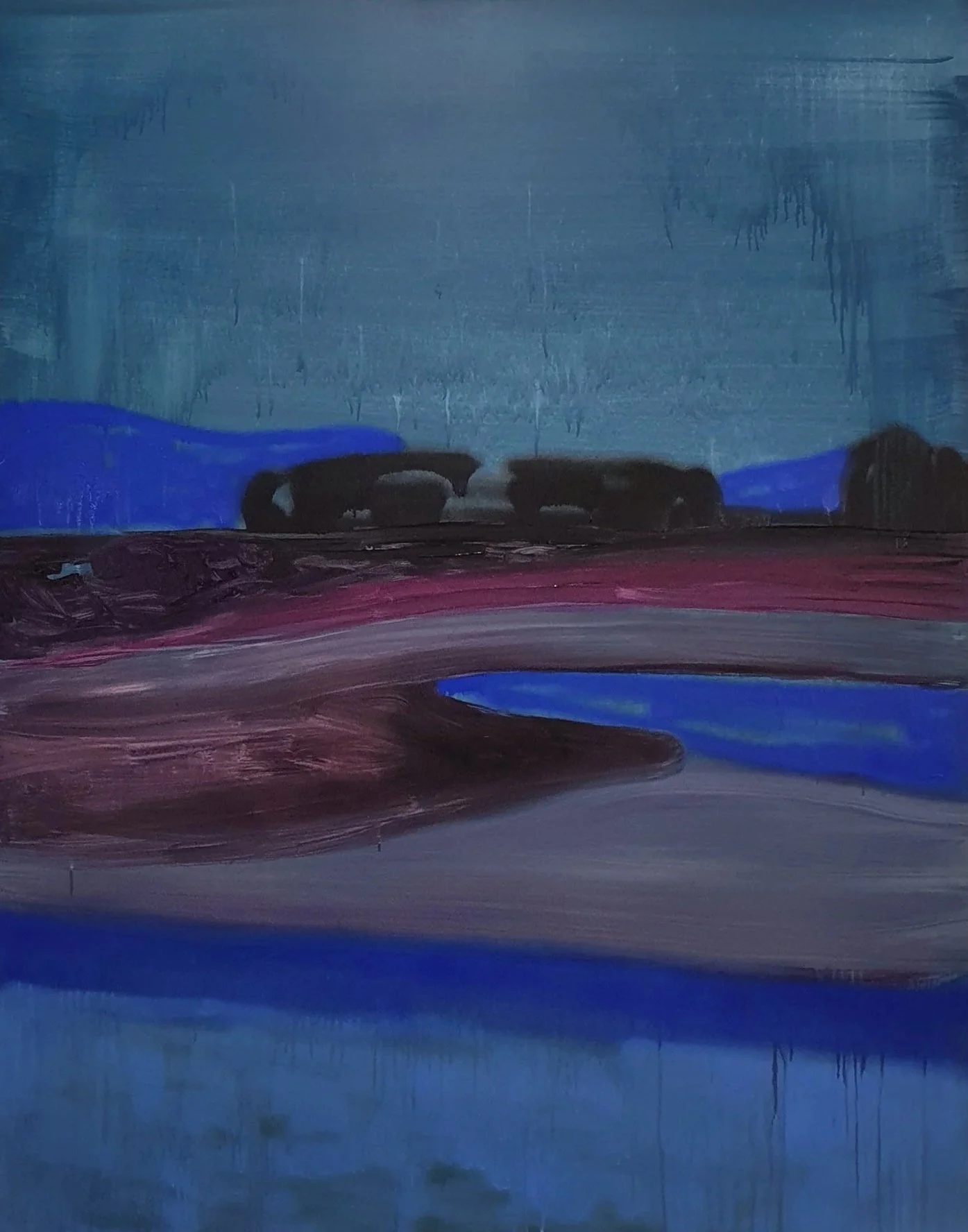
You're known for these bold, vibrant palettes that feel like they're jumping right off the canvas. What is your process for choosing them? Some feel grounded in reality, while others are on the complete opposite end of the spectrum.
I usually start with a photo I’ve taken or a screenshot, drawing from my memory of what light looks like outside or inside. But there’s a funny thing among painters: we often say that if you paint a monochrome piece, it's much easier to make it look like a "good" painting. It's a bit of an unwritten rule. When you limit yourself to one tone, it naturally looks cohesive, whereas mixing multiple colors means they all have to compete with one another on the canvas.
So, I try to find a balance. Sometimes, when you look at a sunset, the world is naturally monochromatic pink or orange, and I’m happy to paint it that way. Other times, I’ll grab a few distinct colors from reality as a starting point, but then I'll push them very far from where they began. If I start with a pink and a blue, and halfway through the pink stops working, I’ll change it completely. It can get a bit messy, and I have no problem completely abandoning my original plan. I start with nature, but ultimately, I go where the painting feels right to me.
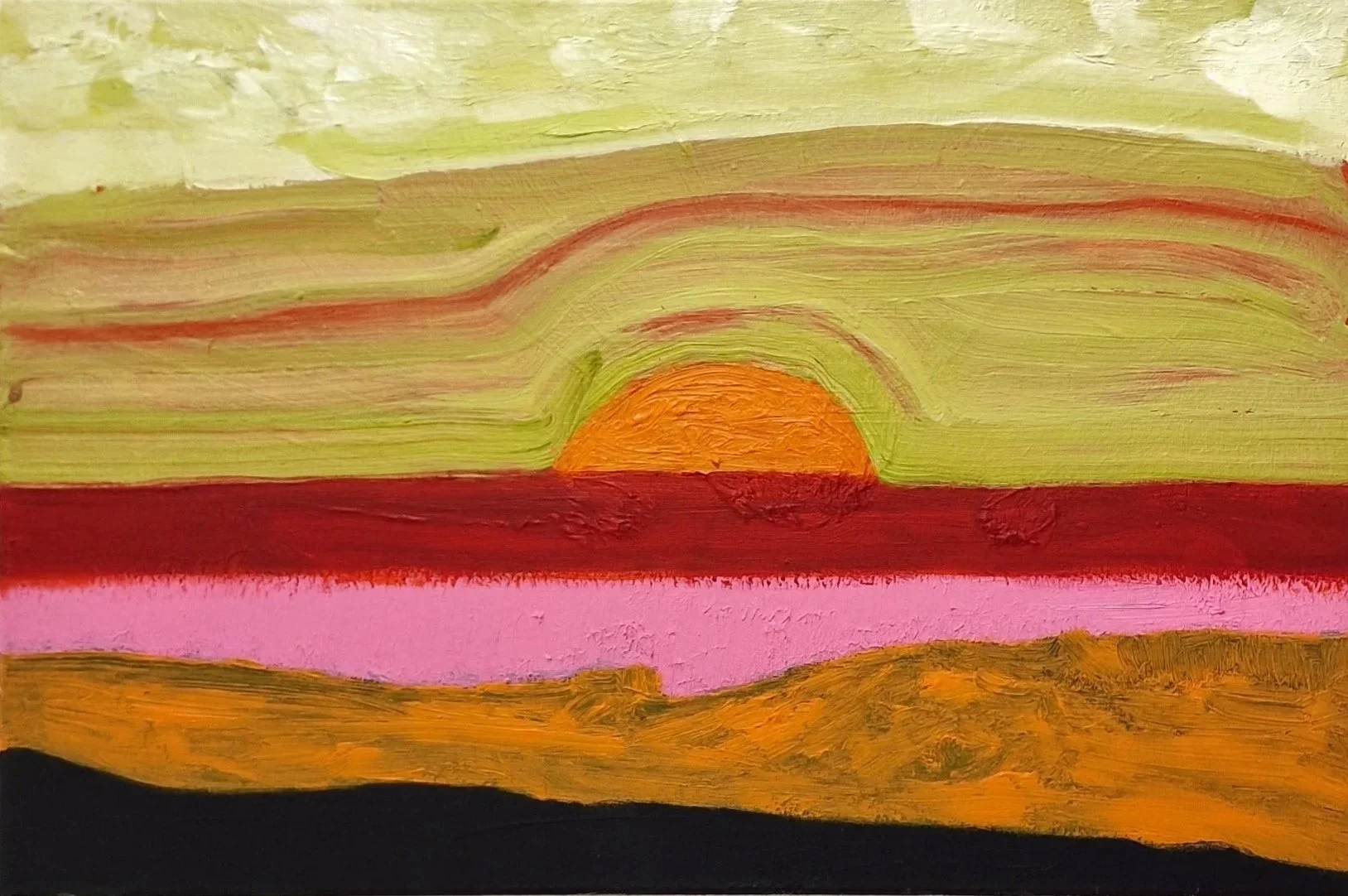
You mentioned previously that you zoom in on screenshots to reference these colors. Are all the landscapes you paint based on photos you take yourself?
No, not all of them. Sometimes I take screenshots from friends' social media stories. I don't try to replicate their exact landscape, but it allows me to see the world through their eyes, especially since they travel all over and I don't travel very much.
I was telling someone last week that one of my recent landscapes started from a random screenshot of a place I couldn't even identify. They told me about a famous writer who never left his hometown, yet wrote books set all over the globe. Because he did such meticulous research, his descriptions were so accurate that people who lived in those places thought he had visited them.
I try to capture an essence like that, even though I stay put. I have a very regular, quiet daily routine: I do sports, I go to my studio, I do everyday things. Honestly, I quite enjoy having a boring routine.
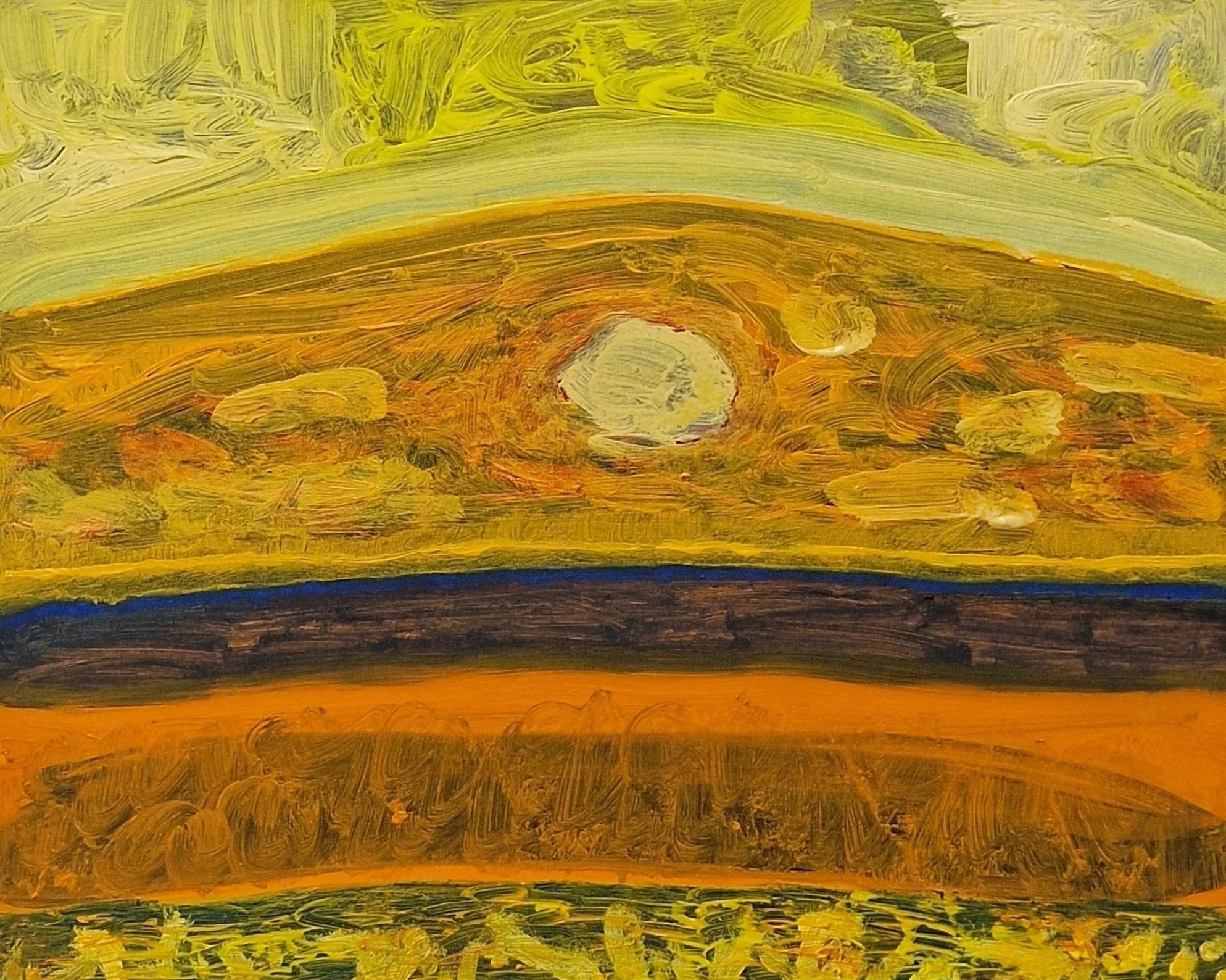
So, for you, painting is your way of seeing the world?
Yes. And it's my way of reminding people where we are, reminding them of what we tend to forget, especially when living in a massive, overwhelming city like Paris.
It’s an interesting contrast, being based in a bustling city, yet painting these idyllic landscapes. Is the exclusion of human figures a form of escape from the city for you?
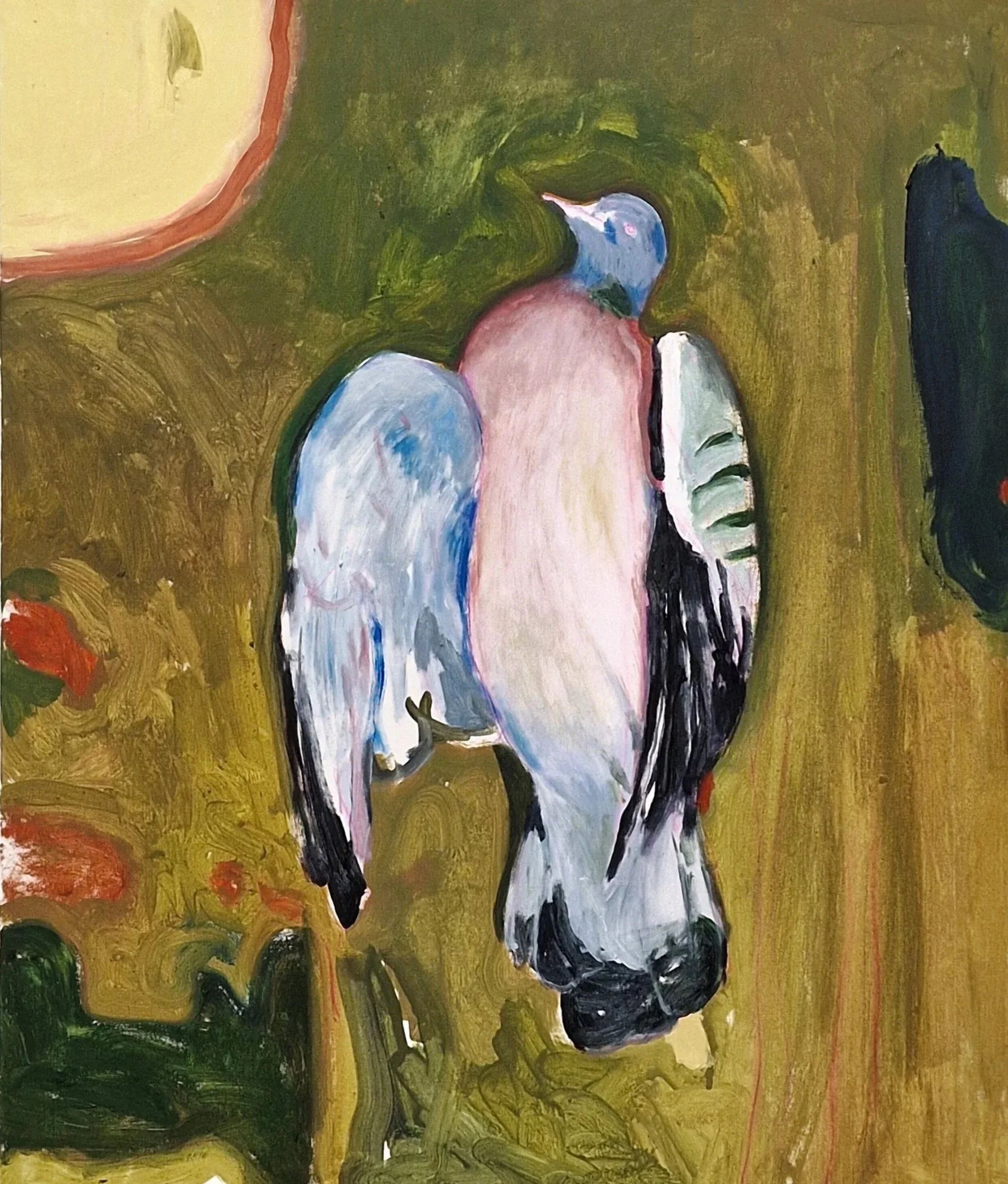
Yes, partly. It’s to keep the timeline ambiguous so you don’t know if it’s a painting from 10,000 years ago or the future. But it was also a subconscious rejection of my older work. I went through a phase of rejecting my previous portraiture, partly because of the commercial pressures of the gallery system. I wanted to break away from all of that, so I focused purely on these abstract landscapes. Eventually, though, I introduced birds, the Cui-Cui’s.
Yes, let’s talk about the Cui-Cui’s!
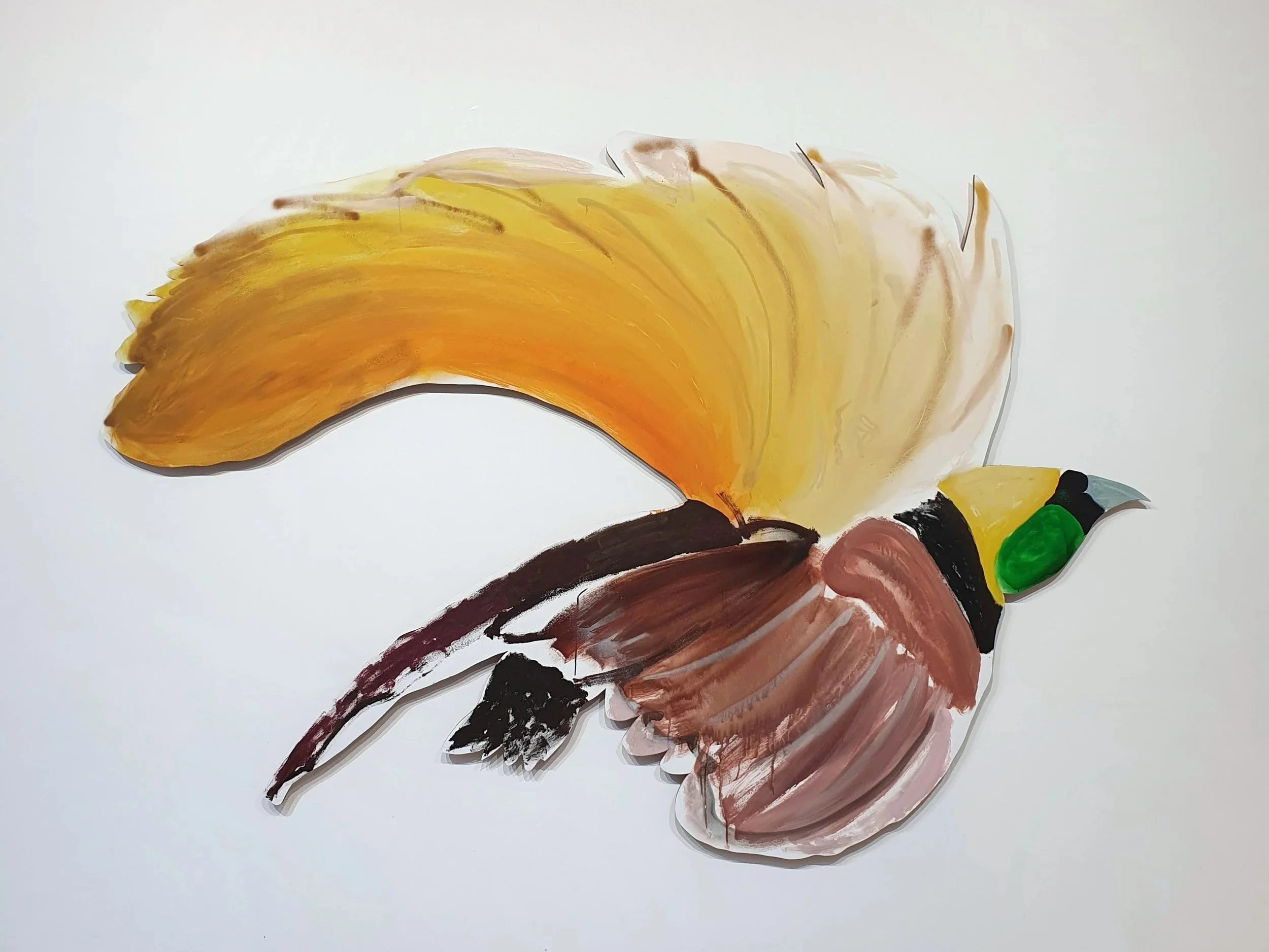
I didn't put them directly inside the landscapes. Instead, I would show a large landscape painting, and then a separate portrait of a Cui-Cui hanging right next to it. Birds have been here since long before us, and I hope they will be here for a long time to come, so they don't disrupt the timeless feel of the work. It was a beautiful way to subtly highlight endangered species without being preachy.
Living in Paris, we don't physically see these species disappearing, so it's easy to forget that once they are gone, they are gone forever. I don’t want to judge people for that, because I am human too and far from perfect. If I want to talk to someone about being a vegetarian, I don't lecture them; I just cook them a really delicious meal with no meat and let the food speak for itself. That’s how I want to offer my ideas.
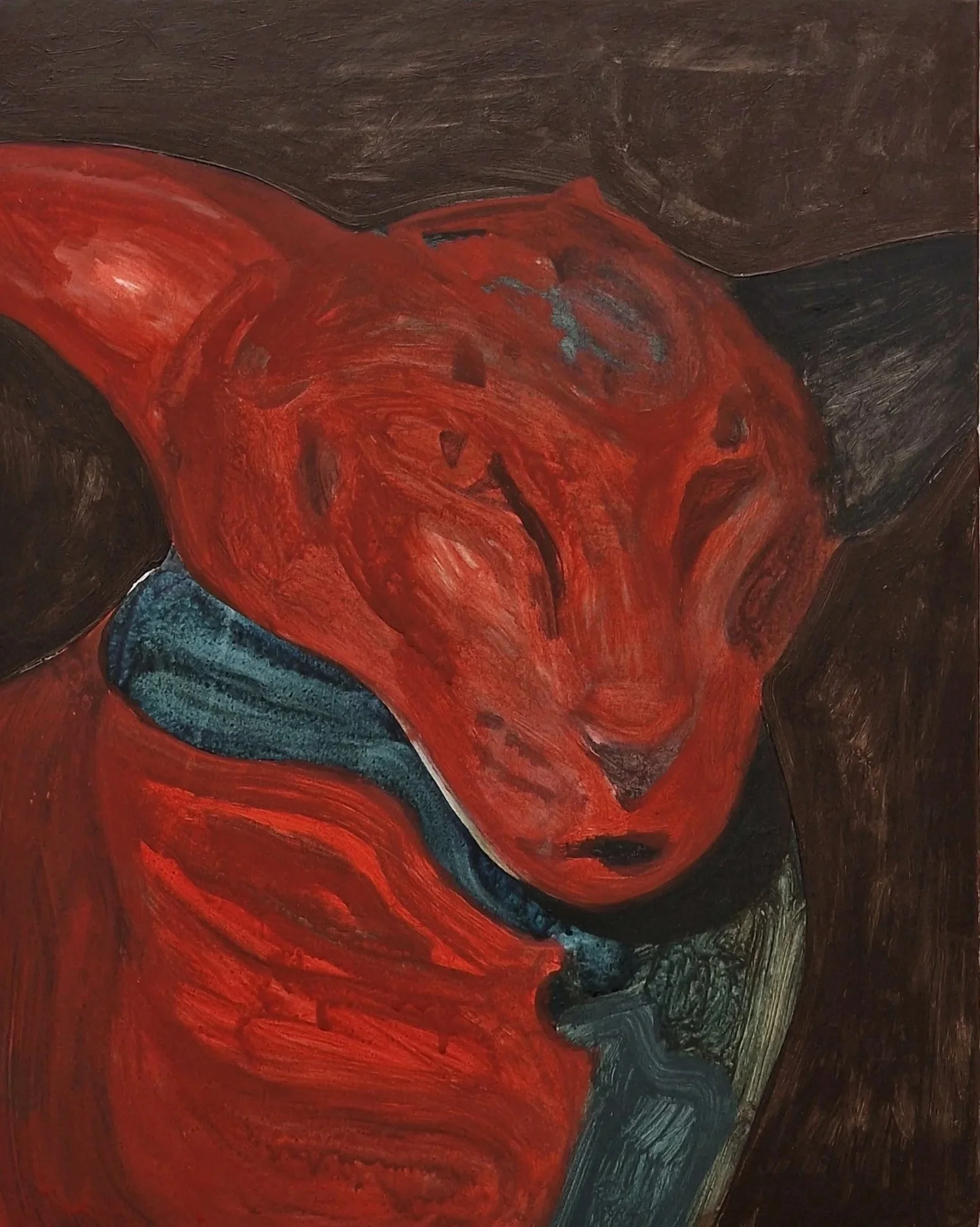
I have to ask, do you have plans to paint your cat, Twilly, again?
[Laughs] Yes! Even if it feels like a slightly selfish or naive act to just paint your domestic pet. For a long time, because my landscape series was doing well, galleries and collectors expected me to stay strictly within that lane. It's an unspoken rule in the art market. You don’t get an explicit email saying, "You must only paint landscapes to stay famous," but the system is built that way. If you constantly jump around doing wildly different things, you might be viewed as a brilliant researcher or a free spirit, but major galleries and collectors prefer consistency. They want to know you will stay on the track you started on.
How do you maintain continuity in a long career when faced with that dynamic? Does it make you scared to experiment with different genres?
I used to be very scared. On one hand, you rationalize it: we are incredibly lucky to make a living doing what we love. So you accept the trade-off. But sometimes you just want to paint with total freedom. When you have high-profile galleries and collectors waiting for specific work, you tend to stop experimenting and focus on what you're known for.
But during the COVID pandemic, my exhibitions around the world were suddenly canceled. For the first time in years, I had an unexpected time to experiment. That’s when I started making the bird pieces. The positive response showed me that the art world can appreciate evolution.
That breakthrough is what allowed me to think, "Why shouldn't I paint my cat?" That's how the Twilly exhibition happened.
Do you feel free in your practice now?
Yes, I feel I’ve reclaimed that freedom. I'm painting portraits and birds again, alongside my landscapes. At 41, almost 42…I finally trust my own voice enough to know that the audience will understand my artistic signature, regardless of the subject matter. Before, I lacked that self-trust, so I worried people wouldn't get it. But given the state of the world and the art market right now, sticking rigidly to predictable landscapes feels wrong. Life is full of surprises, and my work should reflect that.
To wrap things up, what advice would you give to the young, emerging artists working to establish themselves today? Are there mistakes you made or priorities you wish you had understood earlier?
The landscape was so different 20 years ago because social media didn't dictate everything. Back then, the algorithms were exponential, so you didn't have to fight so hard just to be seen. Today, there are so many more artists sharing incredibly high-quality work, making it much harder to catch anyone's eye.
If I were starting out today, my main advice would be: just create constantly. I see too many young artists thinking way too much about what they are doing, getting completely stuck inside their own heads, and paralyzing their process. My mother, being a choreographer, understood the creative struggle intimately. She always told me, "Sometimes it is much better to do anything than to do nothing." Bad work is infinitely better than no work.
Do the work, paint, and put it online. Don't sit around waiting for the "perfect" painting, because the perfect painting doesn’t exist. And even if you make something close to it, you'll immediately start looking for something different. It’s all just research. If you chase perfection, you'll never start, and you'll never grow. Accept that a piece will never be as flawless as it is in your mind, let every painting lead you to the next one, and just go for it.