
Raphaël Isvy: From Collector to Catalyst
For Raphaël Isvy, art is a sensory encounter, not a silent transaction. After a decade navigating the "invisible filters" and clinical detachment of the Parisian gallery scene, he is stepping behind the counter to rewrite the script. Drawing on a background in experience design and the rhythmic hospitality of Japan, Raphaël’s mission is to replace gatekeeping with transparency and anxiety with curiosity. By treating curation as social choreography, he is dismantling the art world’s inherited silences, proving that a gallery can be both a serious cultural platform and a space where visitors feel, quite simply, welcome.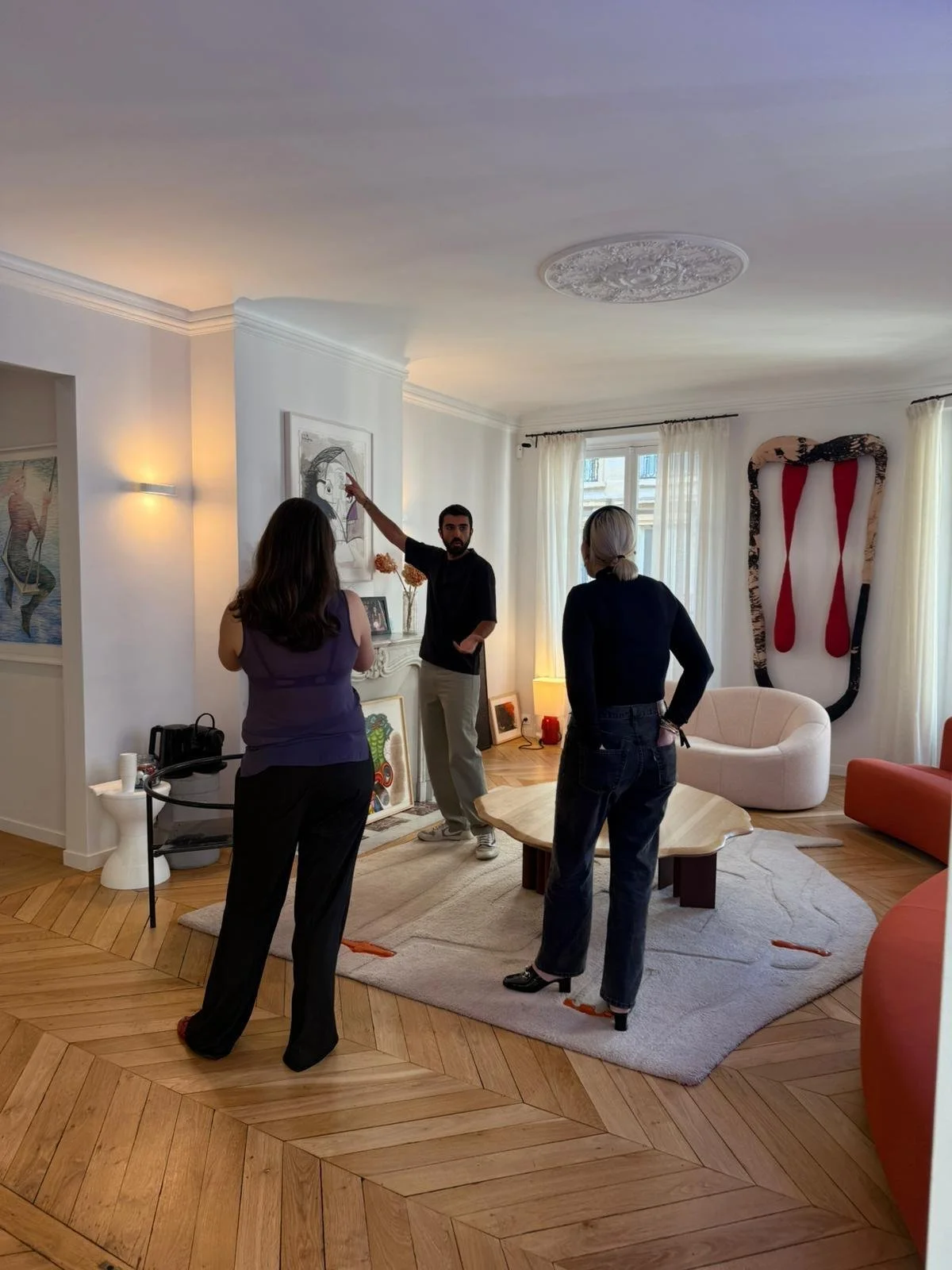
A Glimpse into Raphaël’s Collection as he discusses his George Condo acquisition. This piece serves as a cornerstone of his collection, marking a dialogue between the residence’s modern architecture and the fractured, evocative linework that defines Condo’s contemporary mastery.
You're now operating as a collector and part-owner simultaneously. How does ownership change your decision-making, if at all?
It adds a layer of responsibility that collecting alone doesn't carry. When I buy for myself, the only person I'm accountable to is my own eye and my own walls. When I'm helping shape the programme at Long Story Short, I'm thinking about three partners with complementary profiles — Michael, who built the gallery from zero four years ago in Paris, and Will, who runs the New York side — and about the artists we're committing to, and the collectors who trust our point of view.
What I've noticed is that the discipline is actually similar. Whether collecting or programming, I want to show things I genuinely believe in — work I'd acquire myself, at a price point that's accessible, with a quality standard that doesn't compromise. Our programme for 2026 is full. We're already looking at 2027. The posture is the same as it's always been: observe carefully, move with conviction, and don't confuse what's loud right now with what will last.
Moving from collector to owner-operator, what was the first "behind-the-scenes" mechanism that struck you as fundamentally at odds with the art itself?
The atmosphere. I've been walking into galleries in Paris for over ten years, and I've almost never felt comfortable. There's an invisible filter at the door — you're assessed on how you look, what you already own, whether your taste fits the right boxes. Nobody says the prices out loud. Nobody asks if you need help. The assumption is that serious buyers already know, and everyone else isn't worth the effort.
What struck me stepping behind the counter is that this isn't a deliberate strategy — it's just inherited behaviour that nobody has bothered to question. And it's genuinely at odds with what art is supposed to do, which is move people. You can't move someone you've already made to feel unwelcome. For a sector that's been under real pressure, the attitude has to evolve. There's an entirely new wave of potential buyers out there — people with a genuine emotional response to a work, who want to live with something beautiful, and who aren't thinking about resale multiples or auction records. They're being lost before the conversation even starts.
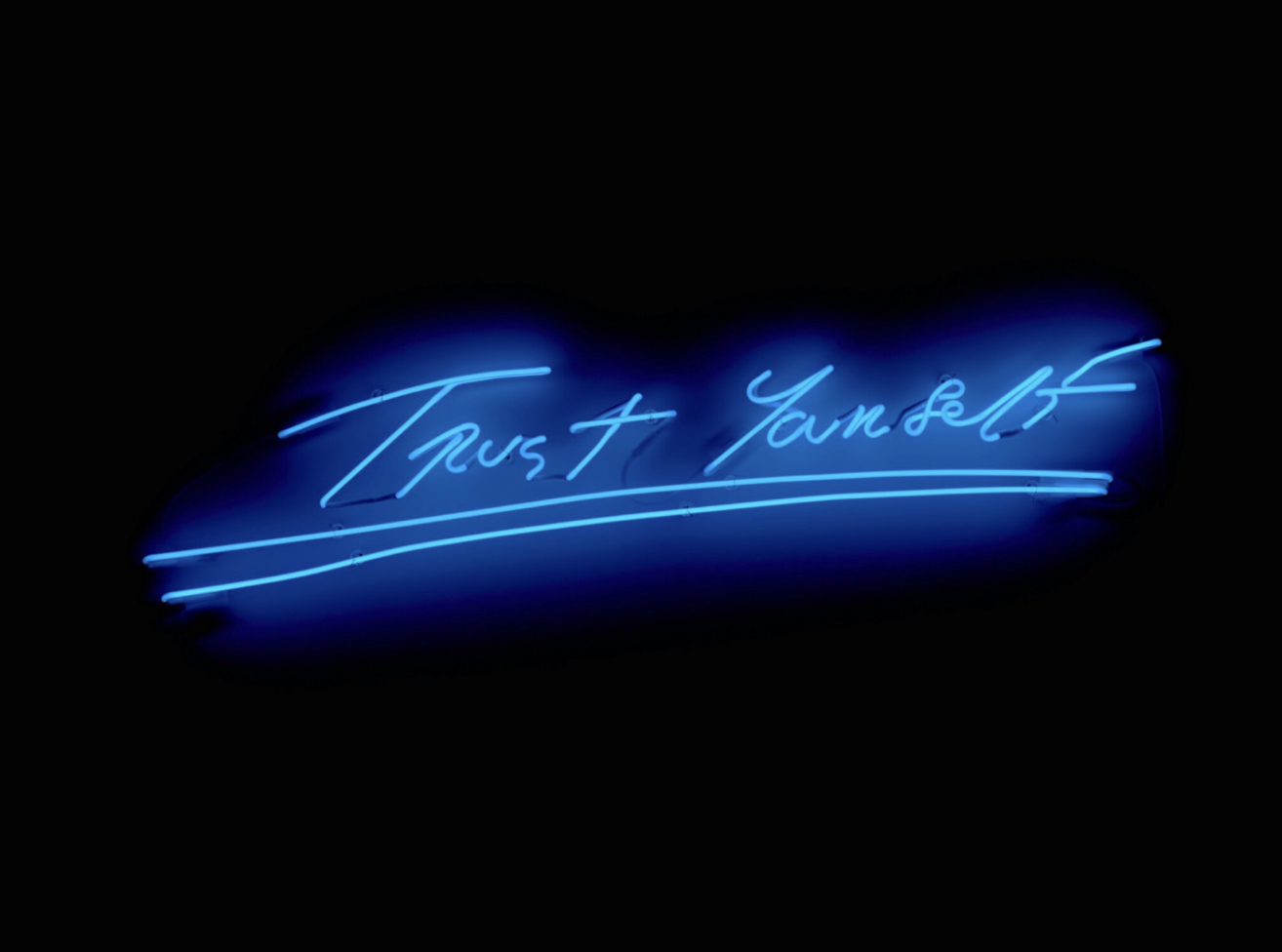
A Glimpse into Raphaël’s Collection: Featured here is Tracey Emin’s Trust Yourself. This signature neon work translates personal vulnerability into a luminous focal point.
You've set out to challenge the local landscape. Which specific tradition of the Paris gallery scene currently feels less like a heritage and more like an unnecessary wall?
The idea that a gallery is a closed room for the already-initiated. Paris has extraordinary cultural capital, but it often uses that capital to gatekeep rather than to open doors. The vernissage format is the clearest example — the same faces, the same circuit, the same signals of belonging. It reinforces an ecosystem rather than expanding one.
My two years at Airbnb Experiences taught me something very concrete: people don't want to just consume a product, they want to live something. And my trip to Japan in January confirmed that there's no universal rulebook for what belongs together. Beauty pairs with beauty, even when the references are completely different. A bonsai next to a painting. A breathwork session in a gallery space. A fragrance installation. A parent-child workshop. The wall that needs to come down isn't physical — it's the assumption that mixing formats dilutes seriousness. I'd argue it's the only way to bring the next generation into the room.
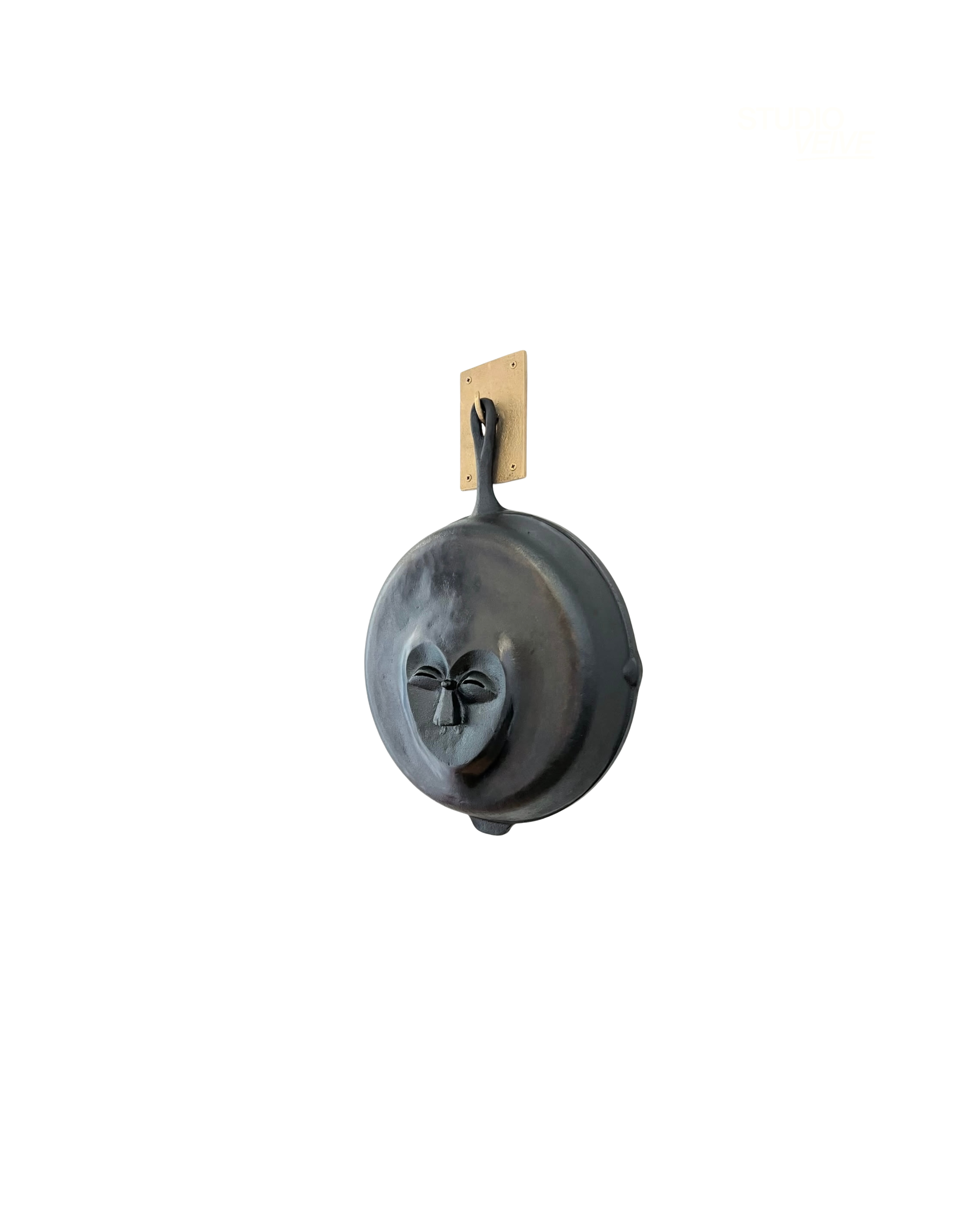
A Glimpse into Raphaël’s Collection: Featured here is one of Hugh Hayden’s iconic cast iron sculptures. This evocative work reimagines everyday domesticity through a rugged, surreal lens, transforming the familiar into a powerful exploration of identity and form.
If you were to rebuild the gallery experience today from a blank slate, what is the first "inherited rule" you would delete to make room for the future?
The silence. Not acoustic silence — that can be beautiful — but social silence. The unspoken rule that says you don't ask about prices, you don't admit uncertainty, you don't show too much enthusiasm in case it marks you as unsophisticated. That performance of detachment is exhausting and it serves nobody.
If I were starting from zero, the first thing I'd build in is genuine approachability — people who speak to you like you've walked into a space they're proud of and want to share, not like you've interrupted something. Price transparency, real conversations, no hierarchy between the person who buys a €3,000 work and the one who buys a €30,000 one. The emotional experience of acquiring something you love should feel the same regardless of the number.
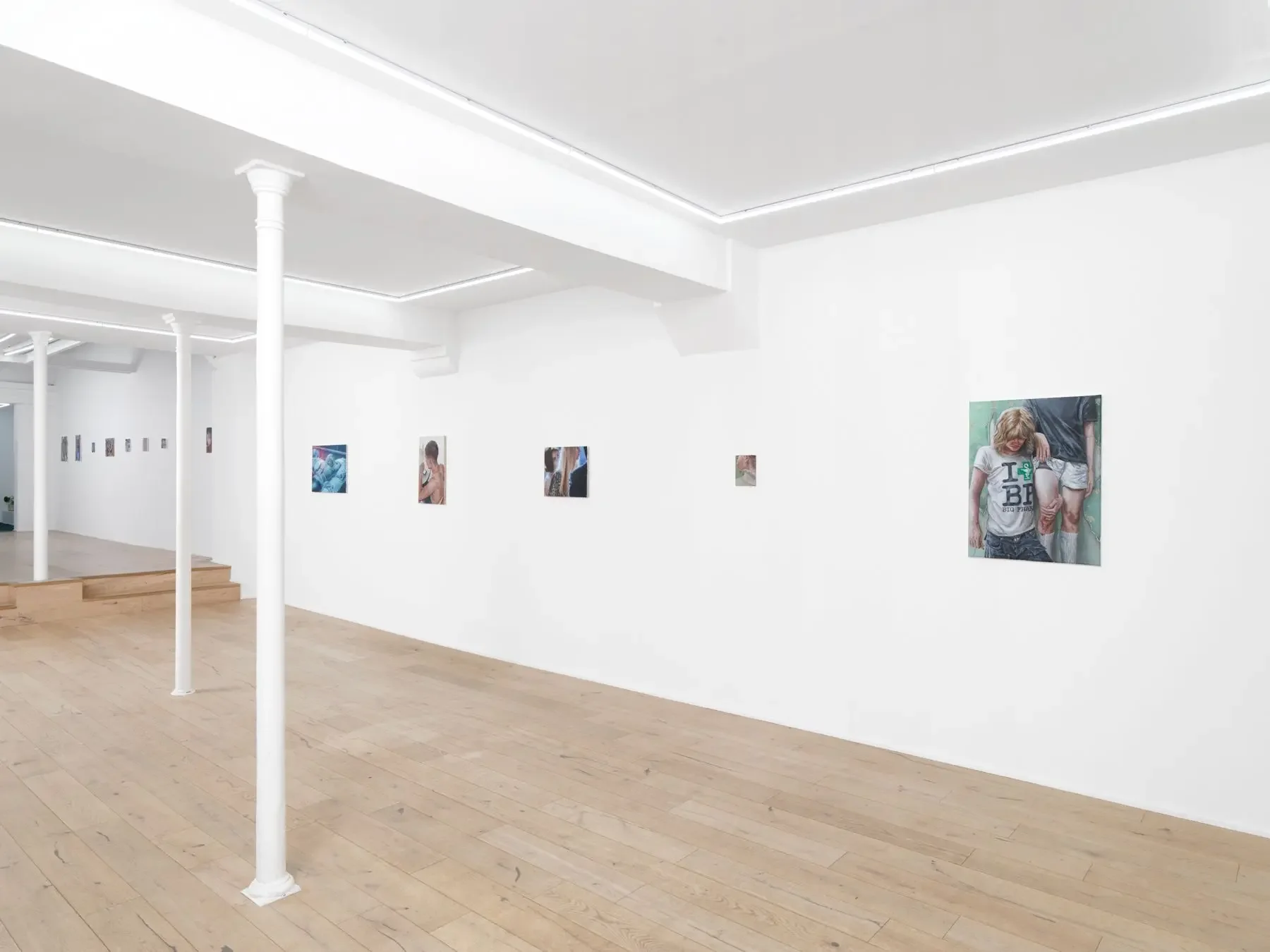
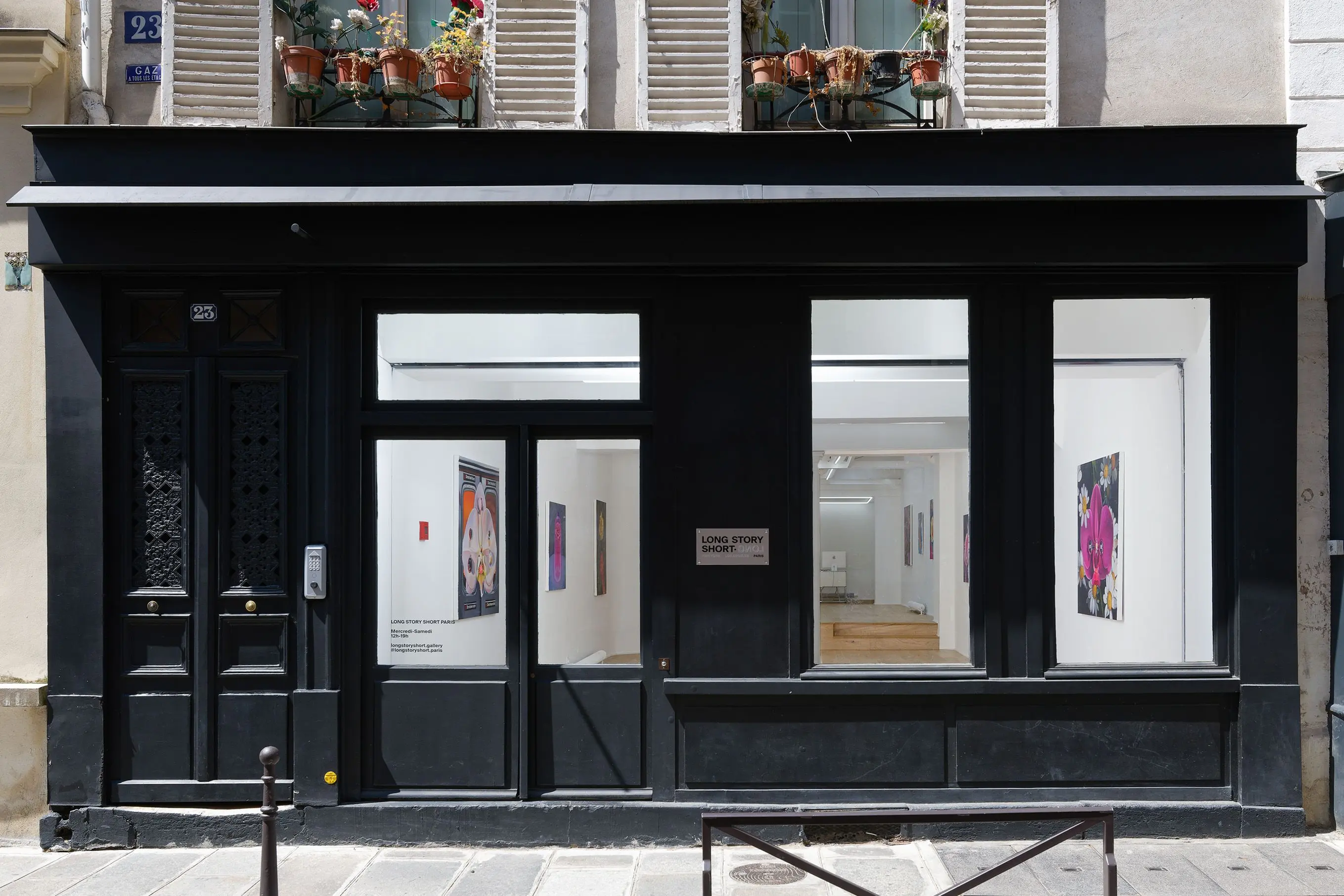
Installation View, YOUTH WILL ALWAYS WIN, Long Story Short Gallery, Paris. © AURÉLIEN MOLE
Your background is rooted in the design of "experience." How does the DNA of hospitality fundamentally alter the way you curate a room?
Hospitality starts before the object. It starts with how someone feels crossing the threshold — whether they slow down or speed up, whether they feel observed or welcomed. That sensibility changes everything about how you think about a room.
When I curate a space now, I'm thinking about rhythm and contrast the way I think about my apartment walls — not just what hangs where, but what the sequence does to someone moving through it. I'm thinking about what other sensory layers are present: sound, scent, light. I'm thinking about the social choreography — where people naturally gather, where they pause, what makes them want to stay longer.
The hospitality instinct also pushes back against overcrowding. Less is more, not just aesthetically, but experientially. A room that breathes gives the work room to land.
If the traditional gallery is built on authority, what is the specific emotional frequency a "post-gallery" model should emit for the visitor?
Curiosity without anxiety. That's the frequency I'm aiming for. The traditional model emits something closer to deference — you're in the presence of validated taste, and your job is to recognise it. The experience I want to create is one where someone feels genuinely invited to form their own response, ask a stupid question, disagree, be surprised.
There's a version of luxury that's warm. It's what the best Japanese hospitality does — you feel attended to without feeling watched. You feel that care has gone into every detail without being made to feel that you owe something in return. That's the register I want Long Story Short to operate in. Serious about the work, relaxed about everything else.
You champion making art fun & enjoyable. How do you keep the experience playful without diluting the intellectual weight of the work?
I think the assumption behind this question is worth interrogating — the idea that seriousness and enjoyment are in tension. In my experience, the most memorable encounters with art have always had an emotional charge that felt close to joy. Standing in front of the Condo I eventually bought, or discovering the Nava early. There was nothing diluted about those moments. They were just alive.
What I try to avoid is forced fun — programming that performs accessibility without actually creating it. A breathwork session in a gallery works if it genuinely shifts someone's state and opens them up to what's on the walls. It fails if it's just a PR angle. The bar is always: does this make the work more present, or less? If more, it belongs. If it's just decoration around the art, cut it.
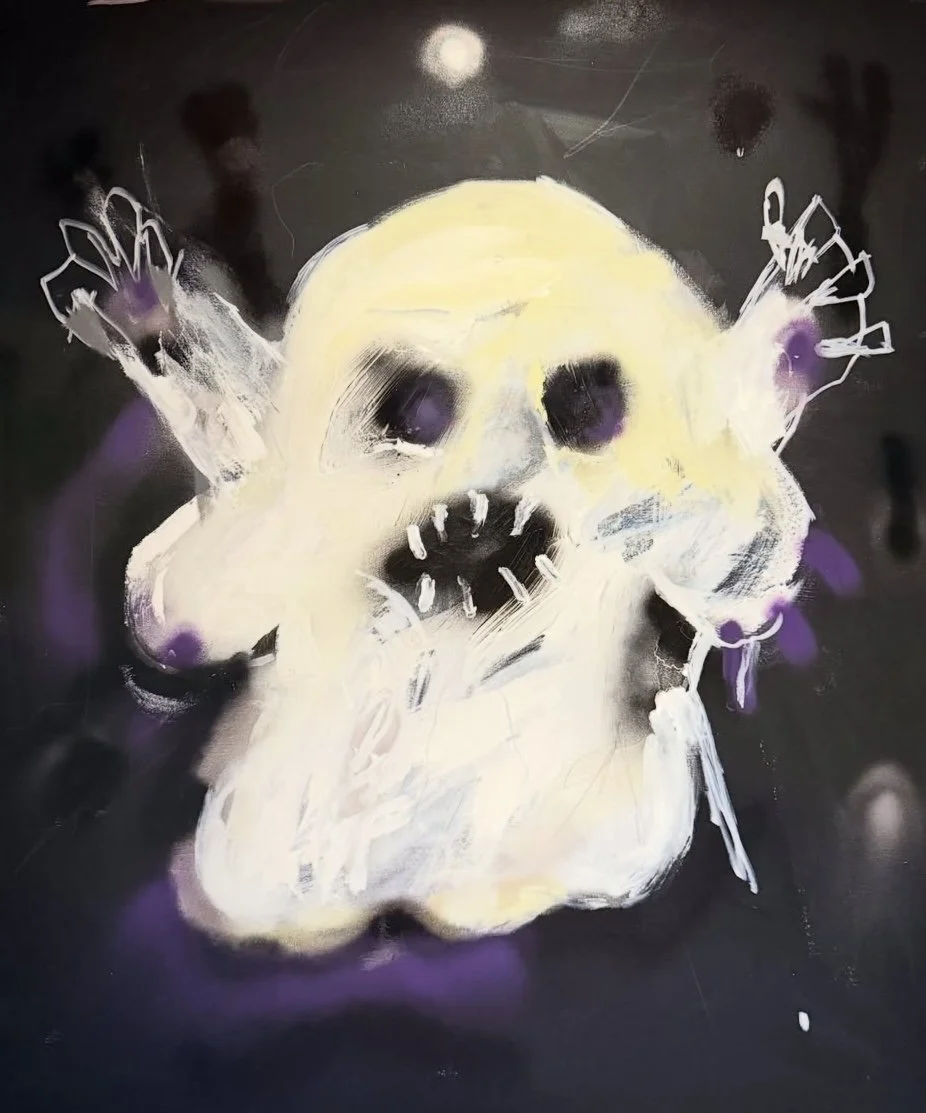
A Glimpse into Raphaël’s Collection: Featured here is Robert Nava’s earlier work titled Ghost (2019). This piece captures his signature aesthetic, blending raw, primal energy with a playful subversion of traditional myth-making.
Where do you draw the line between a gallery as a transaction engine and a cultural platform, or do you view that distinction as an outdated binary?
Completely outdated. The galleries I admire most don't experience that tension because they never separated the two functions in the first place. A sale is just the most committed form of engagement — it means someone loved something enough to bring it home. That's not commercial, it's personal.
What I find more interesting as a question is: what happens in the space between visits? A gallery that only exists as a transaction engine goes quiet between shows. A cultural platform is in conversation with its community continuously — through programming, through relationships, through what it chooses to stand for over time. At Long Story Short, we want to show work we'd buy for our own collections. That instinct — curating as a collector, not as a market-maker — is what keeps both functions honest.
In an era of algorithmic trends, do you still believe the gallery has a responsibility to shape taste, or is its role now to mirror it?
Shape it, unquestionably. Mirroring is the easiest thing in the world right now — the algorithm does it for you. If a gallery is just surfacing what's already trending, it's adding nothing to the ecosystem.
That said, shaping taste isn't the same as imposing it. The best galleries I've encountered — and the model I try to follow as a collector — operate on conviction. You follow an artist before the consensus forms. You hold the position when the market gets noisy. You make the case for work that doesn't yet have institutional validation. I bought the Nava early, before Pace, before the hype crystallised. That wasn't contrarianism — it was genuine belief, reinforced by conversations with people I trusted. That's what taste-shaping actually looks like. It's slow, it's relational, and it doesn't have a particularly good Instagram strategy.