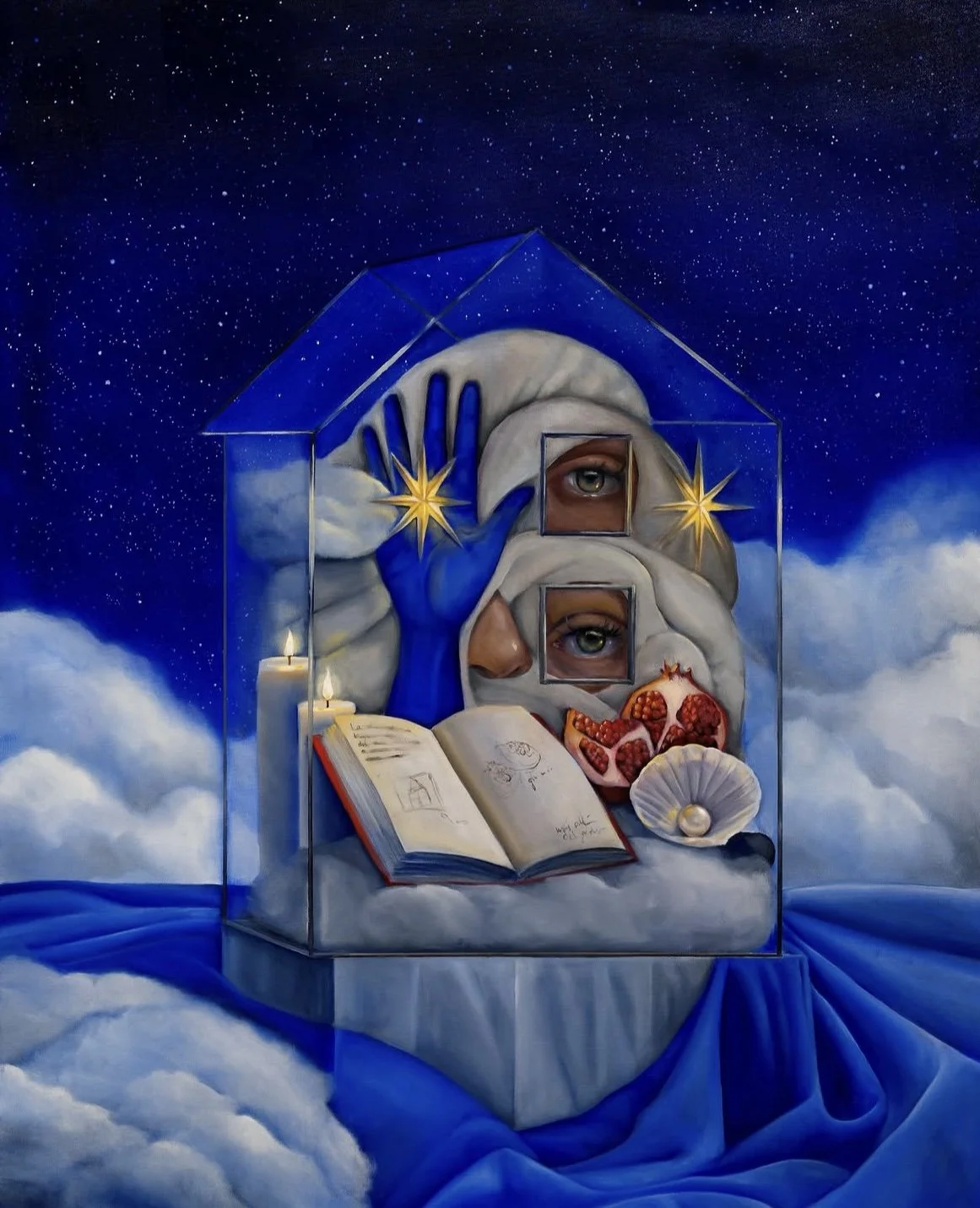
In her latest body of work, Gallego turns inward: not to reveal vulnerability, but to explore the ways we protect it, conceal it, and sometimes lose touch with it entirely. Through fragmented faces, obscured symbols, and imagined spaces, her paintings become meditations on the rituals we create around our most intimate selves. Rooted in autobiography, dreams, and the language of the unconscious, her practice explores the fragile boundary between what is revealed and what remains hidden. For the artist, vulnerability is not a weakness to overcome, but something deeply human and almost sacred, a part of ourselves that deserves recognition, care, and acceptance.In this conversation, she reflects on the origins of her new works, the role of dreams and symbolism in her process, and her transition into sculpture as a way of giving physical presence to emotions that once existed only within.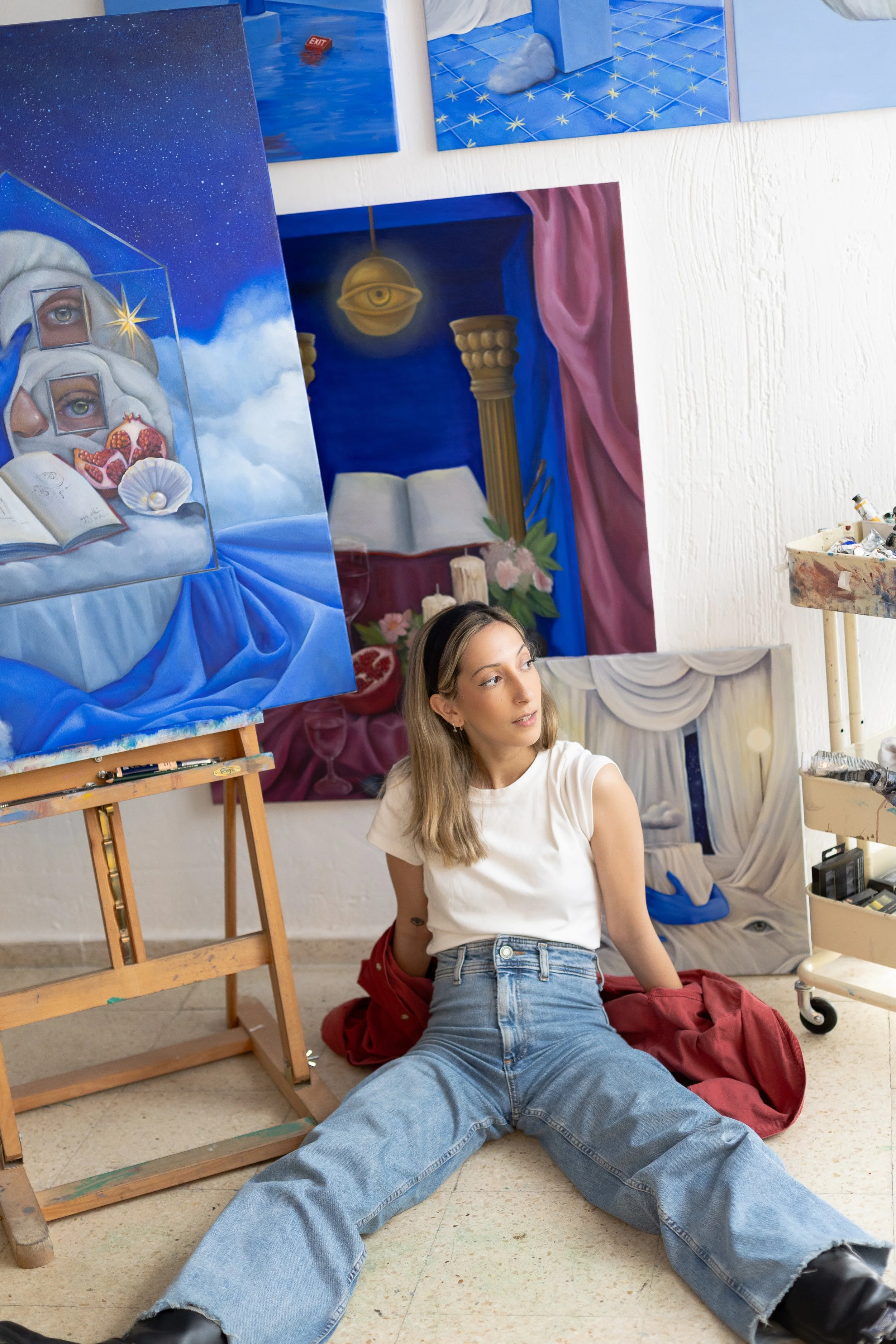
Your work has long explored the inner landscape of human emotion, however your recent paintings shift from exposing vulnerability to examining how we conceal it. What led you to this new body of work?
I think it has been a very natural evolution in my practice. My work is entirely autobiographical, and I always start from self-portraiture, but not in the literal sense of depicting my own face, eyes, or mouth. Instead, I use symbols and imagined spaces to talk about my own experiences. As you mentioned, my previous work focused on revealing very intimate emotions. But through my own personal process, I found myself becoming fascinated by something else: the rituals we all create to protect our vulnerability.
To me, vulnerability is something incredibly precious, almost sacred. Yet, for some reason, we often treat it as if it were something shameful, something that has to be hidden from others. It’s paradoxical because vulnerability is also what makes us deeply human. It’s what allows us to experience joy, grief, love, fear… everything. And yet, especially in a world where so much of our lives is constantly exposed, we feel this need to protect it, to keep it safely hidden.
For me, this body of work came from discovering that idea within myself and feeling the need to explore it. I often think of my artistic practice as a long journey where I stop at different places along the way. Each series is one of those stops, and right now, this is the place I’m exploring.
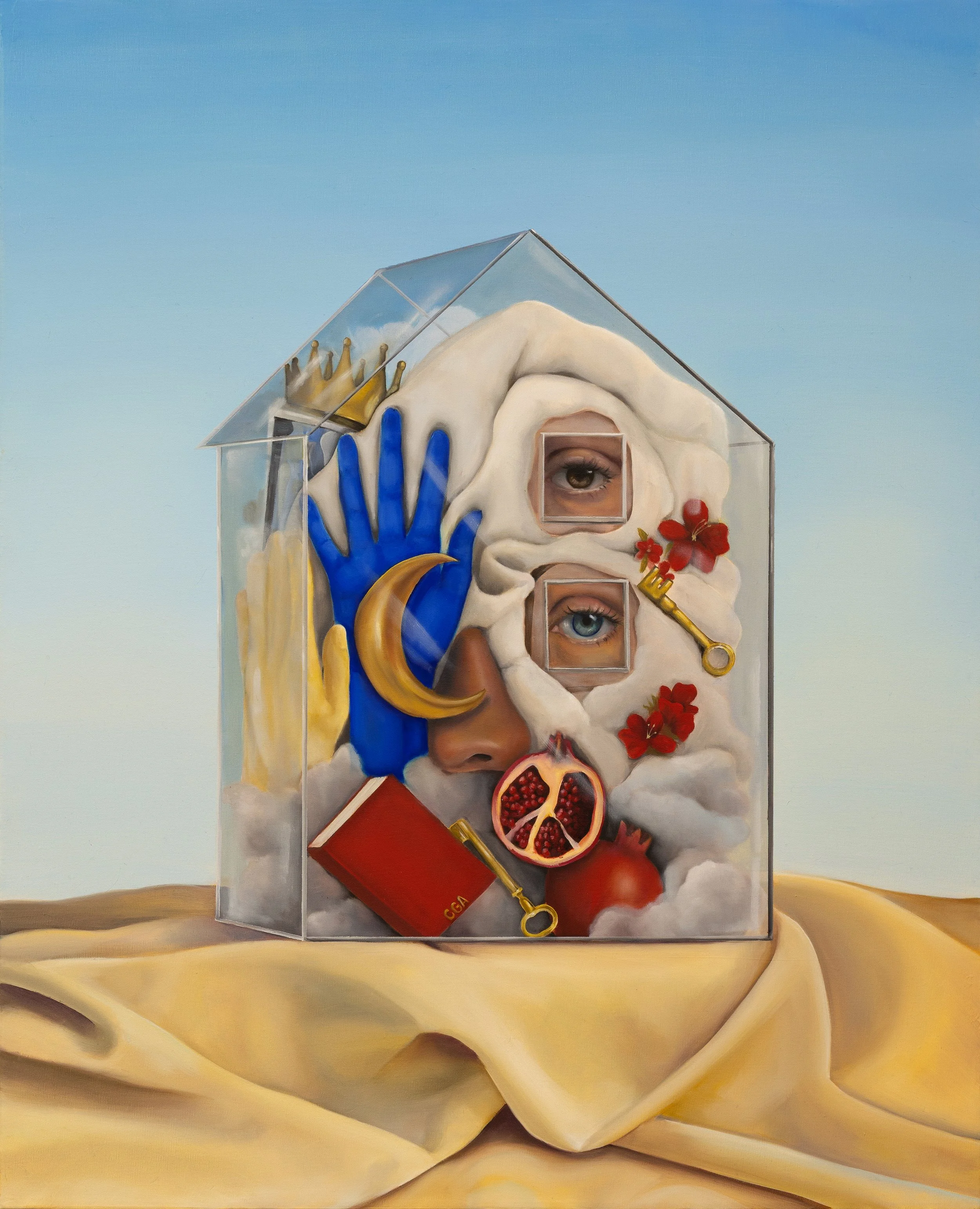
You've described these pieces as reflecting how we keep our vulnerability "safely encapsulated." Do you see these protective rituals as acts of healing, or can they sometimes become a way of keeping ourselves at a distance from the world?
I think these protective rituals begin almost unconsciously. We create them without even realizing we’re doing it.
I actually became aware of this during a therapy session. I realized that I had hidden and locked away my own vulnerability so that no one could hurt me. But by doing that, I had also disconnected from myself. When my therapist asked me to go and find that vulnerable part within me, I genuinely didn’t know where to look. I had hidden it so well that I couldn’t even find it anymore.
That’s one of the reasons I started making these works. I paint because it’s my way of understanding what’s happening inside me. My practice is deeply connected to the unconscious, so painting becomes a way of discovering things about myself that I couldn’t explain otherwise.
At first, these rituals are definitely a way of protecting ourselves. They distance us from the world because we believe that’s the safest place to be. But once we become aware of them, whether through therapy, personal reflection, or whatever path brings us there, they can slowly transform into acts of healing. They become a way of accepting our own vulnerability instead of fearing it, of embracing it and treating it as something almost sacred. Because, in the end, I believe our inner world is the most sacred thing we have.
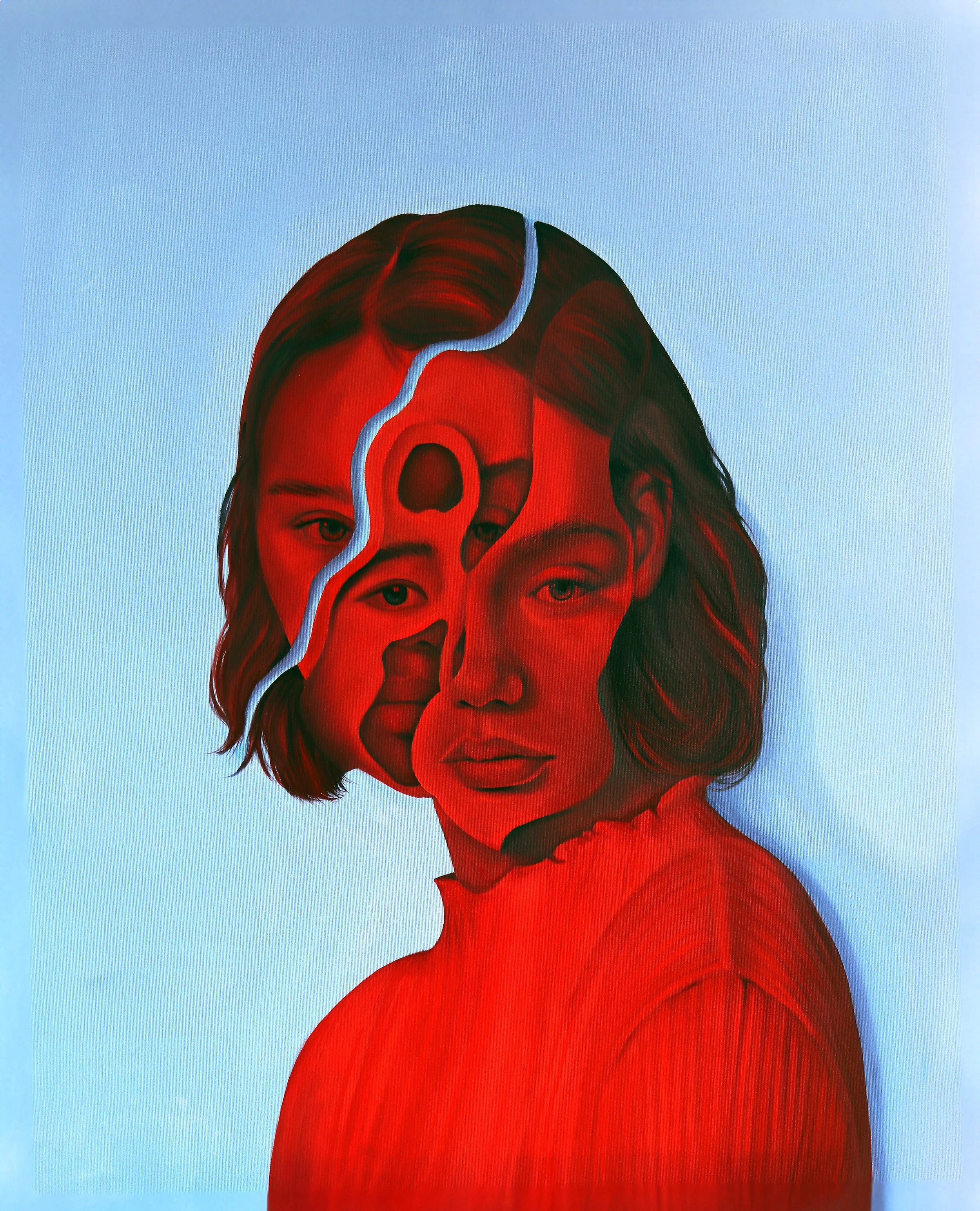
The faces in your paintings are never fully whole, in this new context of self-protection, what interests you about that exact boundary between what we show and what we hide?
I’m deeply interested in the tension between what is revealed and what remains hidden, especially because the hidden part is largely unconscious. It’s not something I decide intellectually. Instead, my own mind and, in many ways, my own body, has gradually revealed things to me, especially through dreams. I think dreams are the place where the unconscious has the greatest freedom to express itself and to communicate through symbols.
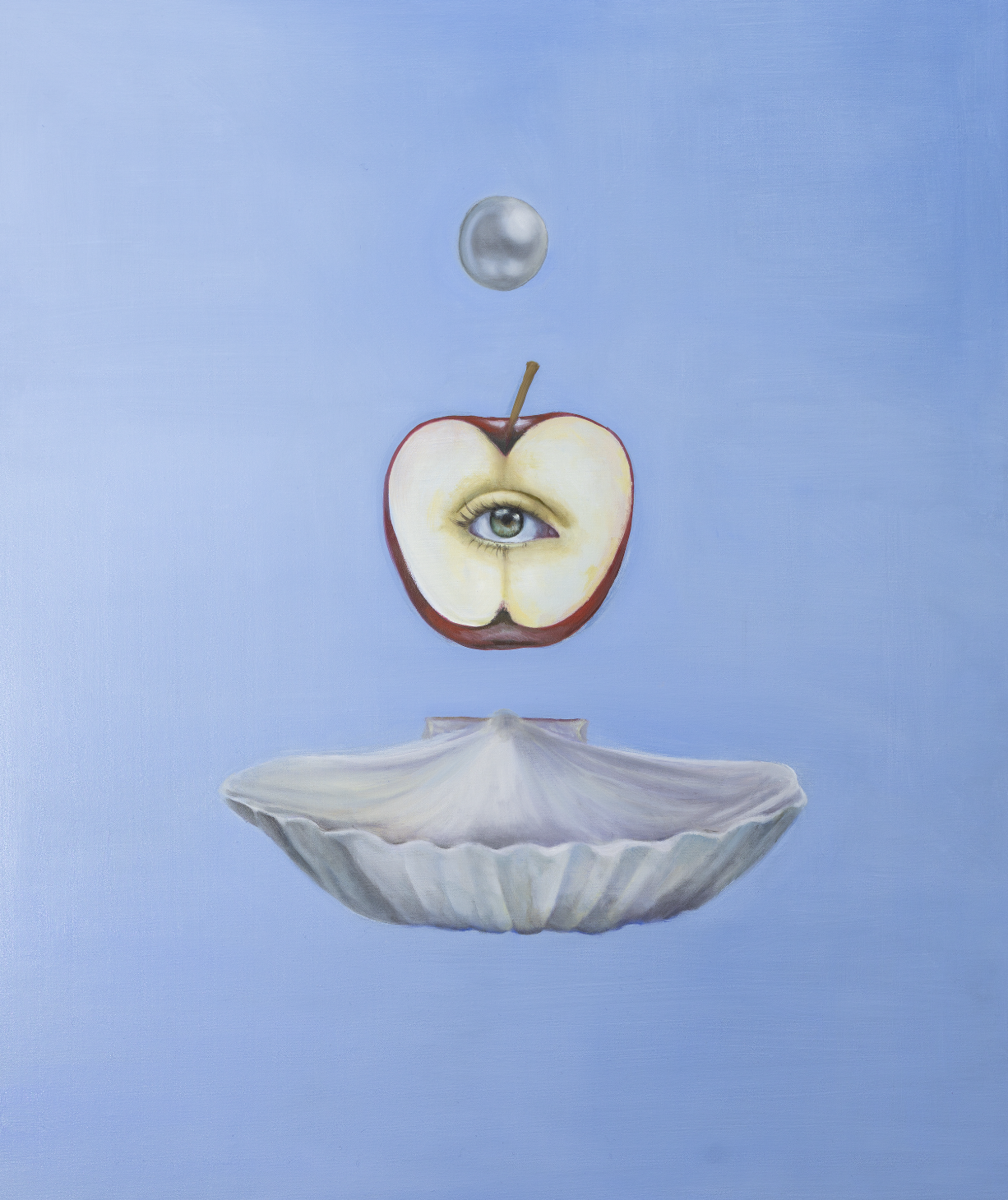
That’s why there are so many obscured elements in my work: fragments of faces, texts that can’t quite be read, parts that remain incomplete or inaccessible. For many years, my inner world felt fragmented and compartmentalized, and I think my paintings naturally reflect that experience.
So would you say dreaming (both literally and metaphorically) is an integral part of your process?
Most definitely. Dreams have become this open space where everything begins to emerge. People like Carl Jung and Freud wrote about how dreams reveal aspects of ourselves that remain hidden during waking life, and I find that incredibly meaningful. But even then, what appears in a dream isn’t always something you immediately understand. It’s still mysterious.
I love that duality in my work, that some things can be interpreted while others resist explanation. Sometimes people ask me what a particular symbol means, and my honest answer is, “I don’t fully know yet.” Something inside me simply asked me to paint it, and I trust that one day I’ll understand why.
In that sense, my work is very much like keeping a diary. You don’t always understand what you’ve written while you’re living it, but when you come back to it years later, meanings begin to reveal themselves little by little.
I love that perspective, it reinstates that an art practice should be ever evolving. Which is a lovely entryway into a new chapter you're exploring: sculpture. Where did this curiosity stem from?
I became fascinated by sculpture because it allows me to bring something out of the canvas and into the physical world. It transforms something that only existed within me into something tangible, something that occupies the same space as we do.
What really interests me is that it can be touched, held, and experienced in a completely different way from a painting. It allows me to give a physical body to something that was once only internal.
The sculpture I’m currently working on, for example, is a series of apples that I’ve called Manolita, after my grandmother, whom I never had the chance to meet. For me, that piece feels like I’ve physically taken my own vulnerability out of myself and given it a body. It’s the way I imagine it, the way I embody it.
I also love the idea that a sculpture can almost become an object of devotion. Throughout Christian and Catholic tradition, places of worship have always been physical spaces, and sacred objects have something you can stand before, touch, or carry with you. In a way, I want to create that same kind of relationship with my work, to make these inner emotions tangible so I can look at them every day, hold them, embrace them, and simply say, “This is me.”
That’s something painting can’t quite do. A painting is meant to be observed, and there’s always an invisible boundary you don’t cross, you don’t touch it. A canvas is delicate. Sculpture, on the other hand, feels much more human to me because it has volume, weight, and presence. You can walk around it, hold it, move it, even embrace it. That physical relationship creates a completely different emotional connection, and that’s what fascinates me most.