
The Serenity of Ordinary Moments: Austin Hayman on Nostalgia, Light, and LA
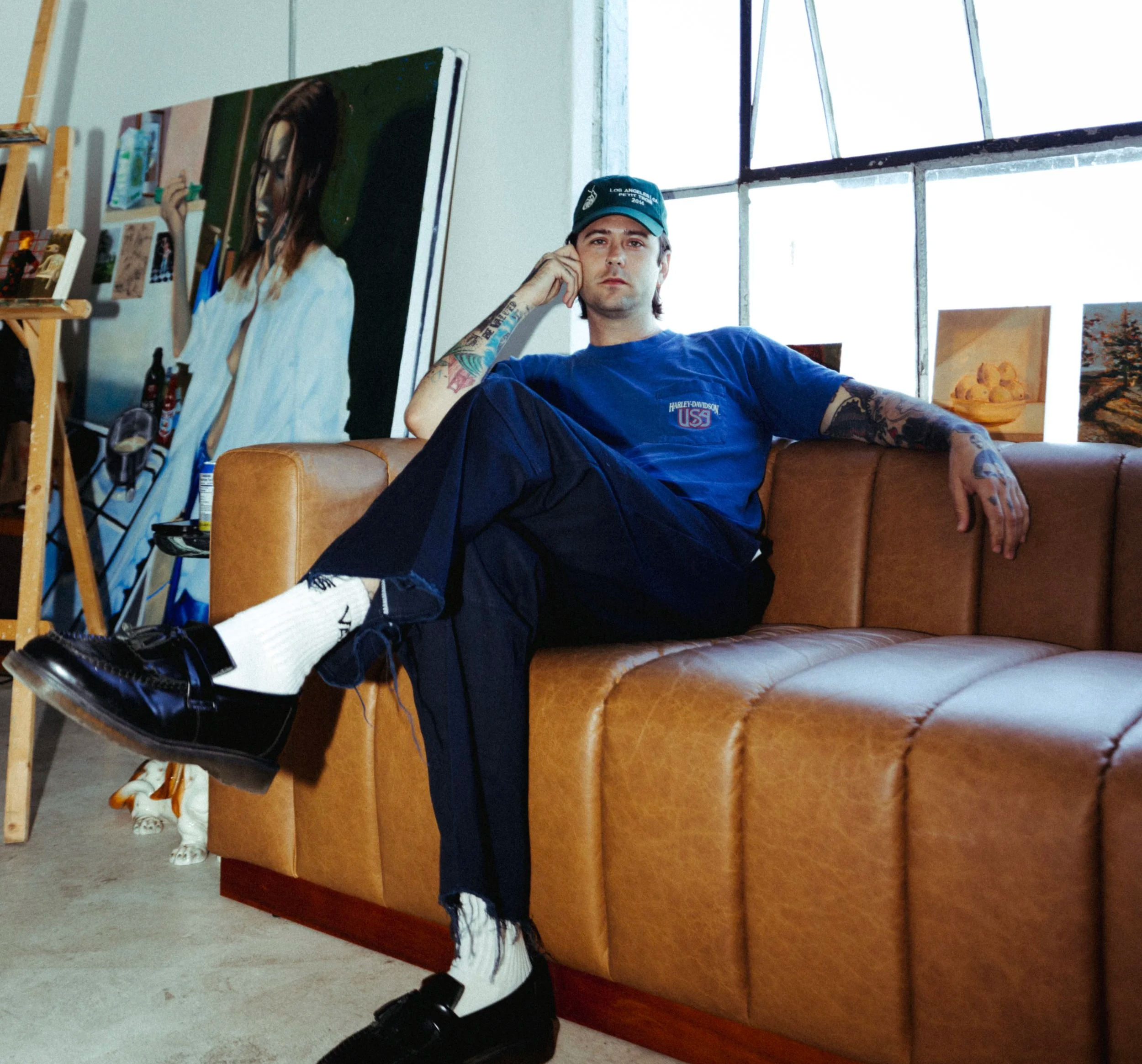
In this interview, we sit down with Los Angeles–born painter Austin Hayman to discuss his inaugural solo exhibition at Make Room, titled, 'Looking for a Friend'.Rather than documenting major milestones, Hayman’s practice anchors itself in life's subtle routines, the small, repeated instances that quietly shape how we remember a place or a time. Split between his roots in Southern California and his upbringing amidst the rural landscapes of Northern California, his work captures a gentle stillness, translating personal relationships into atmospheric domestic scenes. Approaching each canvas with an intuitive, music-like fluidity, he layers personal objects and private gestures to build subtle portraits of his inner circle.The show’s title balances a delicate tension: reflecting both an underlying fear of isolation and the comforting relief of recognizing a friendly face in a crowd. Against the stereotype of LA as a superficial landscape, Hayman offers an intimate alternative, celebrating the warmth of genuine community and deep-rooted personal connections.Our conversation dives into the mechanics of his quiet compositions, his evolving relationship with colour, and how capturing his friends on canvas became an affectionate tribute to the city he calls home.
All of the artworks in the catalogue are a dream to page through! In this body of work, you’ve focused on everyday, ordinary moments. Where did that stem from?
I realized at some point, when reflecting back on different periods of my life, that the big moments and the big memories aren't the things you'd think they'd be. It’s about the small moments, moments of repetition. It can be the way the light hits you through the window, your walk to work, or school.
Those moments tend to define periods of my life and the places where I live. That becomes really impactful, even though it doesn't always seem like it's paint-worthy or “exciting”. But I'm drawn to that serenity and calm, and that's exciting for me.
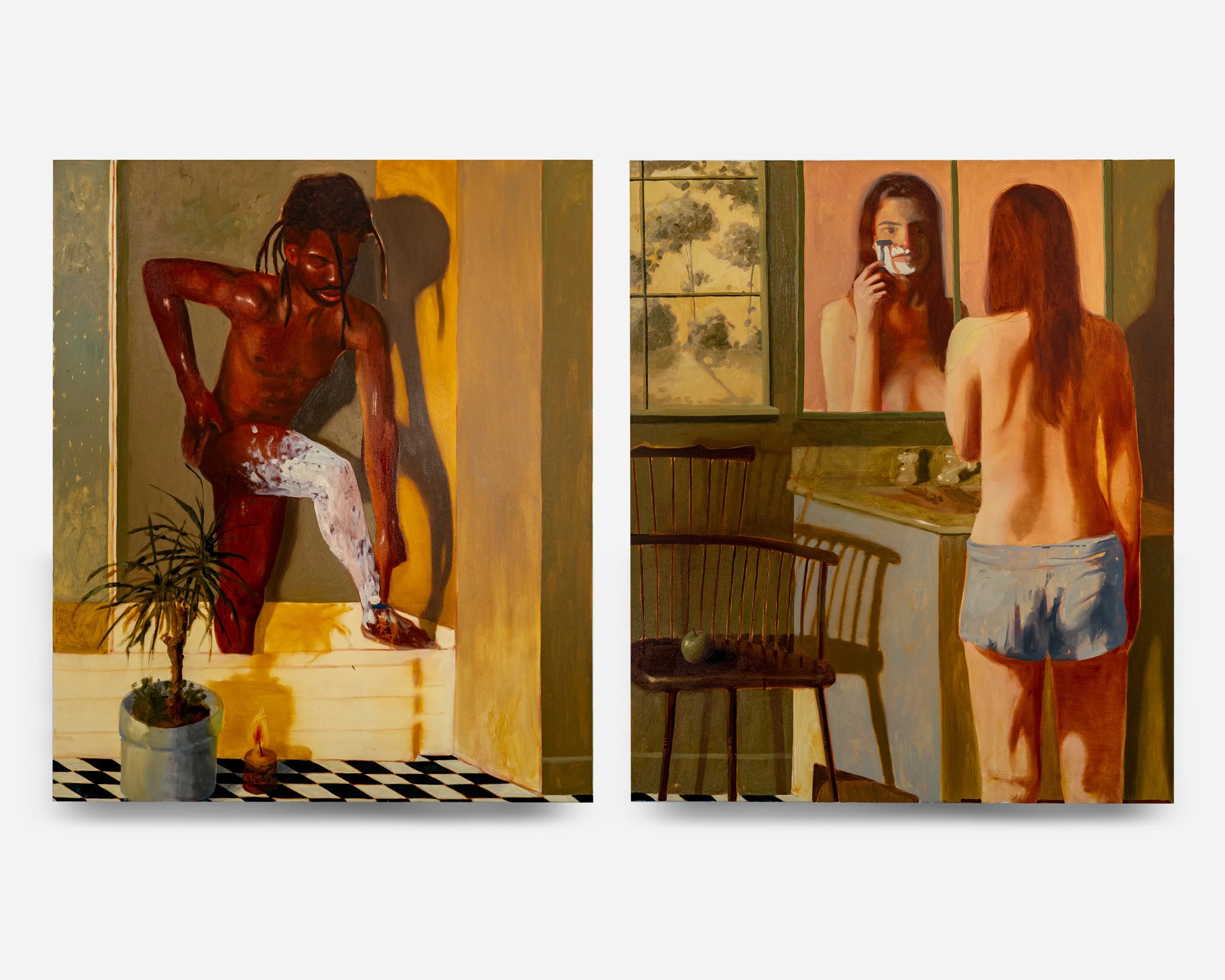
Let’s touch on this aspect of serenity. For a lot of artists, the process of creating work can be meditative. When you're sitting in front of a blank canvas, do you find that it brings you a sense of calm? What is your process?
It's everything and anything. I like to have an idea of what I'm getting into when I begin a painting, but I always like to leave space for surprises.
Compositionally, I'll leave a lot of room in the painting. I'll begin with the larger ideas I have, like the placement of a window, and then the smaller things tend to find their belonging along the way.
It becomes very reflective of what my life looks like. The moment is real because I'll usually use a reference photo for the figure, but then I'll begin building this room around them that isn't real at all. It’s all fiction, but it's made up of things reminiscent of my life. For example, this window appears a lot in the work, but it's not necessarily that exact window, it's just derived from it.
Does the recurring window speak to something for you? Have you ever unpacked why that motif keeps coming back in the work?
We'll have to get a therapist in here! (laughs)
I think the window can represent a lot of things. I like to insert these sort of euphoric and hopeful scenes, often lush foliage outside the windows, and I think it's very optimistic. It's fun to play with that sense of optimism outside the window, like it's a place you know.
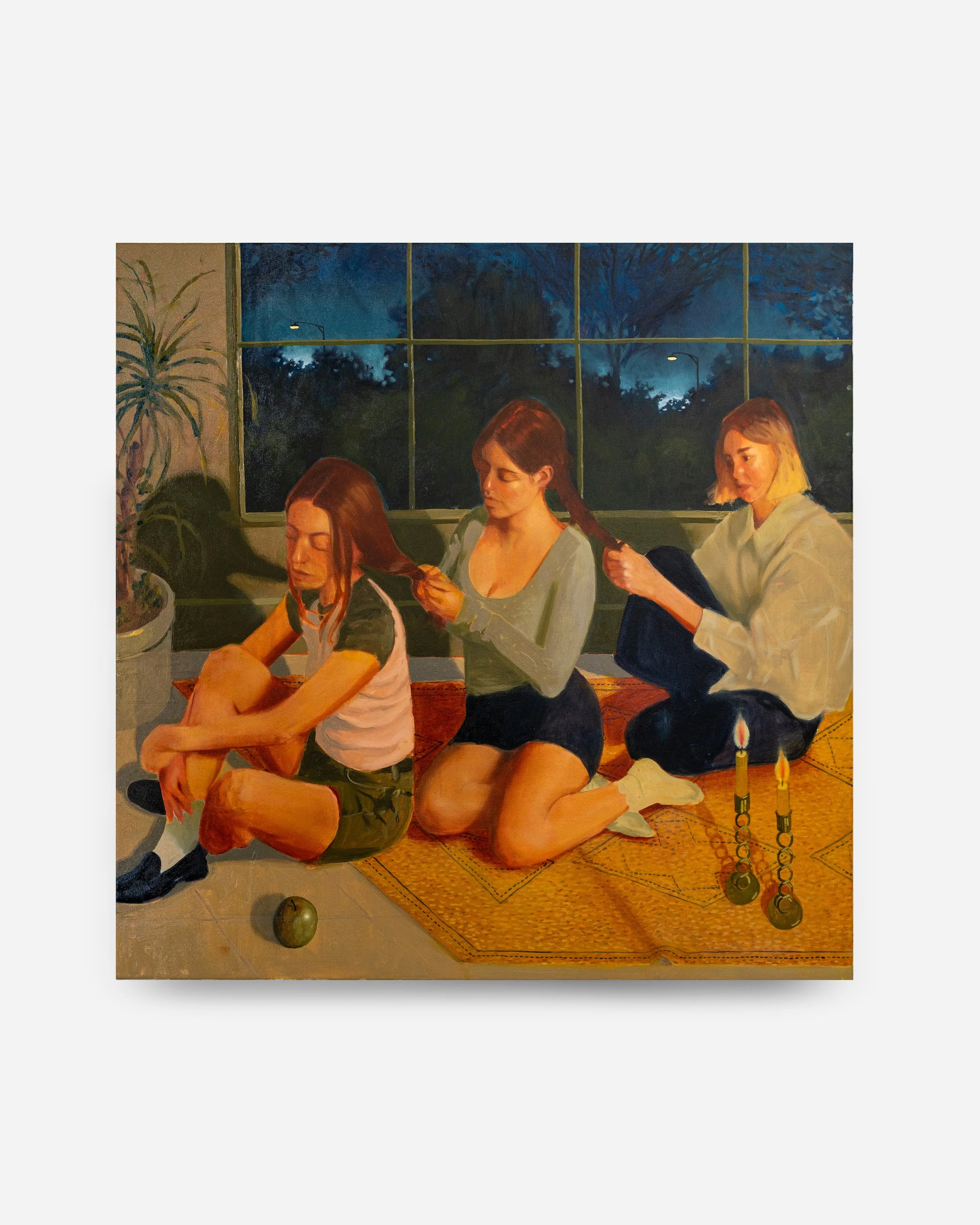
Your works depict your close friends. Because you're depicting such intimate moments, do you try to hide certain aspects that only you and your subjects can identify?
Sort of, but I'm not necessarily cagey about it. What I mean is, there are things inserted in the paintings that often have to do with the identity of a friend of mine.
For example, there's a painting of my friend Doug in my current show. There was a plant that he gave me sitting in my studio, and along the way, I decided there was space in the painting for compositional objects. I felt like inserting this plant that came from him was a playful touch. Nobody else would know that plant was meaningful to me, but I'm not hiding it either.
I think that's fun.
There’s a little moment where people can see paintings of themselves and go, "Oh, you included that thing!"
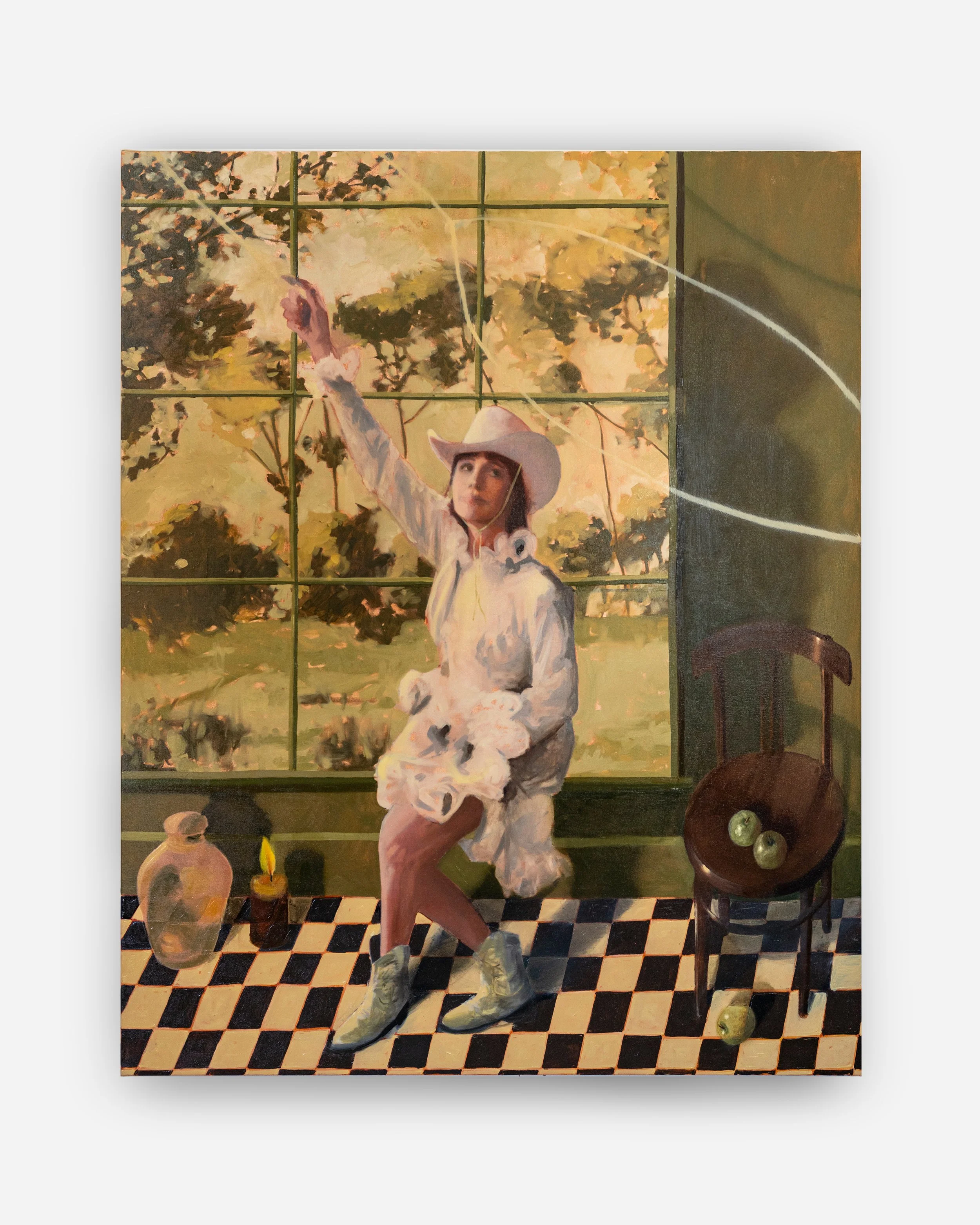
Prior to this exhibit, your colour palette was incredibly vibrant however, this body of work feels softer. What prompted this shift?
It's a few things. One is a little funny: it's just understanding color theory better, being comfortable with softer tones, and figuring out contrast a bit better.
But also, this whole show was made in a span of about three or four months. When you're trying to make that much work in such a short period of time, it becomes really easy for it to be cohesive and to reuse a lot of elements. It wouldn't really cross my mind to look at a painting I did three years ago and say, "I'm going to insert that into a painting I'm doing right now." That's not a bad idea, but it's just not something I'd think to do. But when you're completely surrounded by all the work you're doing in the here and now, grabbing colors and objects from each other becomes kind of a no-brainer.
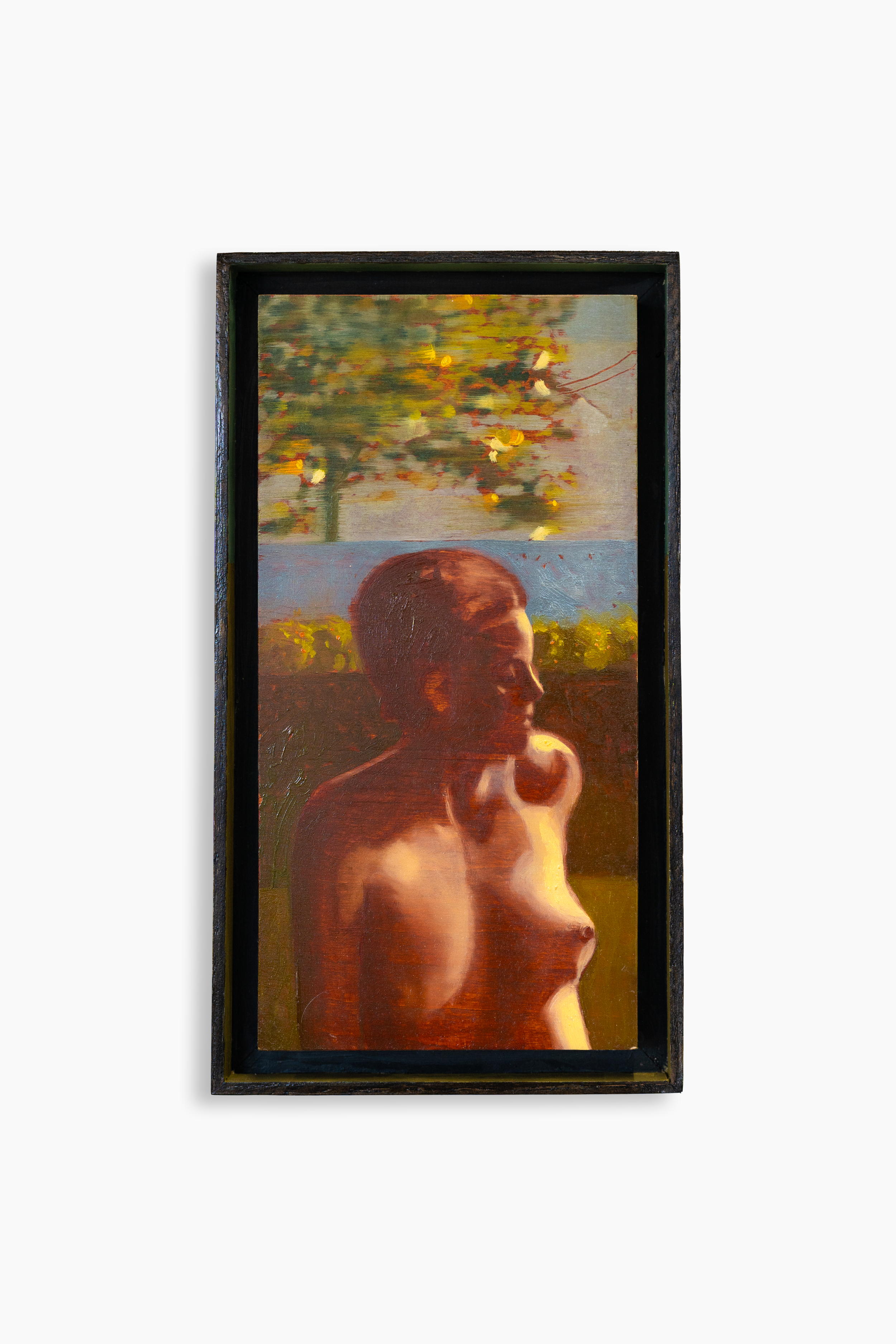
The title Looking for a Friend is such a simple, yet weighted statement. Where or how did this title find you?
I am very much an Angeleno, and I love the city deeply. But like so many people, I've had moments of thinking, "What if I lived somewhere else?" I kind of always return back to the idea of: "But what if I don't make friends the way that I've made them here?"
I guess I also have a weird fear of losing touch with people if I live somewhere else. The way I see the city, and part of the reason I think it's so misunderstood, is that my connection to my friends here is why I love it so much. And because I love my friends so much and I have so many great ones, as my practice developed, it became kind of obvious to paint the people in my life. It's a privilege that people allow me to do that. As that developed, it just became the theme of the body of work.
Somebody once said that every painting is a self-portrait in a way. Finding this balance between the people I'm choosing to paint and this fantasy world I'm placing them in, which is reflective of things I'm interested in, becomes this symbiotic Venn diagram of me and the people around me.
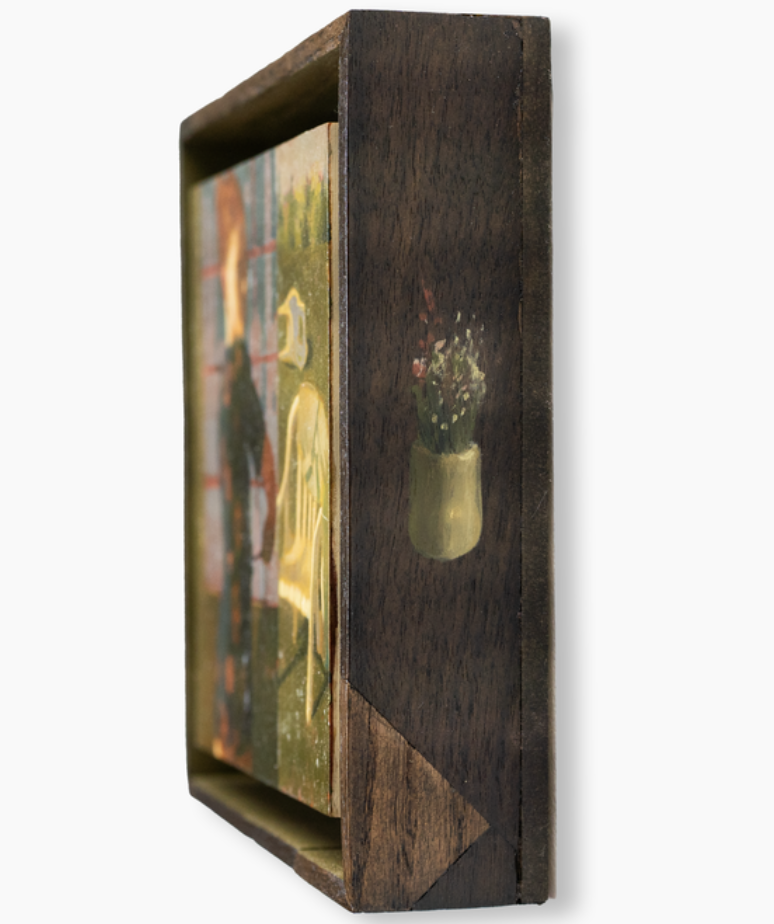
It's interesting you describe it that way, because to me, it sounds like this show was almost a love letter to LA.
Absolutely. I think it's such a misunderstood city. There are a lot of ideas about people here that are true if you go to the wrong places, I guess! But I've found it very easy to connect to people here, so it really is a love letter.
The things in the work are reflective of other parts of the city too, like the shape of the trees, or some of the mid-century design. When I look back on it, I go, "Yeah, that's here."
What's your version of LA that you're hoping to depict?
I think it's a calmer place than people might think it is. It's so rich with culture, so diverse, and there's more nature than people give it credit for.
One of the beautiful things about Los Angeles, unlike some other major cities, is that people actually go to each other's houses. I was thinking about New York the other day, people don't really have dinner parties there unless you're of a certain socioeconomic standing; people just go out. LA is such a comfortable city, and because it's not a walkable city, people spend real time in each other's homes. I think that's a really nice thing.
In this body of work, you were dealing with themes of intimacy, community building, nostalgia, and temporality. I imagine you have a whole new body of work brewing now. You mentioned previously that you don't really reference your past work, that it's always something new. Are you maintaining these same themes in your current work?
Right now, with the things I've been painting, yes. I am painting in a very similar way.
I have some broader themes for future shows that I think I'll dive into eventually, but at the moment, I'm trying not to overthink it and just paint. I'm excited for the bigger ideas I have, but right now the things I'm doing are smaller, just trying to keep the momentum going. They're almost like a little bonus chapter to what I just did.
Looking forward, as your momentum builds with these upcoming projects, are you planning to keep your main footprint focused here in the US, or are you looking to expand across to the European market as well?
I haven't really spent much time exploring Europe yet, but the curiosity is definitely there. Right now, I’m really grounded in the energy of the US market and the community here in LA. But I think as the work evolves, and as those fantasy landscapes outside the windows keep growing, bringing that perspective across the pond feels like a natural next step. I’m just excited to take it one canvas at a time and see where the conversations take me.