Between Material and Memory: A Conversation with Hiva Alizadeh on Tactile Histories, Color, and the Sacred
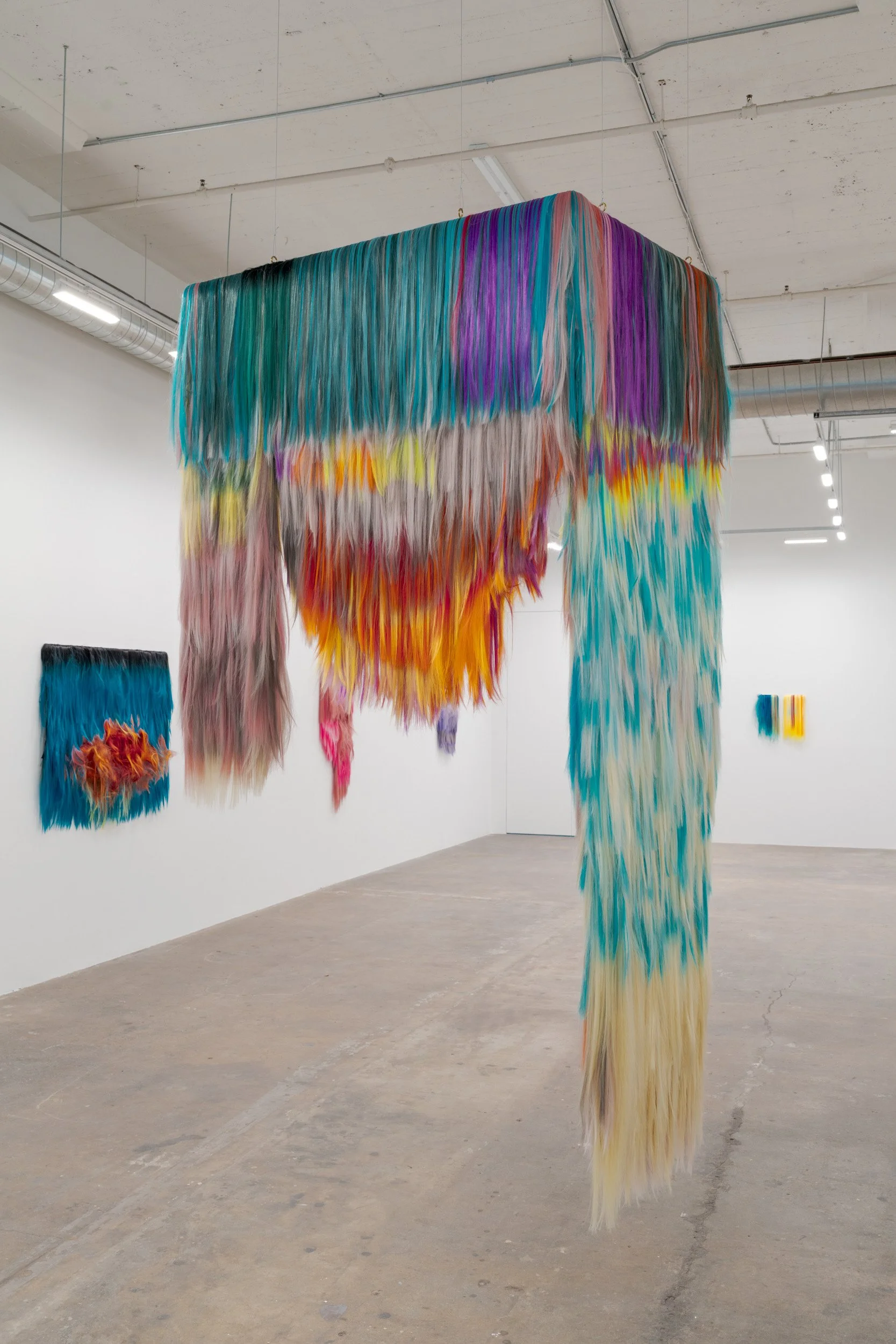
In this interview, we sit down with the self-taught, London-based artist to explore the delicate contradictions at the heart of their practice. Working at the intersection of painting and sculpture, the artist transforms synthetic hair into vibrant, weightless installations that negotiate space, political identity, and ancient symbolism. From the spiritual resonance of sacred gardens to the dynamic energy of their upcoming studio near Tate Modern, our conversation uncovers how memory and color offer a pathway into profound human connection.Your work exists in a state of fascinating paradox—it is incredibly tactile yet immaterial. What draws you to medium choices that live in this in-between space?
It stems from a few major reasons. Before working with sculpture or painting in contemporary visual art, I was working with carpets and rugs. I felt a strong connection to textiles and their heritage, but I wanted to engage with that history in a way that wasn't strictly traditional.
As I developed my practice, I searched for a material that could capture that specific quality. I am deeply in love with painting and equally in love with sculpture, but I don't see myself exclusively as a painter or a sculptor—I exist somewhere in between.
Compositionally, this feels like a patchworked approach to art history. Throughout history, painting was rarely isolated; artists constantly integrated materials like carpets, tiles, or glass. Choosing a material connects your work to a specific era. For example, working with silk immediately speaks to a dialogue from three hundred years ago, whereas synthetic fiber speaks directly to the present moment.
How important is that sense of time passing—and the awareness it brings to the immediacy of the present moment? Is that something you find yourself thinking about constantly?
Culture carries messages from history, offers something we need right now, and projects ideas into the future. Art and culture exist between timelines, allowing different eras to inform one another.
I want to maintain that continuum in my work. Because I exist in the present, I choose synthetic materials, but there is also a specific reason why I use hair. In my home country, hair carries a complex history, and currently, the hijab is a major central issue.
I found myself asking why we are so sensitive about hair across global cultures and religions—whether in Buddhism, Sikhism, Hinduism, or Islam. Hair always carries intense sensation, limitation, and meaning. Through my research, I realized that hair is one of the primary tools humans use to gather information from their environment.
For instance, if a cat senses danger, its fur reacts instantly, turning into an antenna to absorb sensory information. Similarly, when a woman experiences deep trauma or sadness, a common response is to shave her head as a way to physically disconnect from the sensory information around her. Hair has always been unique to the human experience, and because art is a human-to-human dialogue, it felt like a vital medium to explore.
Where did your initial fascination with the topic of hair and its cultural connotations begin?
It started with a fundamental question: Why is there a desire to restrict or remove it? Why are generations of women choosing to stop adhering to rules that have been enforced for two or three thousand years?
The answer lies in access to information. Today’s world is saturated with information, and people want direct access to it, whereas traditional structures try to enforce old rules—often without even understanding the original stories behind them. So much of human history around hair has been forgotten.
I’ve even tried to approach the biological aspect of hair by attending major specialized academic conferences. I asked the organizers if I could join, but they told me, "Listen, you wouldn't understand what we're talking about—this is strictly for researchers and professors, not even regular doctors!" But I keep pushing to understand it because it fascinates me.
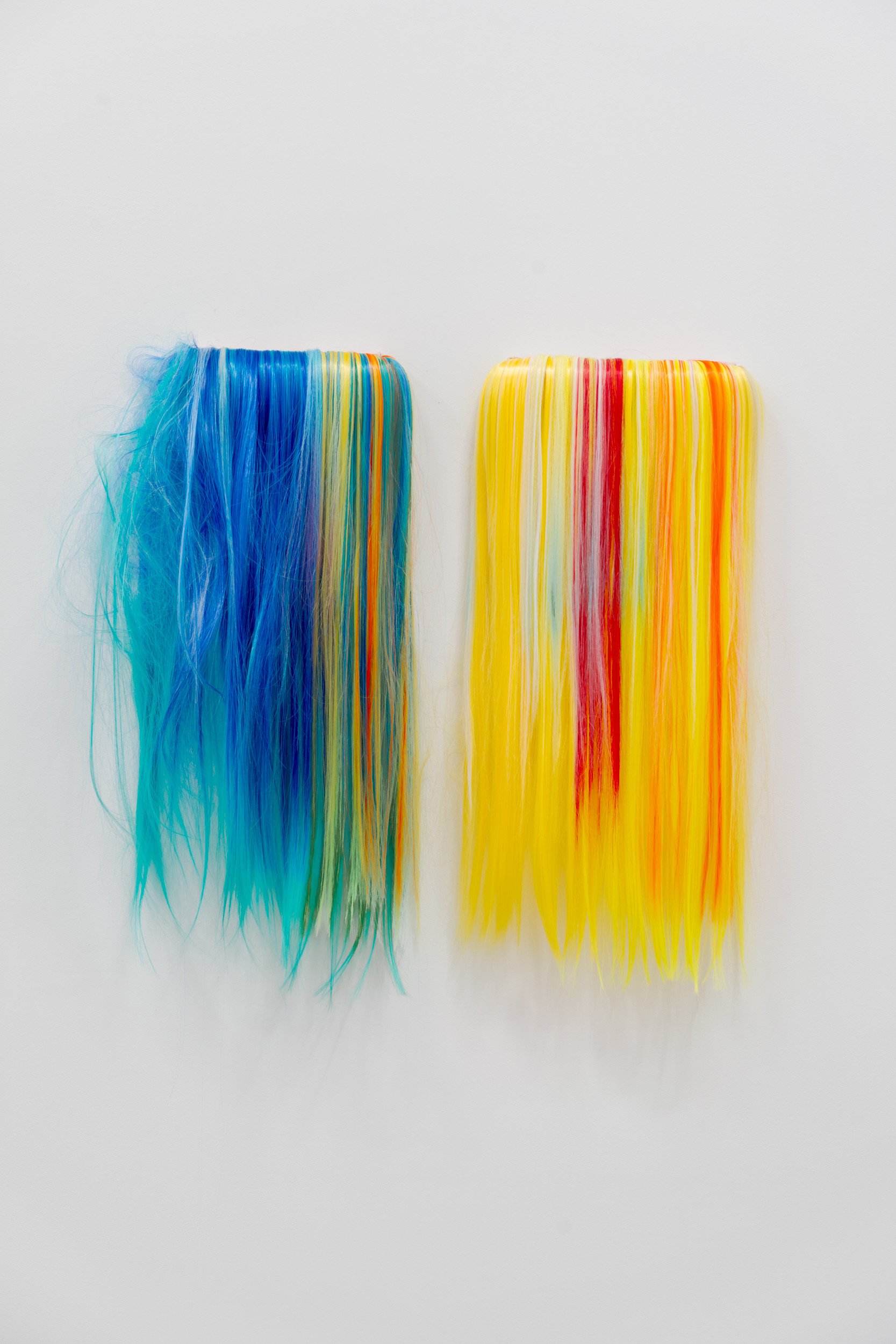
The fact that the hair you use is synthetic is one aspect, but your color choices are extraordinary—it’s one of the most striking visual elements of the work. Is the vibrant color palette something that emerged throughout your research, or is it purely an aesthetic choice?
It’s a mix of both. My culture is famous for its history of color, but historically we relied exclusively on natural dyes.
Synthetic and fluorescent tones represent a totally new opportunity for me to play and explore. Historically, we never had the chance to use fluorescent greens or intense oranges paired with vivid blues. These synthetic hues offer a fresh language that belongs to our time, and I want to use it.
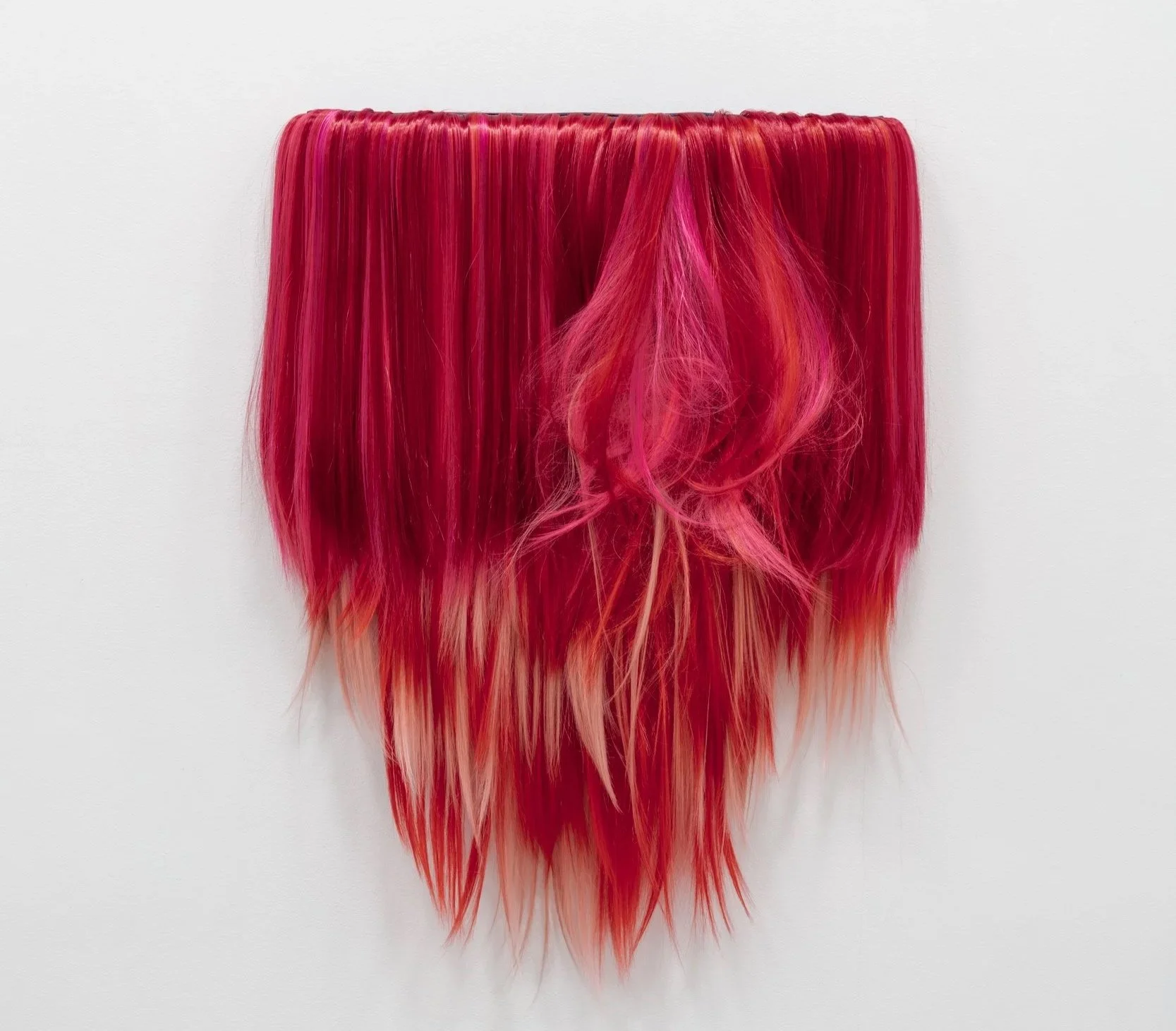
Does that playful experimentation with color serve as a way to balance the heavy conceptual and historical weight behind the work?
Yes, exactly. It brings a sense of playfulness and joy into the studio.
Beyond the concept, the work is undeniable in its visual beauty. Do you view aesthetic beauty as an inviting entry point into tougher, more complex conversations?
I believe artists have a fundamental commitment to beauty. Throughout history, the elements that endure are beauty and meaningful messages. You don’t look back at history to find messages telling people to create destruction or live in dirtiness; human beings naturally seek out beauty to elevate their lives and live better.
To me, abstract beauty isn’t meaningless. It acts as a key to enter a journey where you might receive a message, spark your imagination, or see something from a completely different perspective.
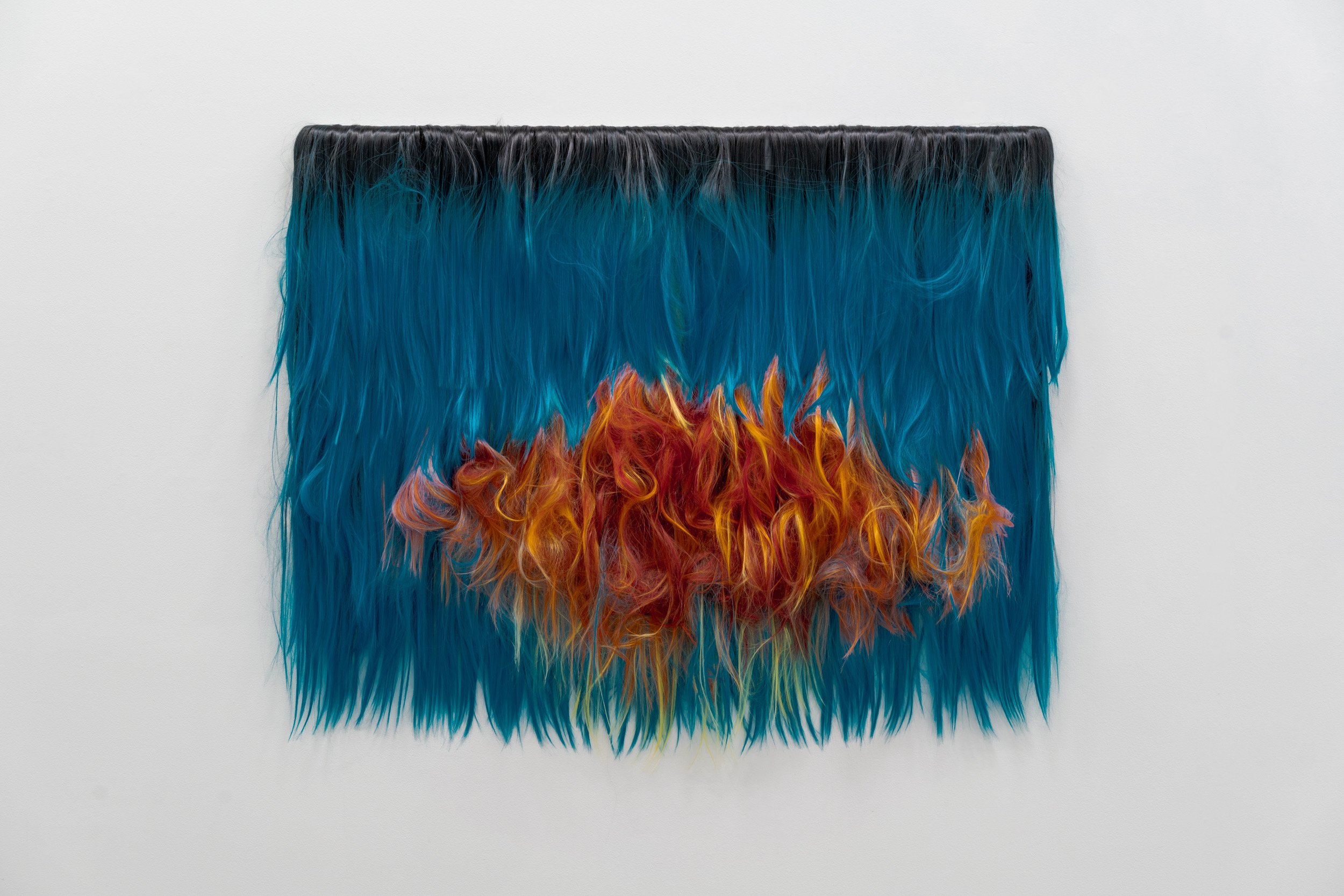
While your work engages with collective history and cultural memory, it also feels intensely personal and intimate. Is there a boundary for you between creating autobiographical art and touching on collective memory, or are those two forces inseparable?
They are completely inseparable—you need both together, like instruments in an orchestra.
When I’m working in the studio, the process is very intuitive. I might tell myself, "Okay, now I need a calm blue," but in that very moment, my mood shifts and I decide to bring in a vibrant pink instead. It’s about following the emotion of the moment and seeing how all these different colors and feelings can exist together.
How does that balance of personal and collective memory translate into your practical research?
I often look to traditional environments for inspiration. For instance, I’ve traveled to live alongside nomadic weavers in rural villages who craft traditional carpets, studying how they translate memory into their work before I bring those ideas into my own canvases.
Nomadic weavers often work inside their tents during the winter because they can't farm outside. While enclosed in the cold, they weave vibrant landscapes of spring and summer from memory. If I asked you to recall last spring, your mind wouldn't recall every single day—it compresses the entire season into a single visual memory. I try to approach my work in a similar way.
Right now, I’m developing a project for an upcoming exhibition in Los Angeles that centers on my motherland and the ancient Jiroft civilization. My family comes from that region and is very prominent there, so growing up, I had access to historical archives, ancient sites, and storage artifacts. Those original artifacts lost their vivid colors over thousands of years, leaving behind raw clay and stone. In my new work, I am reimagining those historical designs through my own eyes, heart, and emotions—filling them with vibrant color and modern life. It’s a synthesis of the personal, the historical, and the speculative.
You’re based in London now, but you travel back home often. Moving between two vastly different geographical, cultural, and social environments, how has that shaped your artistic identity and the way you navigate the art world?
I relocated to London about two years ago, though I began exhibiting across Europe ten years ago. Living in a major contemporary hub like London or New York is essential because it gives you the platform to share your heritage while learning from and studying other global cultures.
When I first started working with hair over a decade ago, there were few artists who were using it as a primary medium. Today, it has grown into a major global movement with more than thousands of artists exploring it. Being here allows me to observe these movements firsthand, learn from them, and contribute my own voice to the evolving narrative.
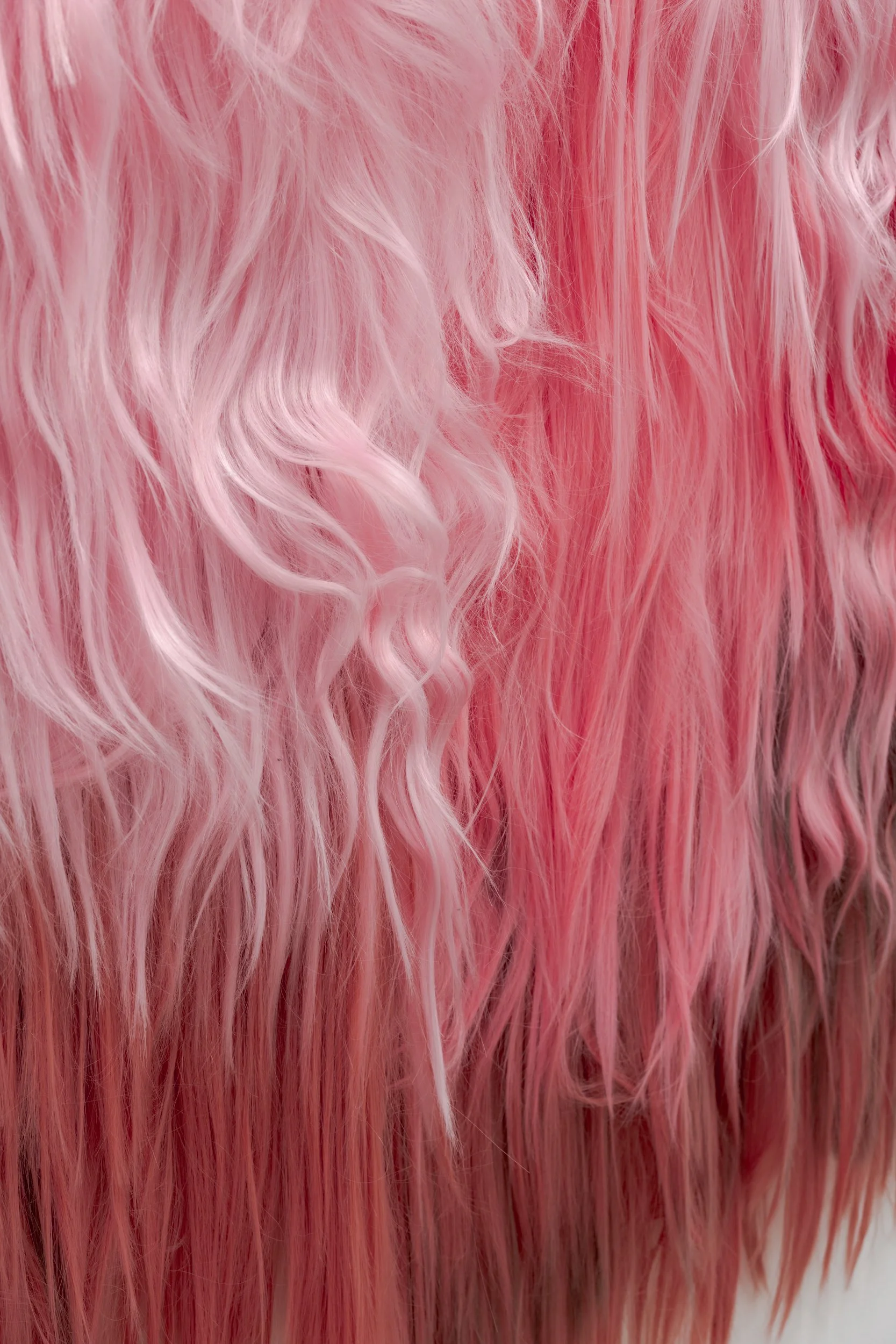
Returning to the recurring motifs in your work, deep dives into your practice often highlight gardens, mythology, and spiritual symbolism. Where do these themes stem from?
I consider myself a deeply spiritual person because art and spirituality have always been linked throughout history.
Growing up in a very low-income family, I didn’t have the opportunity to attend high school or university—I am entirely self-taught. During painful or difficult moments in my childhood, imagination was my only escape. I used to imagine a sacred, holy garden filled with protective angels. That space became a core part of who I am.
Sometimes I joke with myself that maybe we aren't creating art for other humans, but as a report sent back to gods or angels to translate what life on Earth feels like! Working within the motif of that garden for twelve years hasn't limited me; digging deeper into the same place reveals new paths, unmapped corners, new trees, and fresh flowers. I translate those feelings into abstract forms—not literally drawing a bird or a wall, but capturing the feeling of being in that sanctuary.
Do you have a favorite type of wildflower or landscape within that garden?
When people ask me to pick a favorite color or flower, I never know how to answer because I genuinely love all of them! Each has its own distinct beauty. But within that internal garden, I prefer open, agricultural landscapes over dense jungles—places where you can see the horizon, sit quietly with wildflowers, and just absorb the space.
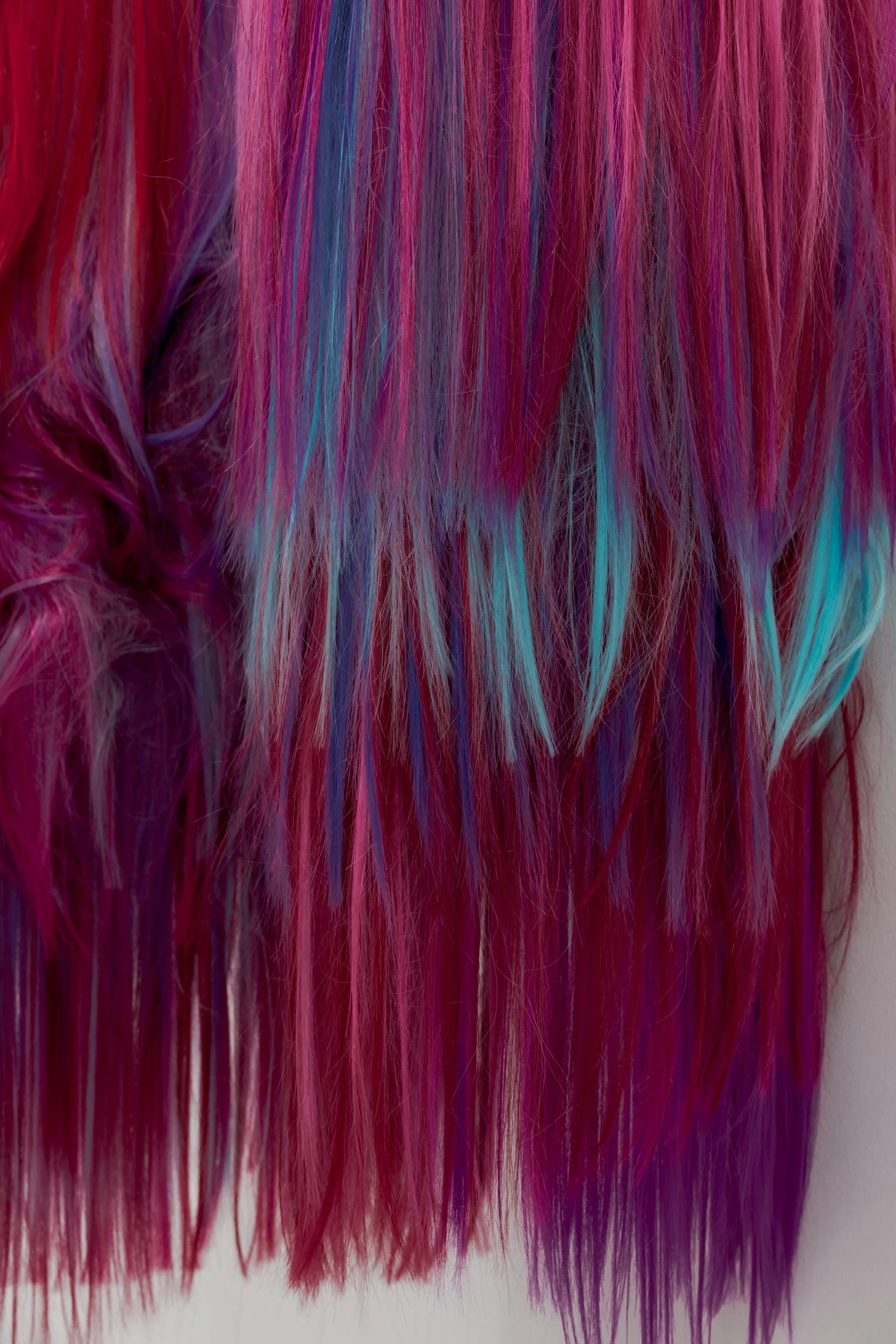
Looking ahead, are you currently building toward a new body of work, or are you taking a moment of pause?
I’m always working. My studio neighbors know I arrive by 5:30 or 6:00 in the morning and work straight through the night—it’s very labor-intensive!
Right now, I’m preparing to move my practice into a massive new studio space in London near Tate Modern. It’s a first floor office space over 300 square meters, which will allow me to scale up my sculptures significantly.
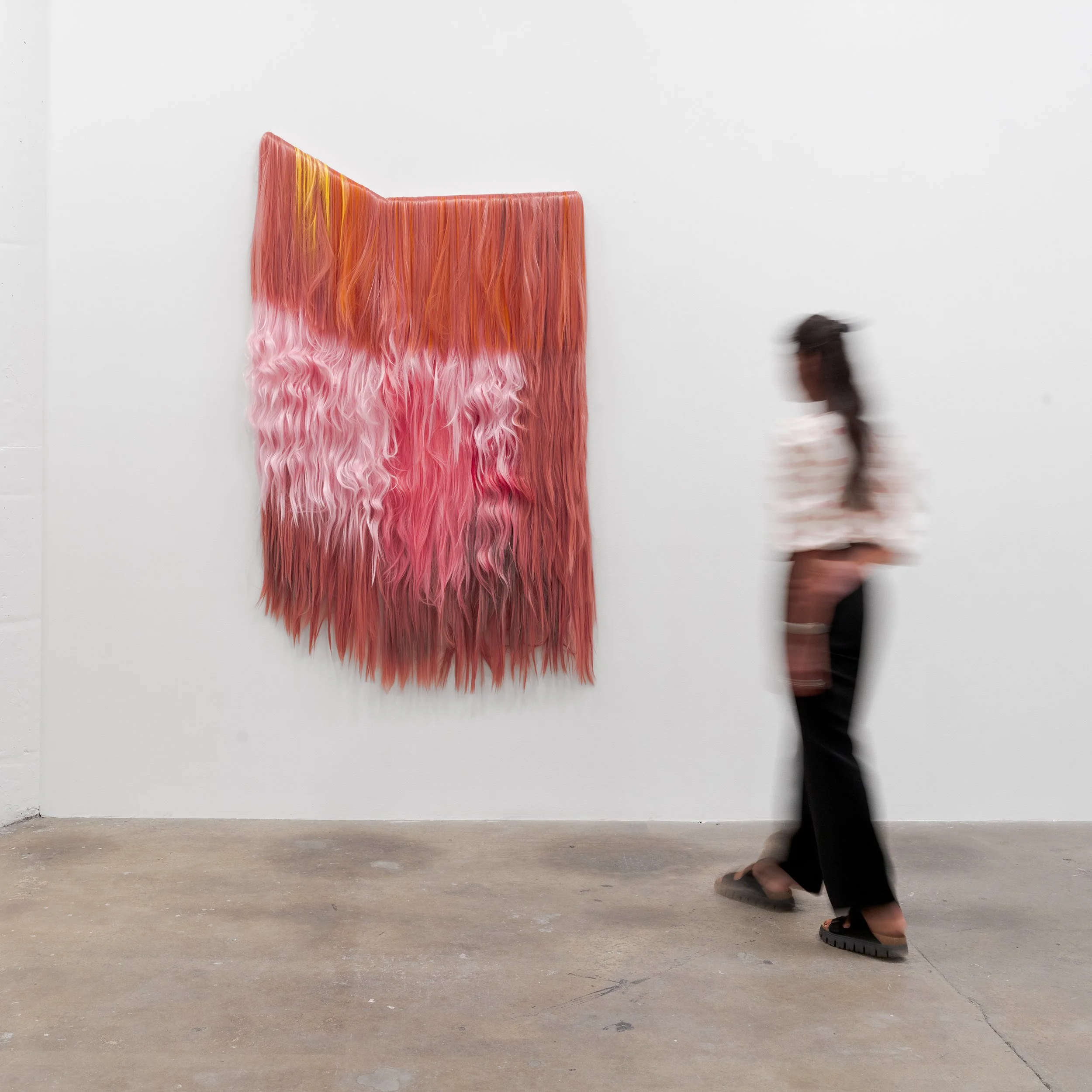
For example, I recently created a piece that captures an angel's dress made of vibrant pink fibers. I chose not to depict the face because I am not the person to define an angel's face. Instead, I sculpted the dress left behind as she passed through a portal. Life is a series of portals: we pass through one moment, assume a new identity, and then move through the next.
Looking at those pieces, there is such a luminous quality to the material—it feels as though light is glowing from inside the green and pink fibers.
That internal radiance is exactly what I strive for—I want the colors to feel as though a light source is alive right behind them.