
Karimah Hassan: Art, Intuition, and the Slow Formation of Self
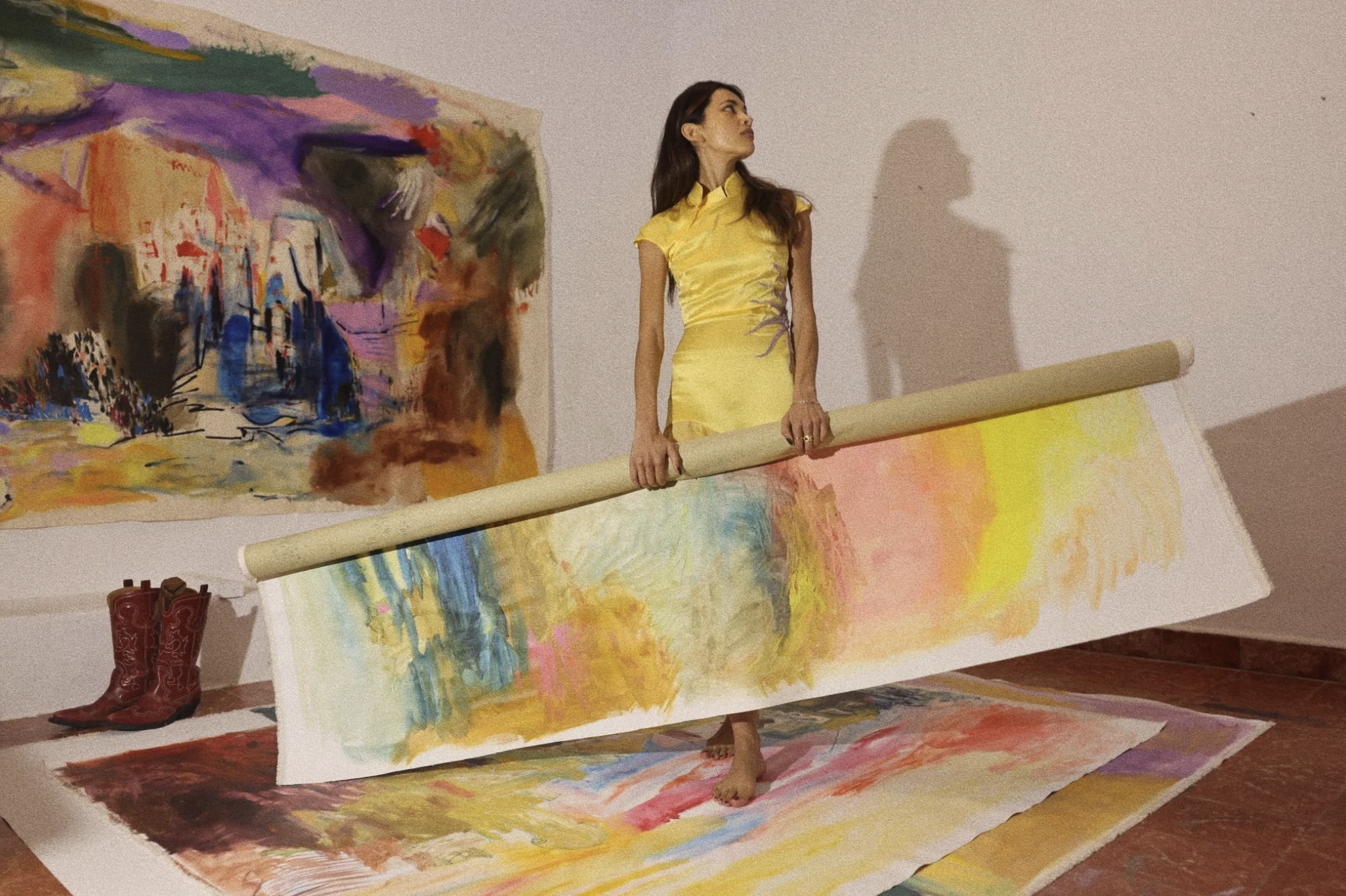
Karimah’s practice unfolds, layer by layer, flirting with a plethora of ideas as opposed to offering one fixed conclusion. What emerges is a way of thinking about art as something lived: a process of intuition, patience, and continual becoming. Whether working through personal archives, abstract forms, or shared spaces, her approach resists urgency in favour of depth, allowing meaning to surface over time. At a moment when so much creative pressure leans toward immediacy and visibility, her perspective feels both grounding and radical. There is trust in not knowing, in letting work take shape when it’s ready, and in understanding art not just as output, but as a way of moving through the world with intention, care, and openness.
In this conversation, Karimah reflects on navigating uncertainty, embracing the slow formation of identity and practice, and the evolving body of work that connects her to her family’s history. Speaking with openness and clarity, she offers insight into what it means to create from a place of instinct, responsibility, and care.
You speak about beauty in a very particular way, where did that perspective come from?
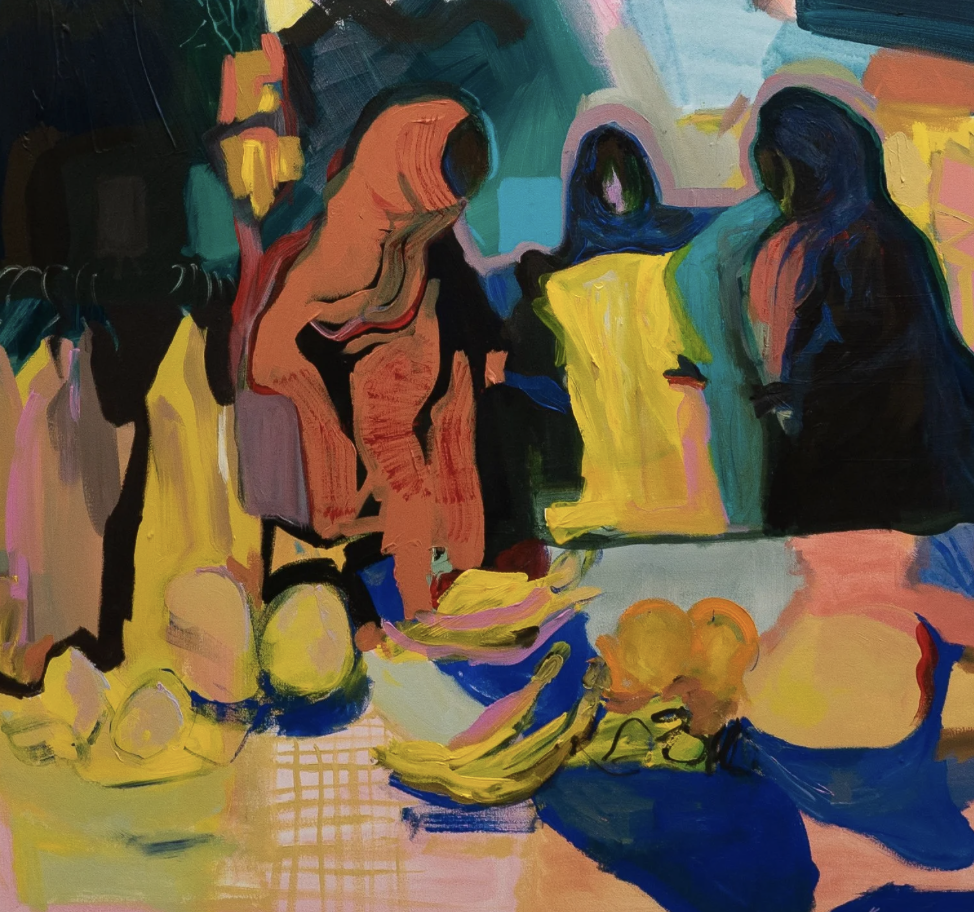
I was trained as a designer so I often think about the function of art; seeing beauty within utility. I don’t see beauty as medicine, I see it as something human. More importantly, attention to beauty is a human art.
And that’s also where my love for fashion came. It offers a unique way of perceiving a person, rather than placing them into a fixed paradigm. Looking back, though, I carried a lot of inner tension and faced obstacles around feeling like an outsider. There was also this pressure, especially in the 2010s with the whole “boss babe” era, the “30 under 30,” “40 under 40.” It felt like you had to have everything figured out and make it happen instantly.
And I remember thinking, I’m stumbling through all of this.
There was so much pressure, especially when I didn’t even know what I was doing myself. But now it feels like it’s coming together. I’ve always loved life and poetry, but I didn’t know I could access being a writer. And it’s the same with painting, you become a writer by writing, you become a painter by painting.
With your practice spanning so many different outlets, and your own personal evolution alongside it, where do you feel you are now in your career?
I feel like there’s a thread that’s coming together. If I imagine myself maybe 40 years from now, I’d probably see this moment as things just starting to come together, that this is just the tip of the iceberg. And I really believe that, because my interests are so wide and diverse, and they go beyond just painting. I think I’ll be able to make sense of this moment looking back. This is a time to keep going, and becoming.
Standing on the cusp is one of the most exciting places to be, it’s brimming with potential.
It’s very fragile, because I’ve had this vision and this self-belief for so long, but it sits inside until it’s ready to be birthed. For me, I’m much more about showing than saying. I keep things internal until I can express them properly. It’s a great place to be, because maybe those projects and ideas that have been forming for two, three, four years and I didn’t have the understanding, knowledge, or resources before. And now, it’s starting to become tangible. So I feel safe enough to start speaking about it.
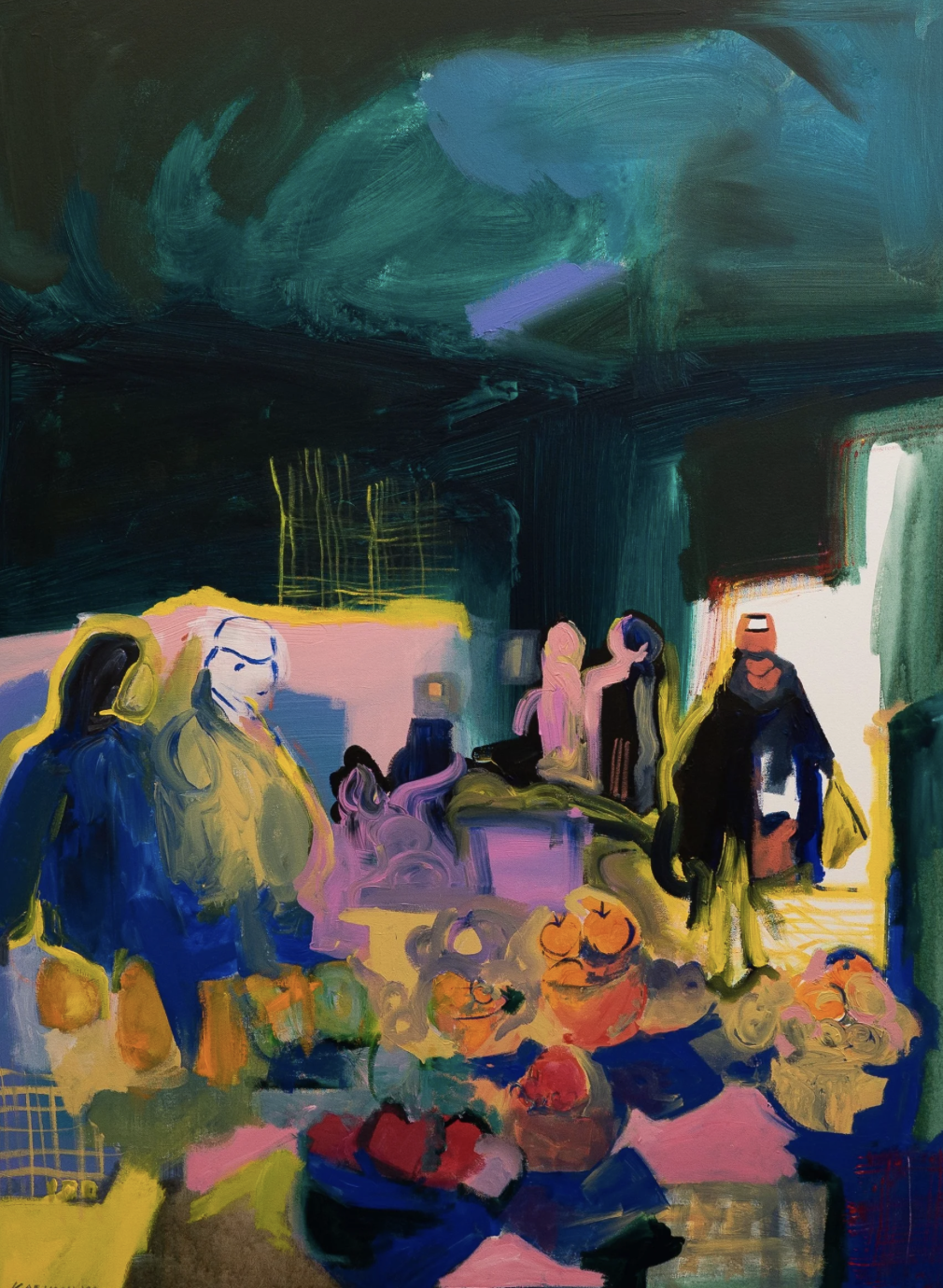
Your work seems to move between quiet studio moments and more shared, public spaces. I’m curious how you experience that movement yourself: Does your practice feel solitary, or is it always in dialogue with others?
A bit of both. I like structuring my day almost half and half; half solitary, and then being out with people afterwards. I like grounding myself in my own practice first, in my own knowledge, intuition, and process, but I really feel the power of working with others too. I’m quite introverted, so I need time alone to be able to do the social stuff. It takes it out of me. But I know it’s necessary, and I know it feeds me. I see the power in performance and bringing work to people, so I step outside my comfort zone. It feels like a kind of duty.
I’d love to expand on that. What kind of duty?
It’s the duty of envisioning what the room is going to be and need, how people are going to feel. I have to ask, “What’s my intention? How do I want people to feel when they leave?”And then actually leading with that.
A lot of people say they want to do things, but actually doing it…making it happen, that takes something. I get nervous every time before I present my work. But that feels important. Because there might be people from all walks of life who come and share their poetry or art with me, and they’ll say, “I’ve never shared this with anyone before” and it's because I’ve given them permission by doing it myself. If I can do it, you can do it too.
So even when it’s uncomfortable, you have to push through. It’s part of the role of being an artist. If it was just a hobby, I wouldn’t have to share it. I wouldn’t have to be uncomfortable. But because it’s a profession, it requires different roles.
Within your process, you've spoken about the need to ground yourself. How does that unfold?
It changes depending on the season of my life. When I lived near the sea, grounding was the ocean. Now I’m in London, so it’s baths, water, whatever I can access. I’m a very spiritual person, astrology, crystals, ceremony, all of it. Life feels like a ceremony to me. Grounding is touching base with writing, painting, imagination, and action. Even simple things like moving my body daily. There's also channeling, stream-of-consciousness writing. I think artists are like bridges between different worlds.
When a new body of work begins to take shape, what usually appears first? Is there a yearning to create?
Yearning is a really good word. There’s a pulling, it starts as a spark, a thought form. I then write it down or store it mentally and begin investigating it.
As I move toward it, it moves toward me.
For example, I’m doing a residency in Morocco. I don’t know what I’m going to make, but I know the feeling…olive greens, red clay, blues. Very earthy. I can feel it, but I don’t know why yet. Then I move into the practical, what size canvases, how many works. It’s a dance between intuition and structure. I literally talk to my projects like they’re alive. I ask, “What do you need from me?” It helps me get out of my own way.
Some projects take years. The body of work I’m making now about my family has taken four years. It couldn’t be rushed, it’s emotional, it involves other people, conversations with my father. It had to come when it was ready.
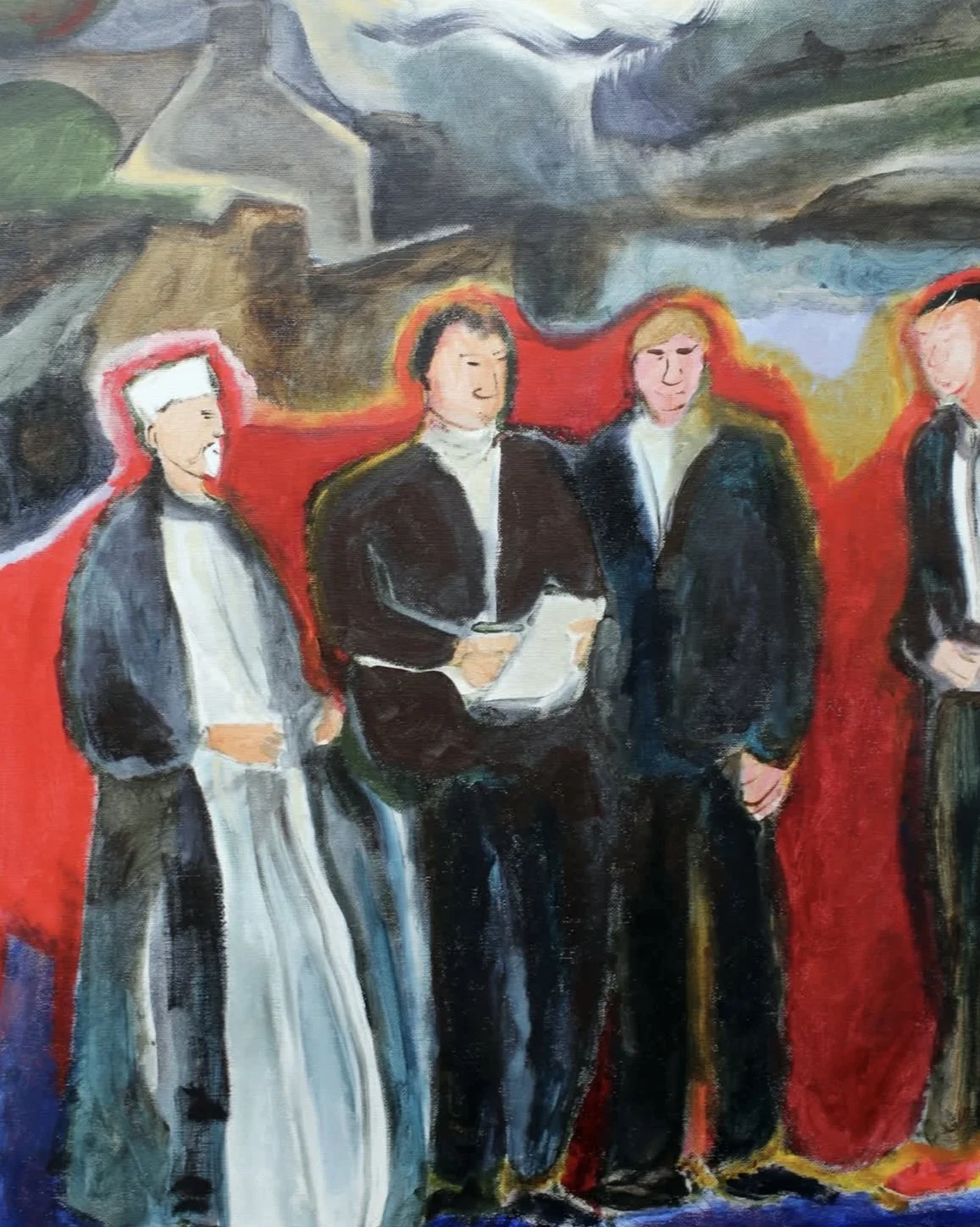
Let’s talk about your family archive project.
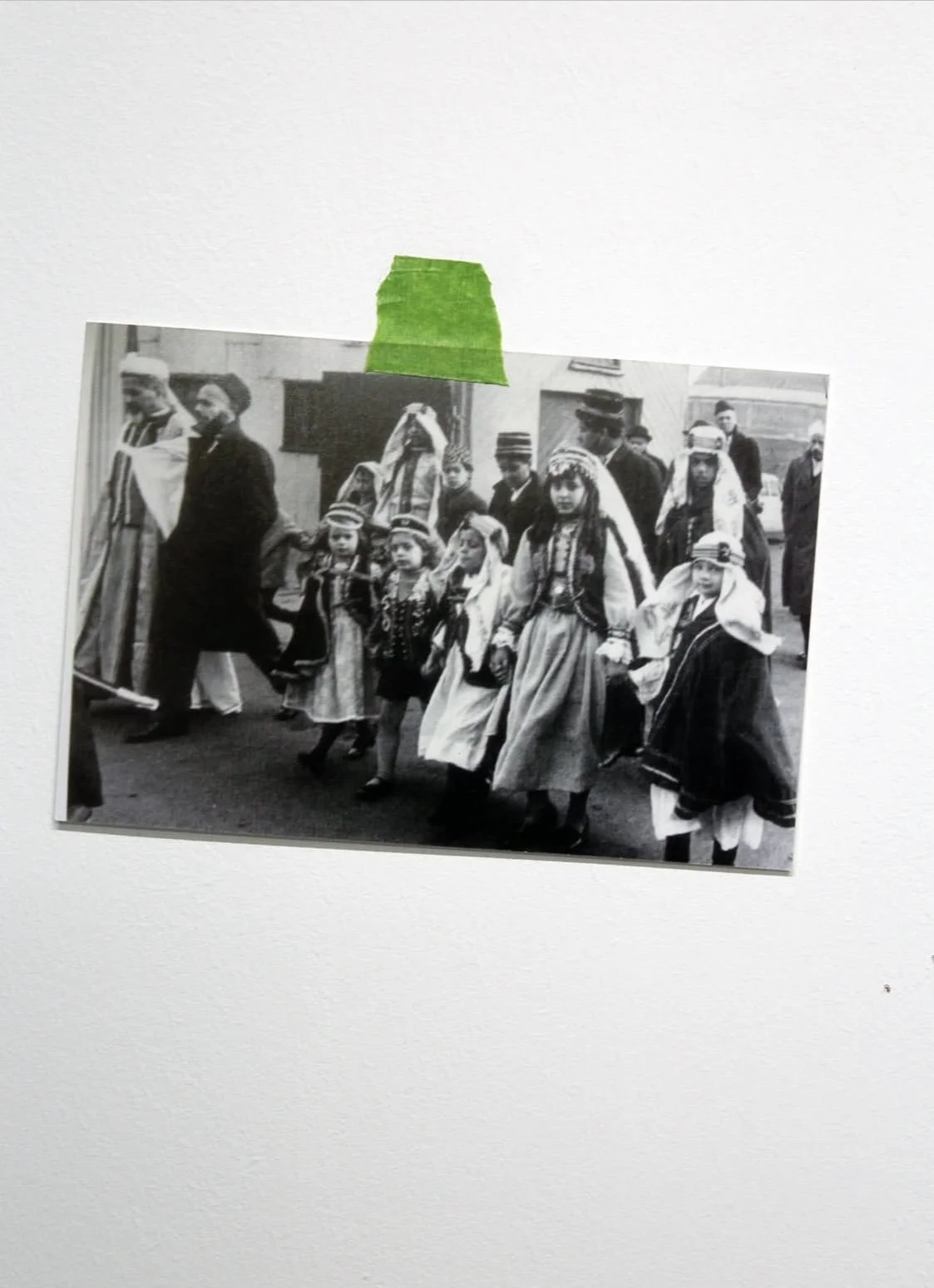
It started as something deeply personal. My family history is really rich, Tiger Bay, Cardiff docks, migration between Yemen and Wales going back to the 1920s.
These stories aren’t really told. And I realised how easily they could be lost.
So it became more than just a personal project, it’s about preserving history. These archives aren’t just nice-to-haves; they’re keys to understanding bigger social and political patterns. We keep repeating cycles, and it frustrates me. But when I look at patterns across generations, it helps me understand things more clearly.
I’d love for people to archive their own families, interview grandparents, write things down. Everyone has something worth preserving.
What would you hope an audience takes away from this body of work?
First, education, that people understand the history of multicultural communities in places like Cardiff. Second, the beauty of cultural blending, Wales and Yemen, these identities coming together over generations. And third, a simple love story. My grandparents fell in love and got married when it wasn’t easy. That’s something everyone can connect to.
If people can feel those three layers, I’d be really happy.
Do you find that within your process, you often return to these themes?
There’s always this layering of colour and light, and emotional rawness. I like leaving parts unfinished, letting the emotion show through. Even when the work changes, there’s a confidence in colour and trusting emotion. Sometimes I treat each painting like a poem. Writing takes me somewhere else. It’s like tapping into a universal mind. It reminds me that there is something special in those moments of truth.
And then there’s always this thread of activism, leading with love instead of hate. That’s been there since the beginning.