
Jo Hummel: Exploring Consciousness, Materiality, and the Geometry of Experience
Jo Hummel is an artist whose work navigates the intersections of consciousness, materiality, and geometry. Rooted in a deep engagement with phenomenology and informed by her life on the Isle of Wight, Hummel creates paintings and installations that translate internal states into colour, form, and rhythm. Her practice draws from natural materials, the cycles of the environment, and the poetics of science, producing work that is meditative as well as precise. Our conversation explores the philosophy underpinning her process, the dialogue between intuition and structure, and how her work can extend beyond the gallery into spaces of healing and reflection.
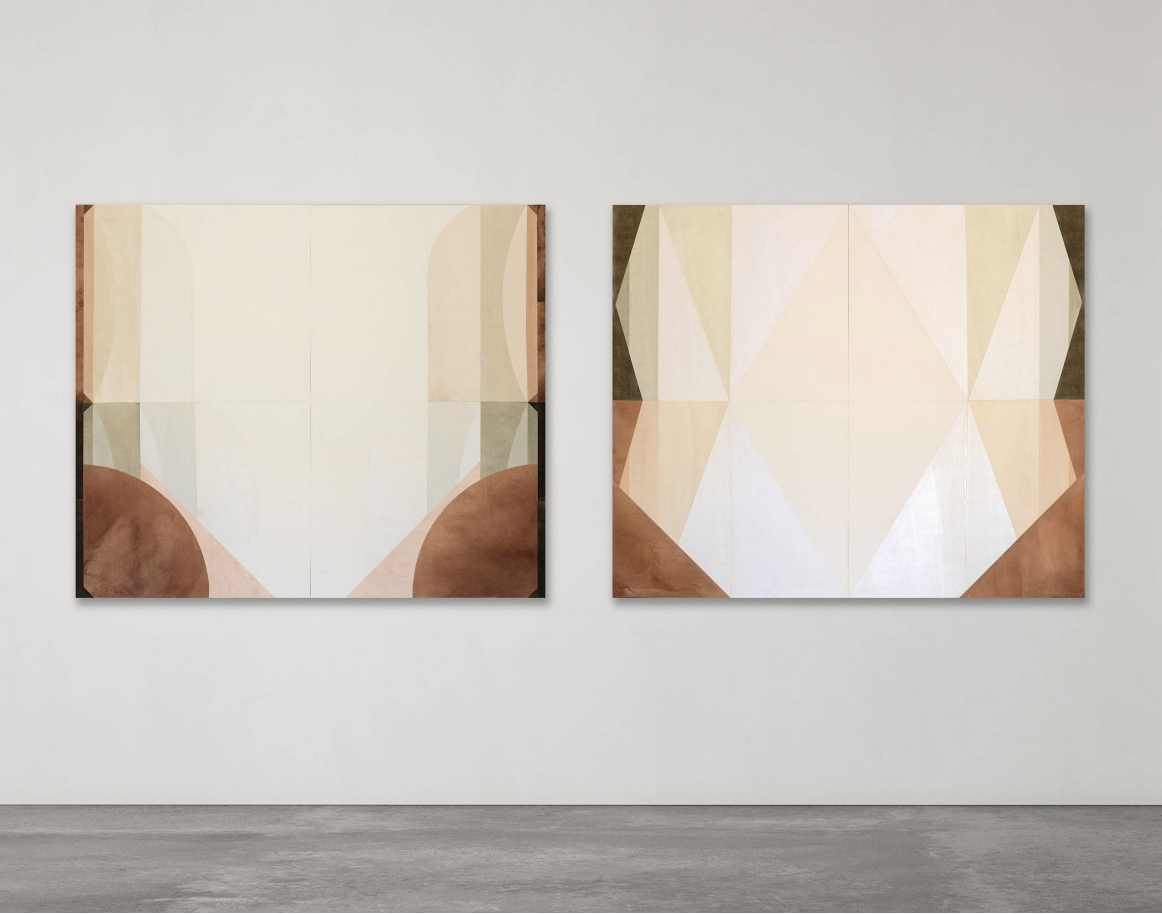
Jo Hummel, Stars Wrapped in Skin II and III, Clay pigment on paper and poplar ply, 150 x 180 cm, 2025.
Let’s begin with your most recent exhibition, Stars Wrapped in Skin. It takes Rumi’s words as a quiet point of departure. When you were making these works, what did that line unlock for you conceptually or materially?
When I began making work seriously, I was interested in understanding consciousness. Much of my research centered on determinism and free will. I used my practice as a phenomenological process to experience my own qualia; the subjective experience of perception, as it’s called in consciousness studies. Colour became a vehicle to map my own mechanics of subjective experience; pleasure, discomfort, and asking myself why.
This ongoing interest led me to concepts like panpsychism and noetic science. Panpsychism suggests all matter holds the potential for consciousness; it just has to reach a complex enough state to “flower.” It touches on the idea that we are made of stardust…cosmic, recycled material. I think that's beautiful. Rumi’s line felt like the perfect poetic lens to describe this “conscious dust.”
Does your interest in these ideas stem from a background in philosophy or psychology?
I don’t have an academic background in philosophy, but for me, art has always been philosophy. It’s a window into thinking. Even without art, I often ask: what’s left? Philosophy, spirituality, science, all of that guides my practice.

Jo Hummel, Orrun II, Indigo and Clay pigment on paper and poplar, 60 x 50 cm, 2025.
Your practice is rooted in reduction, yet these new works feel sensorial and almost bodily. How do you decide what needs to be removed, and what must remain, for a painting to feel alive?
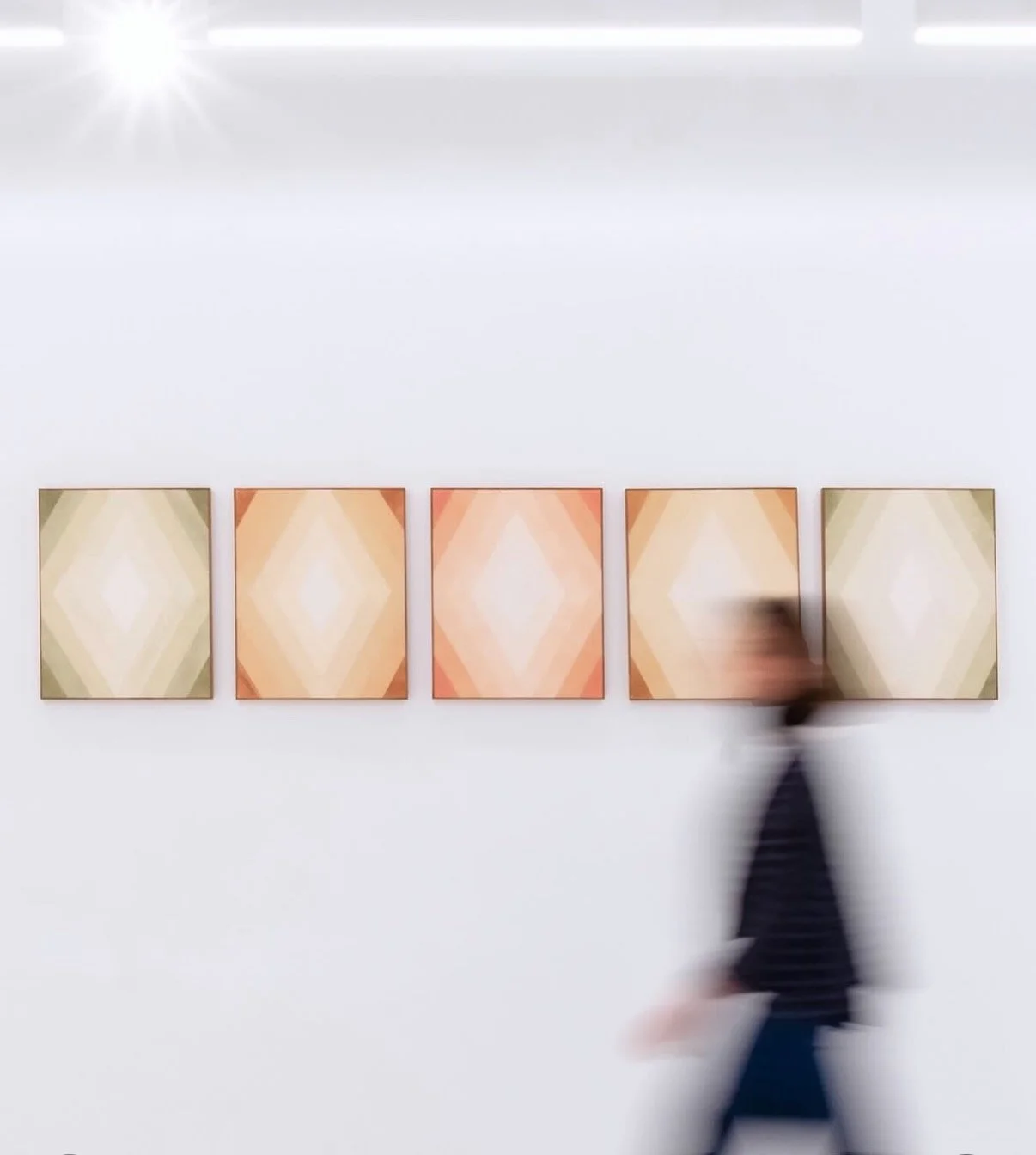
Feeling in the body is key. My internal sense of balance guides what comes next. I aim for a sense of equilibrium, how I know a work is finished is when my nervous system shifts. Working panoramically or pushing elements to the edge of the canvas encourages viewers to widen their visual field, which activates the parasympathetic nervous system, a “rest and digest” state. Intuitively, that’s what I’m striving for in arranging form: to evoke a bodily feeling.
So your goal is mostly serenity and calm. Have you ever created work intended to disrupt, evoke anger, or sadness?
There are chaotic interruptions. For example, a large wall installation at Saatchi Gallery was arranged randomly, I didn’t control the choice-making. It was almost an antidote to the usual bodily experience.
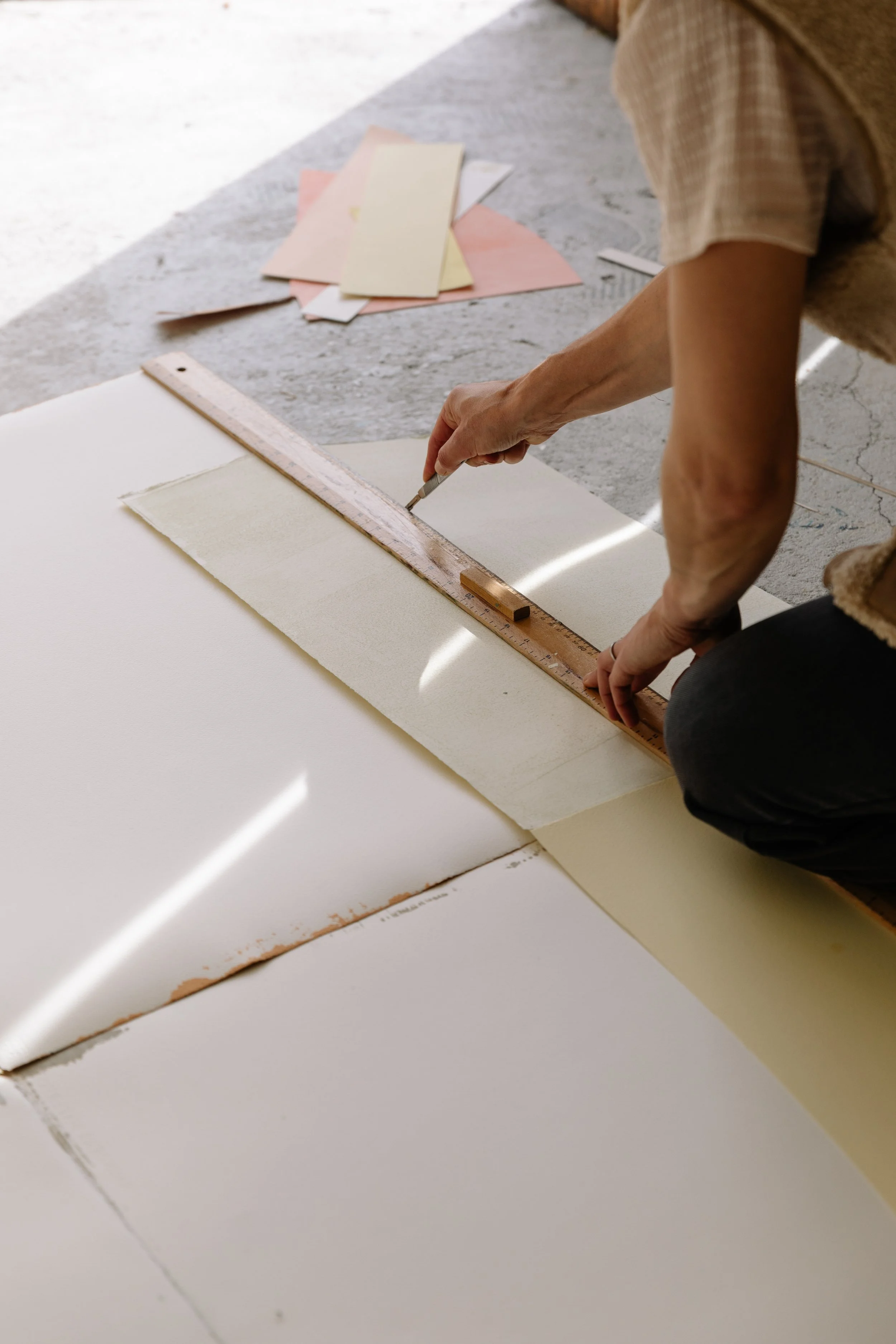
Colour feels especially charged in this body of work: less descriptive, more atmospheric. How are you thinking about colour in terms of emotion, structure, or energy?
Colour is phenomenological for me. In Barcelona, I sourced pigments from clay and chalk near my studio. The limited palette removed choice, creating a vernacular colour language. Conceptually, it’s elegant; aesthetically, the colors harmonize naturally. It’s more conceptual than visceral.
What does bringing literal earth into the work mean for your understanding of time, fragility, or permanence?
Using materials from the nearby environment ties the work to a specific place and moment. The earth dictates color and texture, embedding natural cycles into the work itself.
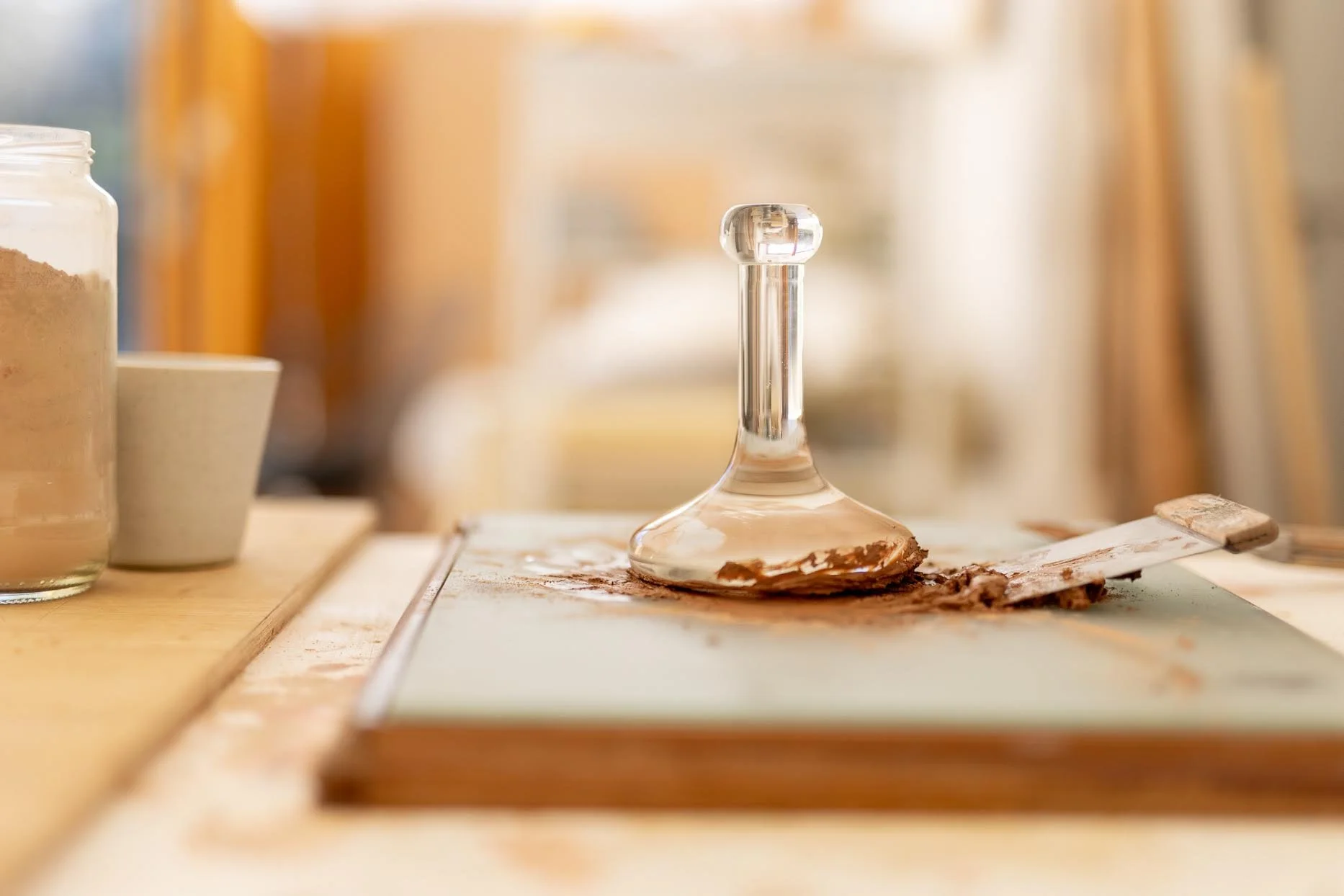
I love that, it's as if you’re creating a homage to the birthplace of the work. If we return to the compositional elements, geometry and symbol recur throughout your practice, but here they feel softer. How do you hold space for intuition within precise systems?
Geometry is fundamental, it’s the language of math, science, and the natural world. Even microscopic formations are geometric. Yet, I leave room for human imperfection. Subtle irregularities mirror the spontaneity of nature.
The idea of Sunya (void and infinity) sits at the core of your thinking. Do you experience the void as quiet, or charged with potential?
Charged with potential. Repetition and simplicity of forms create rhythm, opening internal space for both me and the viewer.
What do you hope viewers experience?
I make the work for the work itself. Abstraction allows the viewer to experience themselves. That engagement is magic.

Jo Hummel, Conscious Dust II, Pigment on paper and ply, 130 x 210 x 5 cm, 2025.
Living and working on the Isle of Wight offers a specific relationship to landscape and pace. How has that shaped your recent work?
Wide open spaces have always been essential for me. I relocated from London. I loved the city and I did all my training there, but when it came to making work, I needed to be in a natural environment where I could find my voice.
I’m a horse rider, and have three horses. Keeping the horses…it’s governed by the seasons and cycles. We also make our own hay. You can't put a date in the calendar for when you harvest. In that sense, I like being pushed around by the natural world, rather than having certainty dictated to us. Nature dictates the rhythms and seasons, and that informs the intuition, scale, and rhythm of my work.
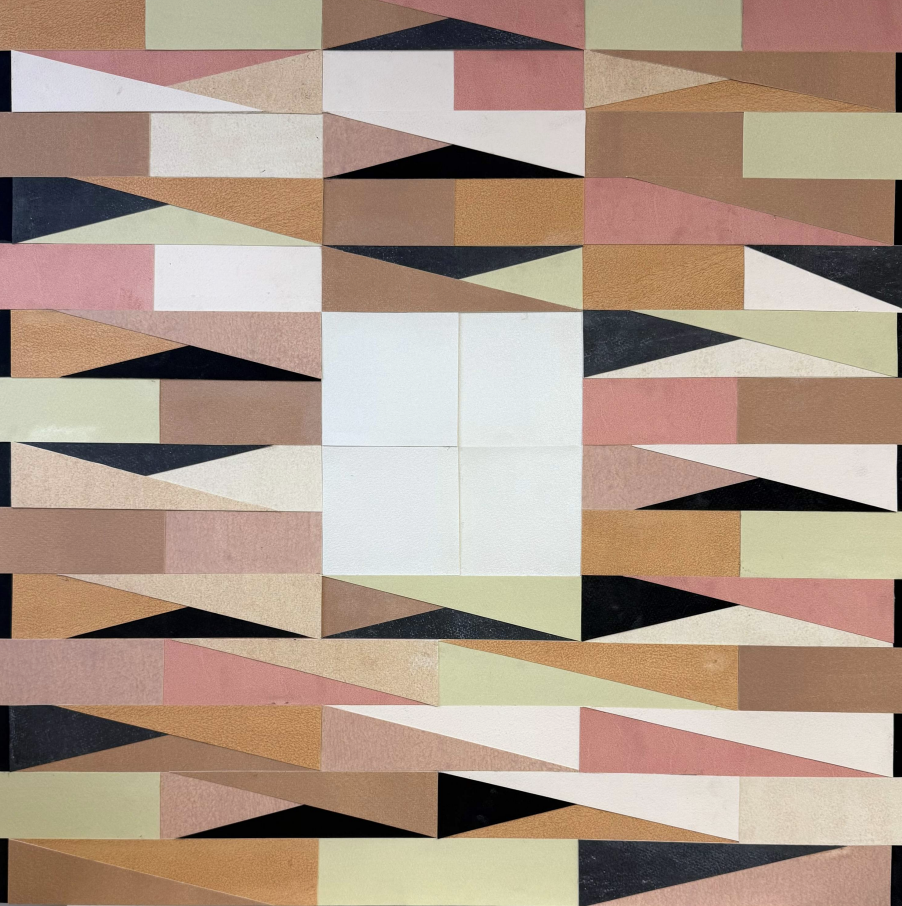
Jo Hummel, Aleph, Pigment and carbon on paper, 70 x 70 cm, 2025.
Soon you’ll find yourself in yet again, a completely different environment. In Spring 2026, you’ll begin your residency at Thread with the Josef & Anni Albers Foundation in Senegal. What are you most curious about?
I’m excited to experience the landscape and craft culture. I love textiles, weaving, dyeing, and indigo, and hope to see this firsthand.
How might the Albers approach to colour theory intersect with your own intuitive approach?
Albers approach treats color almost like behavioral science, exploring perception. It resonates with my own phenomenological pursuit to understand human experience.
Residencies often disrupt established rhythms. What do you hope the Senegal residency will loosen or reconfigure, rather than resolve?
I’m avoiding goal-orientation. I’ll bring materials and ideas, but I want to remain open and let the experience shape me rather than strictly following a plan.
And looking forward, do you have any exciting projects on the horizon?
I was recently selected to present work at the Cambridge Cancer Research Hospital. It’s exciting to place art in healing environments as it's really helped me understand, the idea of art beyond the gallery. Colour engages the limbic system directly, before intellect. Losing both my parents to cancer makes this personally meaningful.