
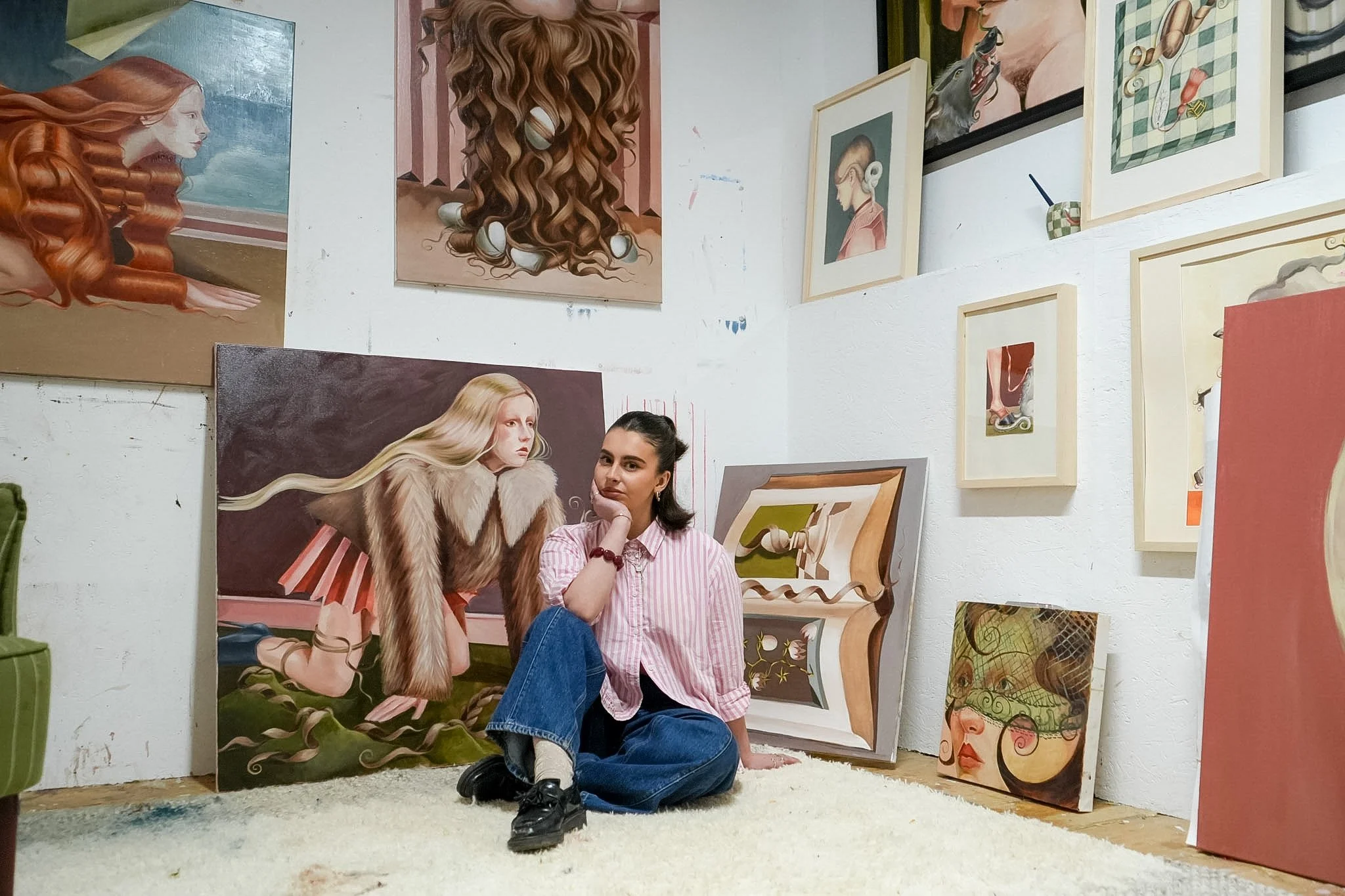
The work of Darcy Whent exists in the elusive space between what is remembered and what is constructed. For Darcy, painting is less an act of documentation and more a process of "auto fiction", a term she adopts to describe the instinctive restructuring of girlhood, domesticity, and the transition into womanhood. Rather than offering windows into a fixed past, her canvases act as tangible 'sentences' within an evolving personal liturgy, where the distortion of a memory often feels closer to emotional reality than the facts ever could. In this conversation, we sit down with the Bristol-based artist to discuss the "in-between" nature of her practice: the tension of the domestic interior, the symbolism of the outgrown shell, and why the act of misremembering is, in itself, a pursuit of truth.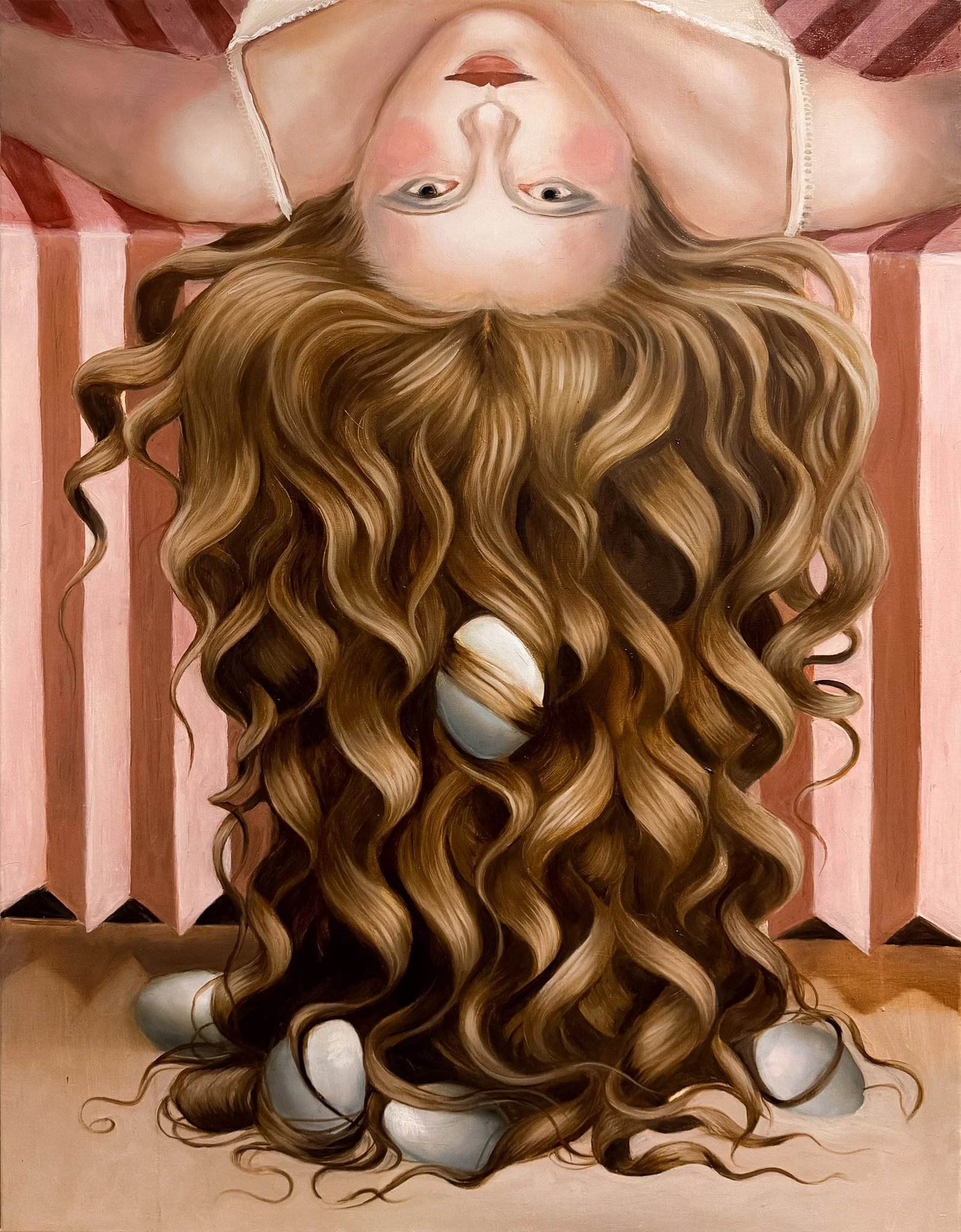
You often speak about the tension between childhood and adulthood. When you’re painting, does it feel like you’re reliving specific memories, or are you inventing something entirely new?
It sits somewhere completely in between. It’s not quite reliving and it’s not quite inventive. The starting point is usually a memory or an image that has stuck with me, anything that feels quite familiar.
I’m particularly interested in how a feeling or a memory shifts the more it gets repeated. The more it's repeated, the more it’s misremembered and restructured. Eventually, the painting itself becomes stronger than the memory because it’s the only thing that is tangible in front of you. For something that feels so fluid, painting feels so factual; it’s a statement you can’t really question because it’s living, whereas the memory isn't.
When you are restructuring these memories, what lens are you looking through? Is it a romantic lens or a more critical one?
I think it lives through both. I never try to make them feel too romanticized because often I’m reminiscing on things I really struggled with. But in a way, I’m also trying to manipulate my own brain to make something I want to see. I want to make something that serves me.
Sometimes I feel like I’m trying to convince myself of something that isn't necessarily true. I’m interested in the space where something is being reworked rather than just recalled. It’s about finding a truth that is personal to me and my experience.
Do you find comfort in that ambiguity, the tension of the in-between?
Absolutely. That tension of push and pull is what feels most true. There is a distorted nature to the transition from girlhood into womanhood. It isn’t linear; there’s no marker that says, "this is when you are a child" and "this is when you are a woman." When you are in that space without a marker, that tension becomes everything.
You’ve mentioned recurring motifs, hair, animals, interiors. How do these figures evolve, and do you create with a specific viewer in mind?
I actually never make work with the viewer in mind. I see my bodies of work as sentences in a narrative, each one is a chapter in an ongoing "biblical text" for me. It’s how I navigate the world.
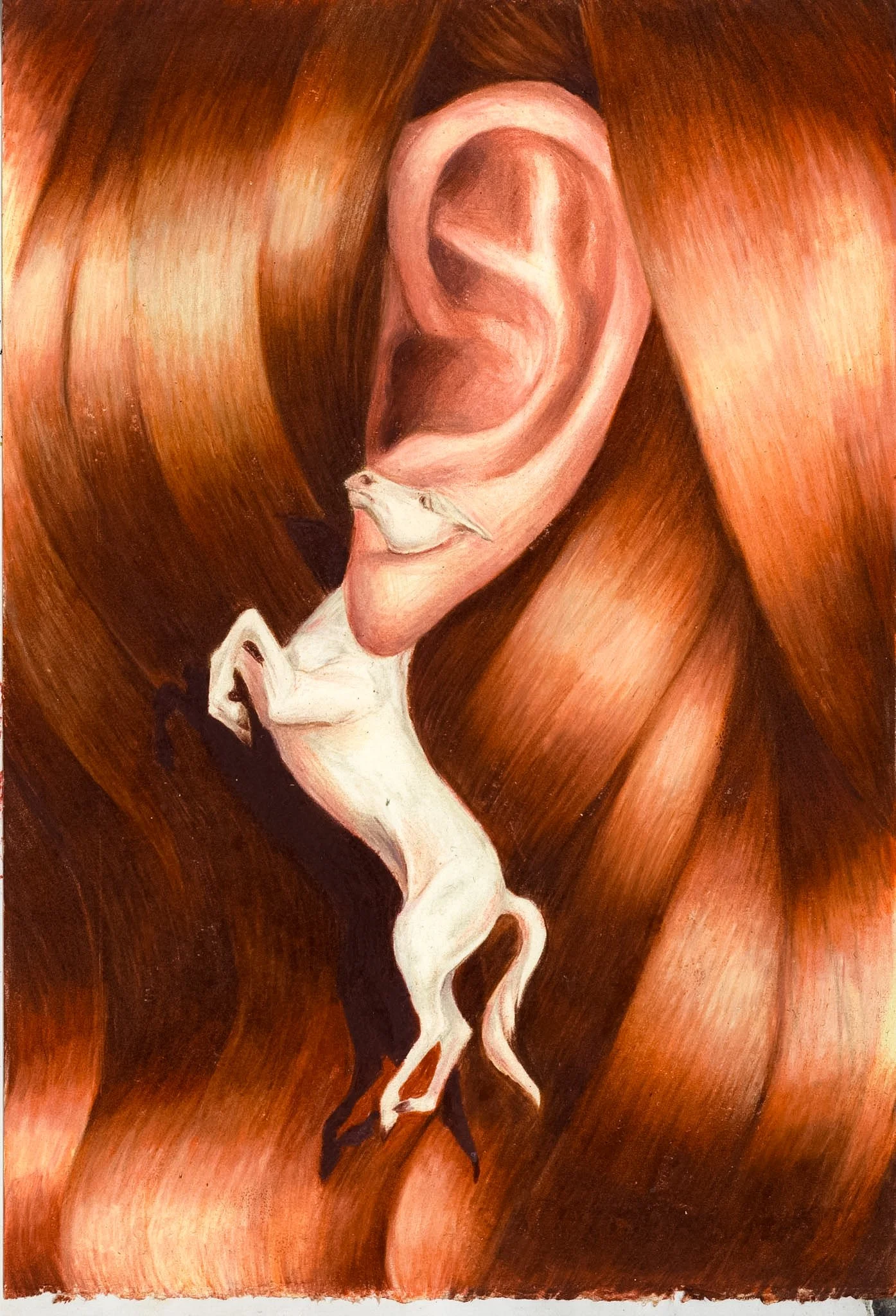
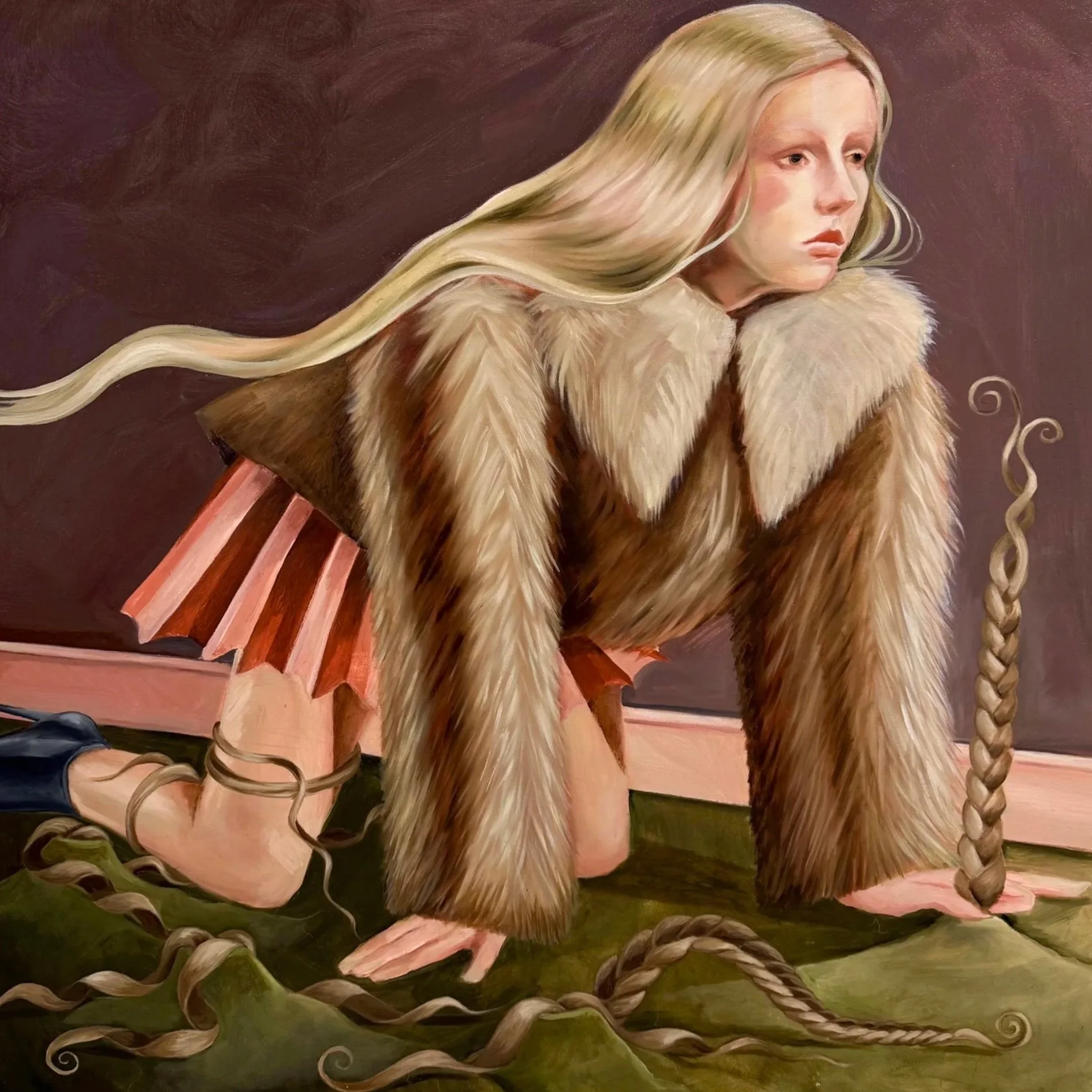
The figures aren't fixed symbols, but things I just can’t shift from my practice. I don’t think anybody should be forced to talk about something else when a subject is all-encompassing. For me, hair, animals, and interiors are familiar but slightly unpredictable. While these motifs are "for me," they also help the viewer adjust to the story. When we are children, we look for familiar things to relate to, and I don't think that really ever shifts when we're adults.
You’ve said your practice helps you navigate the world. Have you had any recent "epiphanies" while working through these themes?
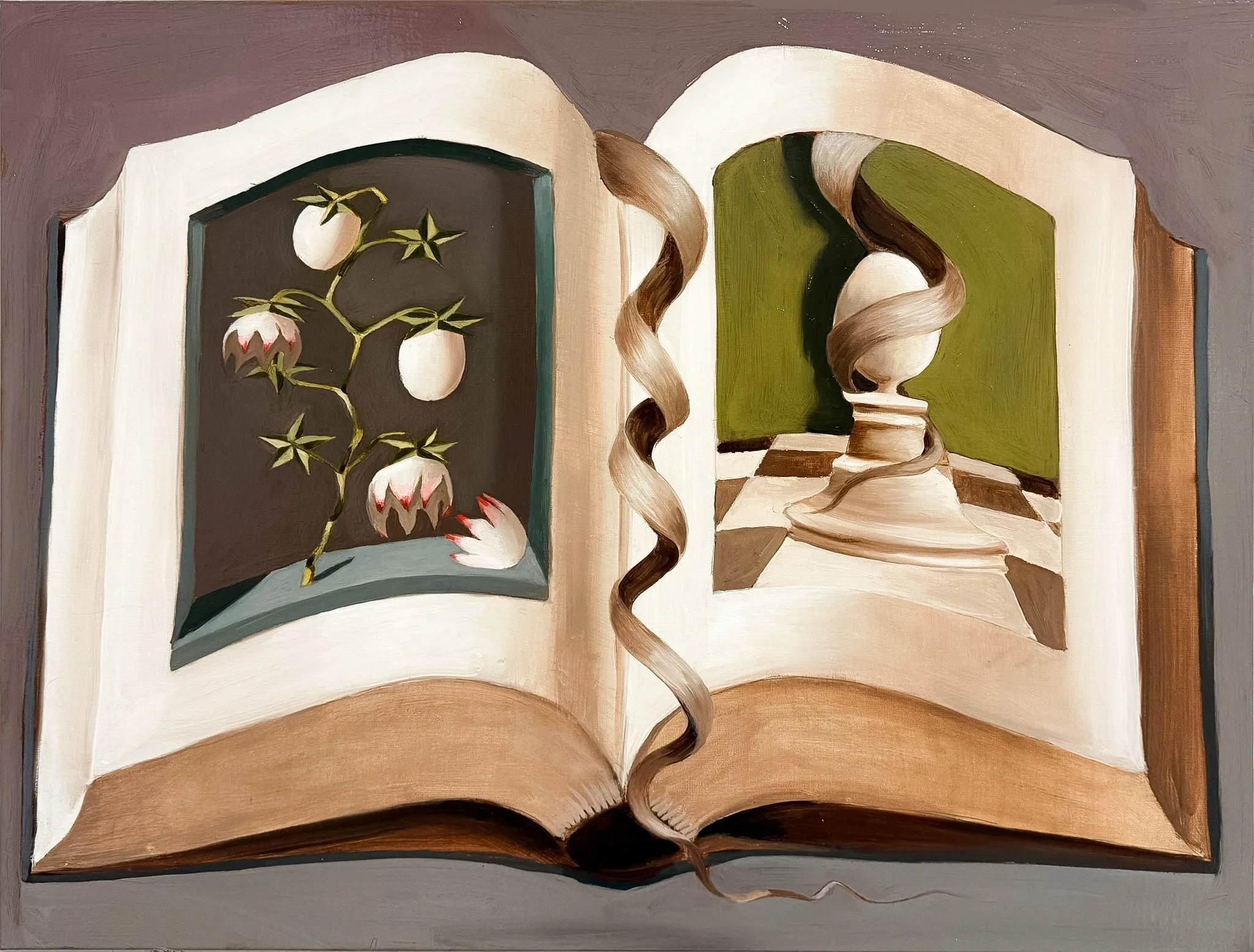
I recently had one while I was obsessed with drawing shells. I couldn’t understand why I was so drawn to this perfectly sculpted, natural spiral. Then it hit me: it’s a home. It’s a place that is nurtured and safe, but eventually, it has to be left behind because the creature outgrows its space.
It symbolized rebirth and the necessity of moving into a new chapter. It also linked back to the domestic space. Many of the women in my work never leave the interior; they stay inside where things are stable. But we only realize something isn't right for us once we leave and compare. Otherwise, our "normal" is just normal.
Your style has a very intentional mix of realism and figuration. How did you arrive at this creative process?
I want the work to have a dream-like feel where you can see yourself. I adopted a term from the artist Alison Katz: auto fiction. As soon as she said that, I thought, "That is exactly what I want to do." The process is instinctive. It might start super close to me, and then it gets adjusted, exaggerated, and interrupted. This distortion feels closer to the emotional reality than something strictly accurate would. It allows me to move between the states of what is fixed and what is felt.
Your compositions are often tightly cropped. Does that come from a cinematic influence?
A bit of both film and photographers like Nan Goldin. Her work feels so intimate, like you’re stepping into a part of her journal. The cropping comes from wanting to limit the scene. I want to create a sense of something happening just outside the frame, to make the image feel unsettled, as if you’ve entered mid-way through or interrupted a moment.
I think about the "in-between" stage of girlhood, where there was a certain boisterousness and carelessness that I struggle to adopt now. I want these girls to feel like they’re questioning things, like they want to step out from the world around them, even if they don’t quite have the power to do it yet.
How do your titles interact with the paintings? They often seem to add a layer of friction.
I want the titles to resist clarity. I don’t want them to explain the image, but perhaps push it slightly off-center to open up a new dialogue.
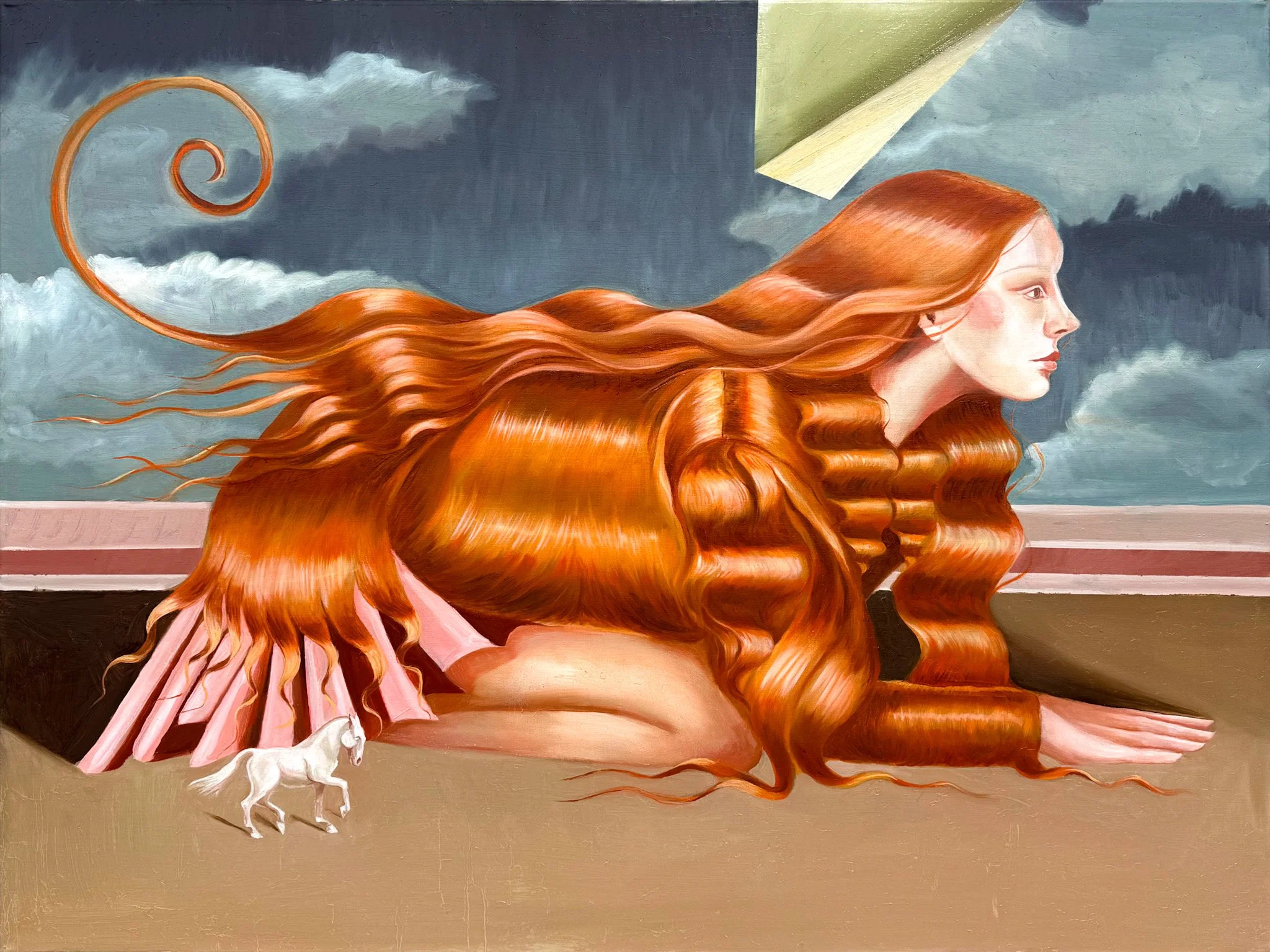
In my work Stay,Stay, Stay, for example, I painted the figure to remind me of a Red Setter or an Afghan Hound, those amazing, long-haired dogs. She looks regal and powerful, almost like a sphinx, and I placed a tiny figurine horse next to her to emphasize her scale. But in reality, she’s inside a room with peeling wallpaper. The title Stay plays with that: she looks magnificent, but she is being instructed to obey like a domestic pet. Does she want to stay? I don’t think she does.
Looking forward, your work is gaining incredible momentum with upcoming shows in Miami and London. As your "chapters" continue to unfold, where do you see these figures going next?
I’m quite lucky because often the previous work leads naturally into the next. I don’t work like a filmmaker with a storyboard; I need to have those epiphanies while I’m painting and follow where they lead. I'm non-stop in the studio right now, and while the themes of girlhood and domestic tension remain my focus, the "sub-genres" of those themes are constantly shifting. I'm just going to keep following the narrative and see where the girls lead me.