
The Politics of ReMemory: 5 Works to See at the Sydney Biennale
Author: Christian Sirois
The curatorial framework for this year’s Sydney Biennale takes up, at its nexus, the theme of “ReMemory.” Central to this exploration of memory and the revisiting of it, Hoor Al Qasimi, Artistic Director of the 25th Sydney Biennale, situates the Biennale within an extremely topical and contextually relevant discourse: one foot in the past, a body in the present, and the other oriented toward how we carry both into the future. She asks of us, as participants, and of the artists and creative practitioners involved: “How do communities inhabit, shape and sustain place and the environments they move through?” (Biennale foreword, AGNSW, 2026). But not just in the context of place making, or simply “being there”, but the negotiation of how we arrived there in the first place.This is in many ways, a familiar question, one that recurs across contemporary curatorial and theoretical contexts. Yet its repetition here opens onto something more specific: What do we place at the centre of our communities? What are the key issues not only of our global present, but those that are locally and contextually embedded within specific communities?Importantly, this is not a stagnant nor purely performative practice. It is both a public and intimately private negotiation, public in its staging, its outreach, and its witnessing through the diverse audiences the Biennale summons, and through Sydney as a global metropolitan art city with its own layered past and present to remember, re-remember, and reckon with. Yet what the Biennale truly succeeds in this year is bringing us into those more intimate contexts of re-memory: spaces that draw us out of our own specific publicness and into the lives, communities, and worlds we may not know so well. These are intimacies across geographies, often unfamiliar, distant, or otherwise out of reach, made momentarily present.
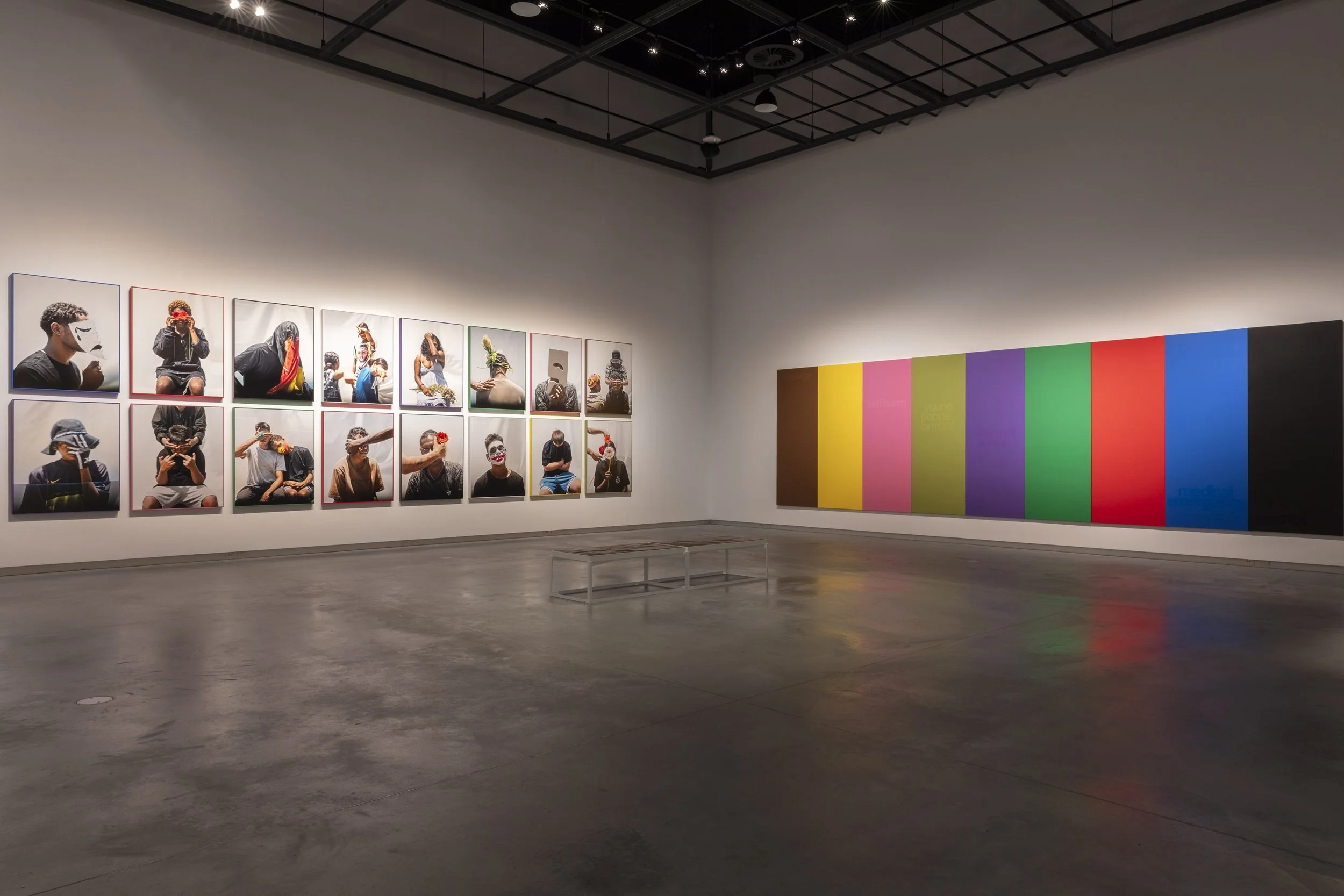
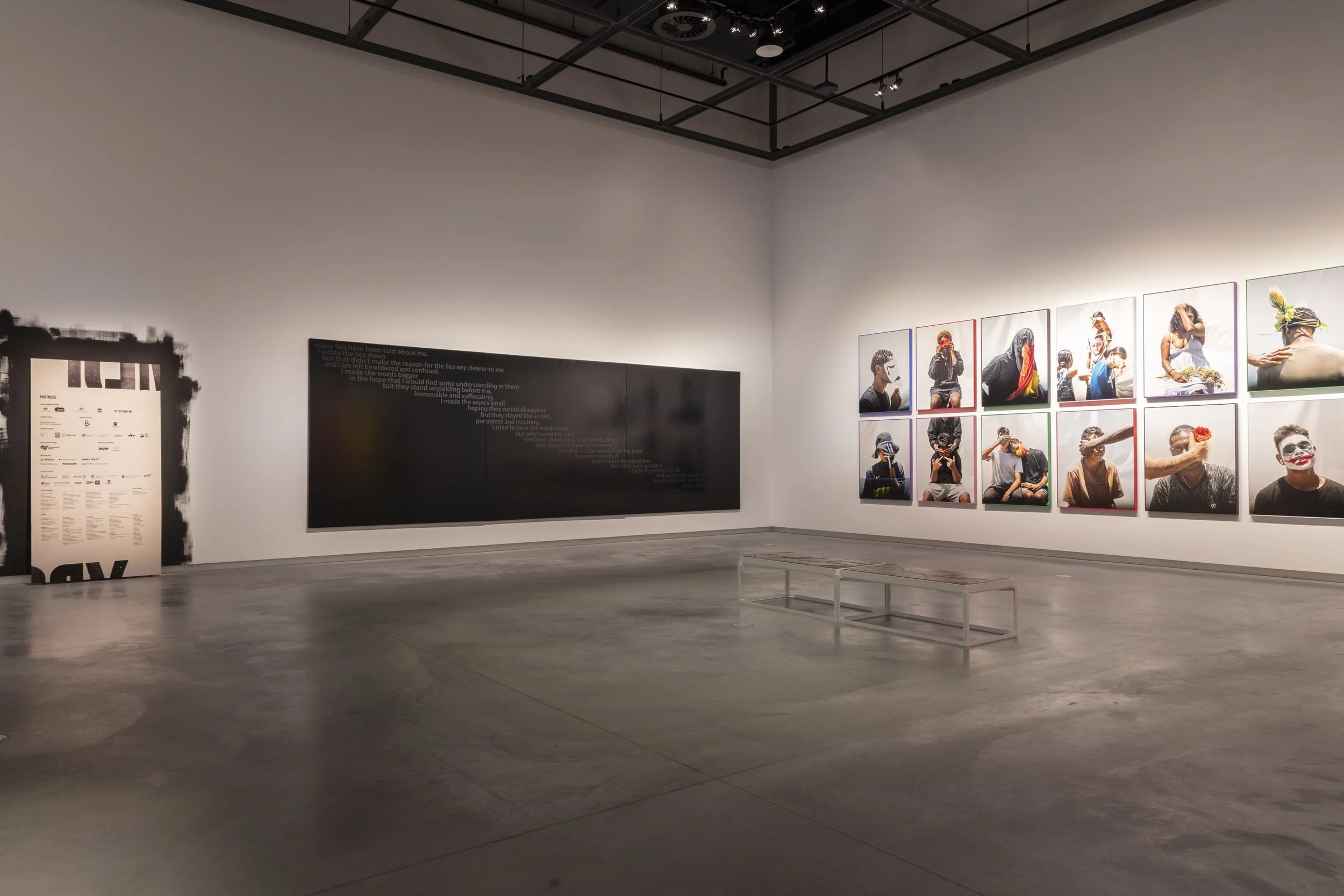
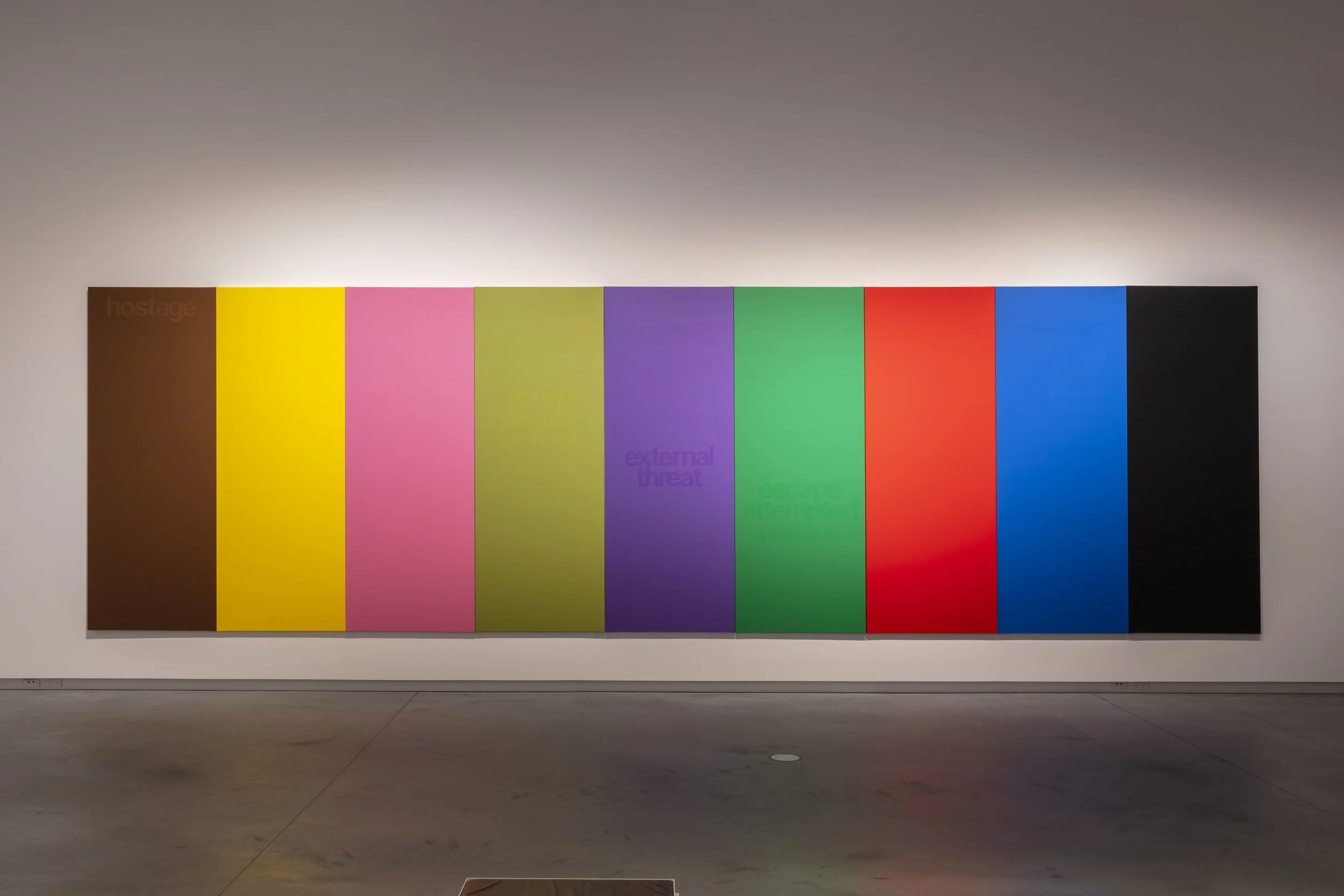
Image: Vernon Ah Kee, Hoda Afshar, Behrouz Boochani, Code Black/Riot, 2025, CCWM, David JamesCode Black/Riot (2025) is a collaborative work between Vernon Ah Kee, Hoda Afshar, and Behrouz Boochani, unfolding across multiple pieces that operate as a collective assemblage within the gallery space. The project holds various forms that oscillate between the gut wrenching and the quietly restrained: Afshar’s photographs and black screens that unpack experiences of Indigenous children in detention, woven against Boochani’s accounts of offshore asylum seeker prison camps on Manus Island, Papua New Guinea, and Ah Kee’s typological works. Within this assemblage, Ah Kee presents two pieces: one a series of black panels with text, and opposite them what appears, at first, to be their clear opposite: multicoloured, bright panels that seem to be just that, nothing but blocks of colour.While many of the works are immediately confronting in their affective force, Ah Kee’s multicoloured work sits rather inconspicuously on the back wall, saturated with colour that is easy on the eye. There is a childlike innocence to this palette, something wholesome and seemingly clean. There is an intimacy in the way the colours meet, soft, bright, vibrant, with that gentleness bookmarked by the sentinel starkness of black and brown. In the centre sits purple; upon it, glossy and fixed, two words: “external threat.”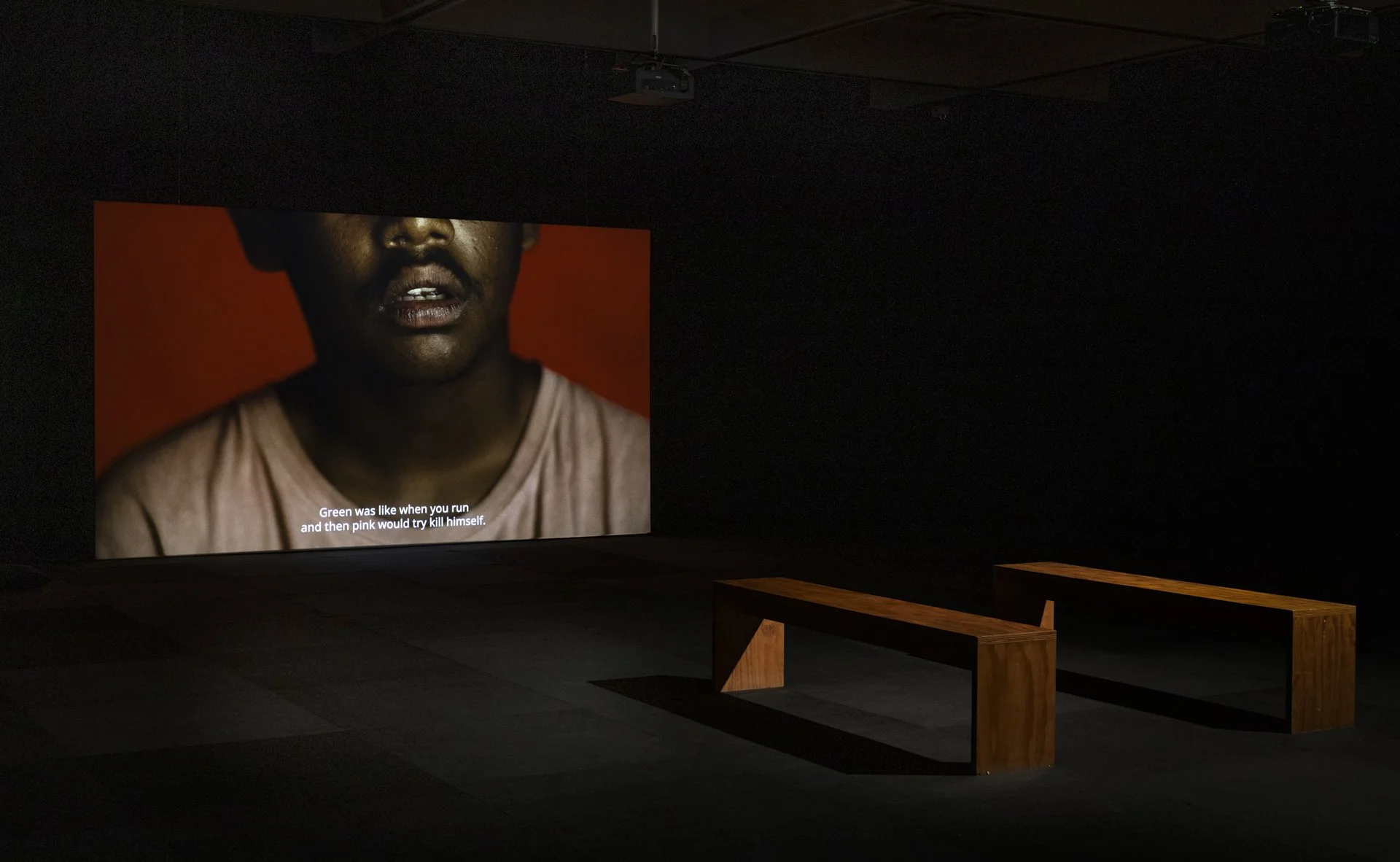
As you move around the gallery space you start to notice other words on the accompanying panels too. Fainter, but present. “Young people on roof” hiding in the green, “self-harm” sitting within the pink, a glossy outline of “hostage” on brown. You have to bend your shape, contort your figure around the softness of the light to better witness what is there. The act of looking demands effort, a deliberate shift in position to gain a new perspective on what is already so clearly present. If you do not, it is all too easy to miss.Deciphering the work is playful at first; it takes time and a particular type of care to sift the words out through the frayed light and the matte surface. As that effort deepens, the initial pleasure begins to shift as the message behind the palette becomes clear. Ah Kee’s technicoloured piece, for me, drives the sentiment of this assemblage home. It works as both a practical and metaphorical example of visibility, narrative, and positionality: how a specific experience and discourse can be so plainly exhibited, so out in the open, and yet still become lost, overshadowed, or hidden in plain sight. It takes time, effort, and negotiation to see what has been pushed to the edges, to see something through someone else’s eyes. Overall, this trio’s collaboration offers an engaging, touching, and disturbing insight into First Nations experiences and realities, not only unpacking their own positionality, but quietly questioning the audience on their perception and position within this discourse.Where to see it? Chau Chak Wing Museum at the University of Sydney
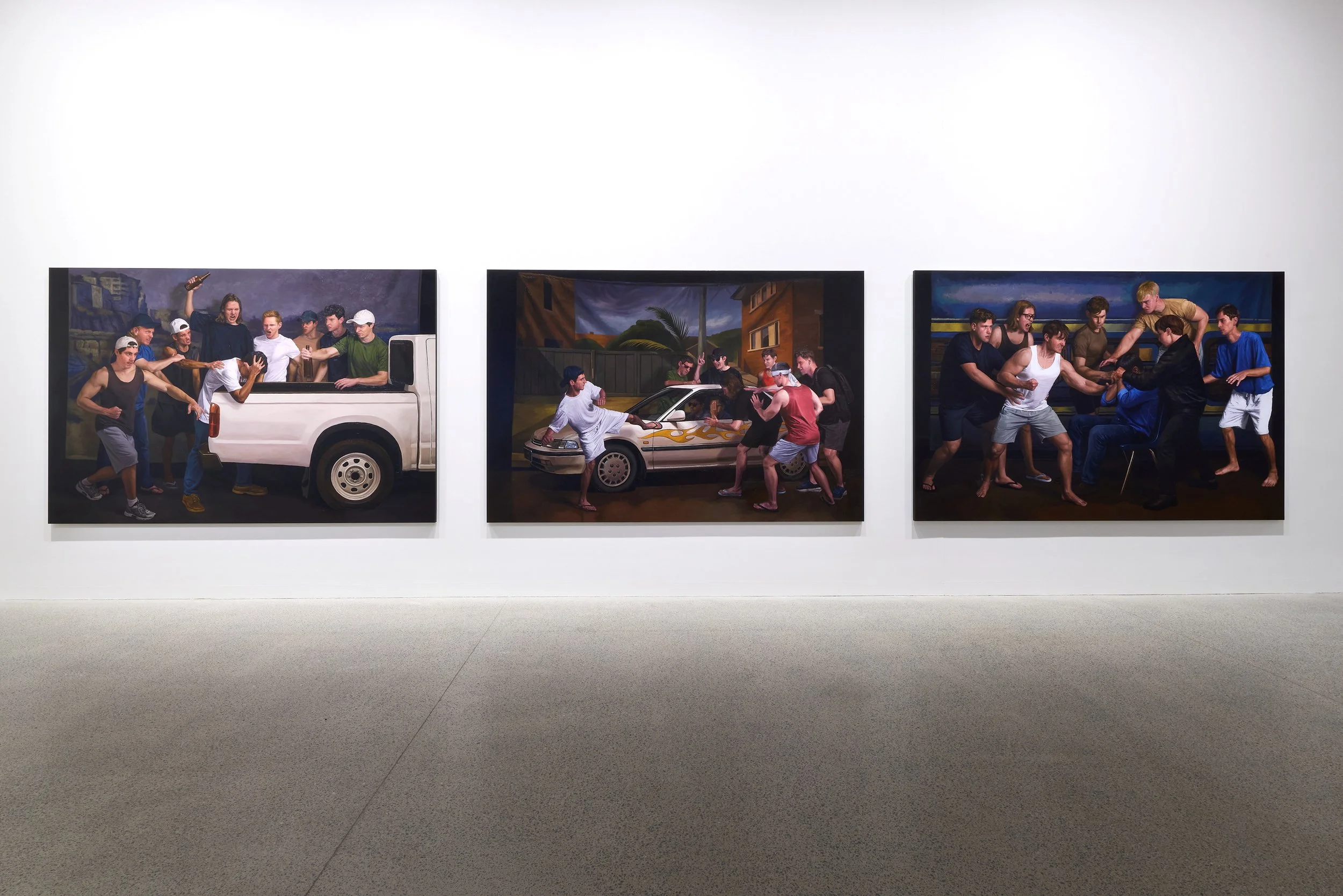
Image: Abdul Abdullah, Cronulla Series, (2025), AGNSW, Felicity JenkinsAbdul Abdullah, Cronulla Series, (2025): Abdullah confronts Australia’s collective memories of the 2005 Cronulla riots, where roughly 5,000 predominantly white Australians assembled in the oceanside Sydney neighbourhood of Cronulla to begin a day long assault against anyone Middle Eastern, non white, or Mediterranean in appearance. In this series, what becomes evident is the artist’s masterful skill in taking the essence of fifteenth century Renaissance and Neoclassical painting, the tableaued stillness of bodies and events held mid action, that sense of suspended time which remains undeniably kinetic, and carrying it into the present. Rather than capes, swords, and fruit baskets spilling across candlelit tables, he swaps the candles for the softness of street lamps, a rolling apple for unfurling fists, beer bottles, and backwards caps. The language of history painting is still there: the deliberate staging, the weight of gesture, the feeling that we are witnessing a scene of consequence, but the setting is suburban Sydney, mid 2000s, in all its ugly specificity.There is a careful ushering of this style from Renaissance tableau into something closer to documentary. The “two thousand and fiveness” is unmistakable as a group of racist thugs smash the windows of a white car with flame decals down the side, wearing singlets, flip flops, and bandanas, while two passengers, noticeably browner in their complexion, are held centre frame within this suspension of violence. The way Abdullah configures and bends light to frame the action recalls the instant a camera flash goes off, catching the scene before it fades. That stark white light seizes the immediate foreground, sharpening edges, building silhouettes, and pointing directly to where the camera, and by extension the viewer, is directed. It intensifies the sense that these are not simply staged images, but echoes of lived events, scenes that hover between reenactment and memory.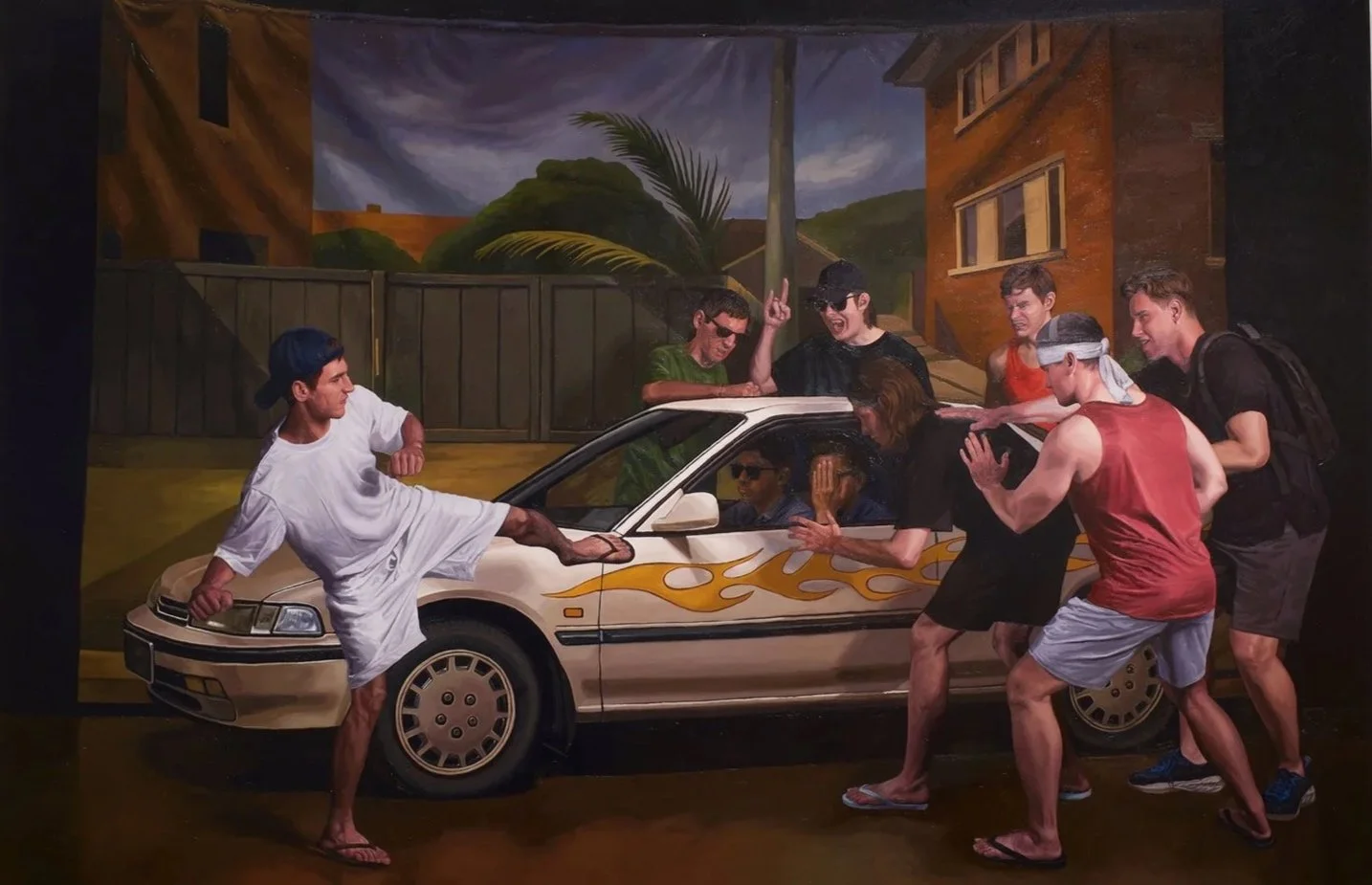
Contextually, this leads us into a process of rememory, a portal back to one of the biggest riots in contemporary Australian history, and, for many outside this context, a first encounter with its images and atmospheres. And while this series is anchored in 2005, and in Cronulla, it speaks to something much broader and more global in its contemporary moment and discourse, recalling the shapes and figures of a not so distant past and asking whether, at any scale, anything has changed at all.Where to see it? Art Gallery of New South Wales
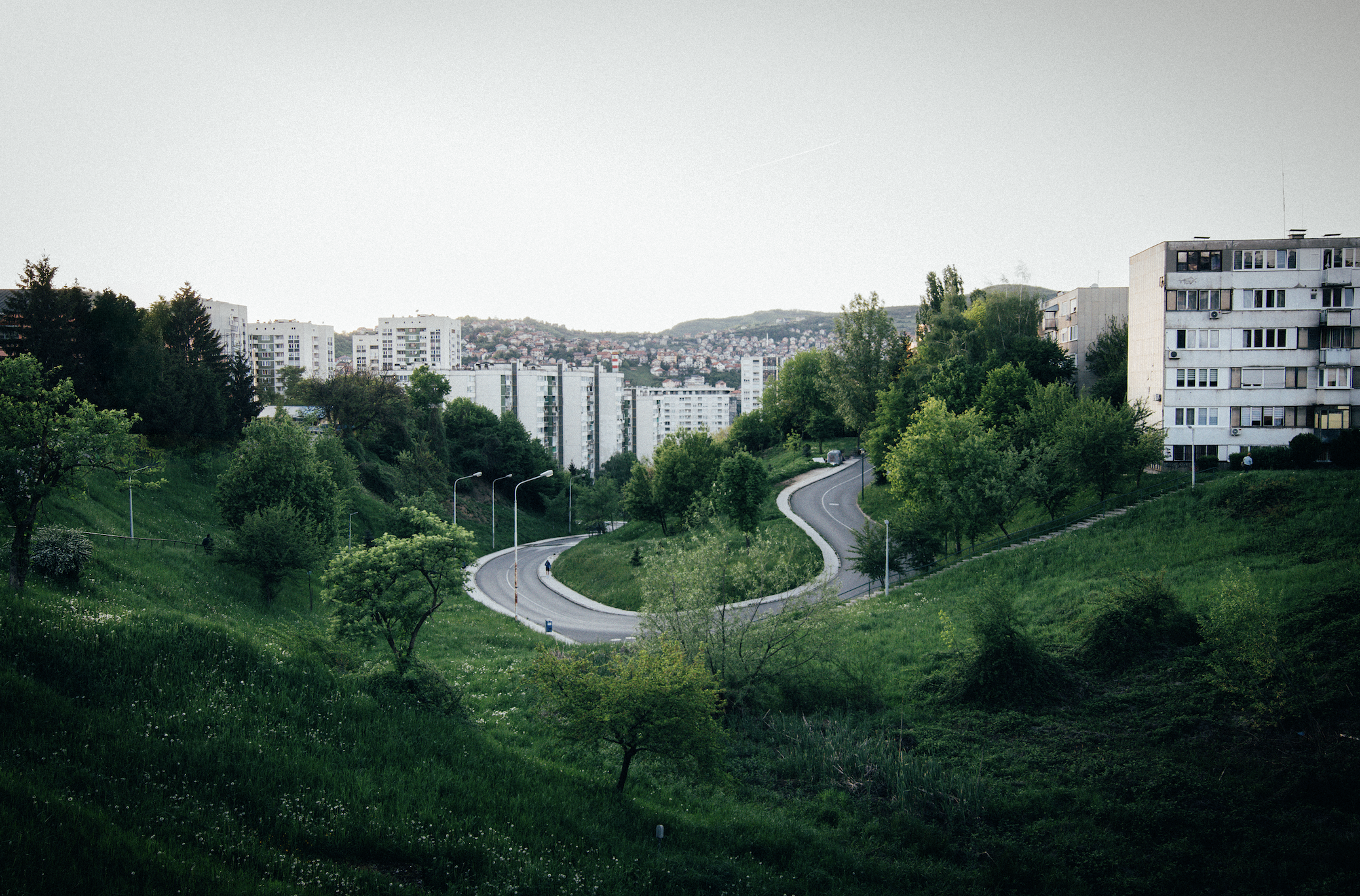
Image: Film Still, Field Report, Kuba Dorabialski, 2025Kuba Dorabialski, Field Report, (2026): Dorabialski’s contribution to the Biennale is a video-based installation, acted by performers who move and speak with the weight of documentary while maintaining the surface of art cinema. It follows a contemporary Polish-Australian writer working on a fictional novel set in Sarajevo, Bosnia and Herzegovina in the 1990s, with particular focus on the Siege of Sarajevo and the genocide in Srebrenica. The work leans on familiar Western tropes of an “Eastern European” aesthetic, yet what it returns to us is not some vague Eastern Europe but the specificity of the Balkans, a region too often absorbed into that catch-all. As an artist coming from outside the region, Dorabialski knowingly approaches it with a foreign gaze and turns that position into part of the work’s problem.Crows drift over brutalist concrete apartment blocks, the coldness of autumn settles into the frame, and expressionless faces hold stern gazes between puffs of cigarettes. A weeping widow appears like a figure already scripted in advance, yet here she refuses to retell her story as confessional performance, withholding the testimony the camera seems to demand. Across its carefully calibrated performances, the film takes up almost every sociocultural and aesthetic stereotype of “Eastern Europe” and the post-communist, post-war Balkans and hurls them at the screen, showing us, one after another, the very images the world has come to expect from the region. Although initially it may present as documentary, the timing, framing, and delivery are unmistakably cinematic, reminding us that this is fiction built from the materials of remembrance.Throughout the work, Dorabialski invites us to consider how certain images and gestures have settled into memory as if they were the only possible way to picture the region, as if history did not propel into the future. The film exposes the absurdity of relegating the Balkans, and Bosnia and Herzegovina in particular, to a fixed genre of geography: permanent grey skies, exotic Easternism, grief, and cigarette smoke ready to be consumed elsewhere. It shows how Western yearning rushes to novelise the “excitement” of trauma in a distant land, turning loss into atmosphere and spectacle, until repeated images of war and genocide risk slipping from memory into genre.Within the context of “ReMemory”, the work treats memory not as neutral source material but as a lived, contested terrain. Using actors, tropes, and satire to mimic documentary, it exposes how outdated twentieth century images of the post war Balkans keep circulating. The film asks why we cling to these singular, incomplete narratives, and reminds us that memory moves, and that things are not always as we have learned to remember them.Where to see it? Art Gallery of New South Wales
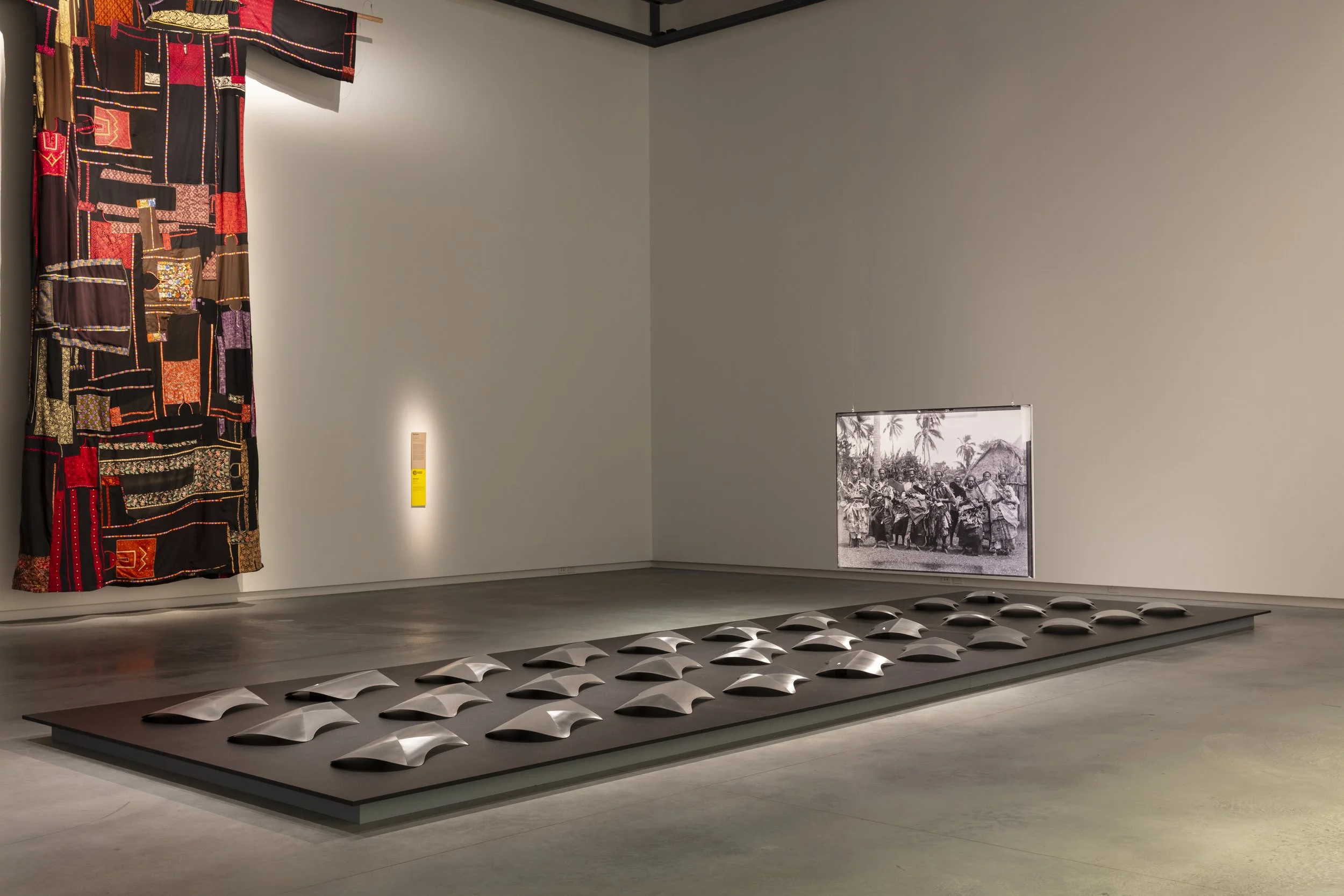
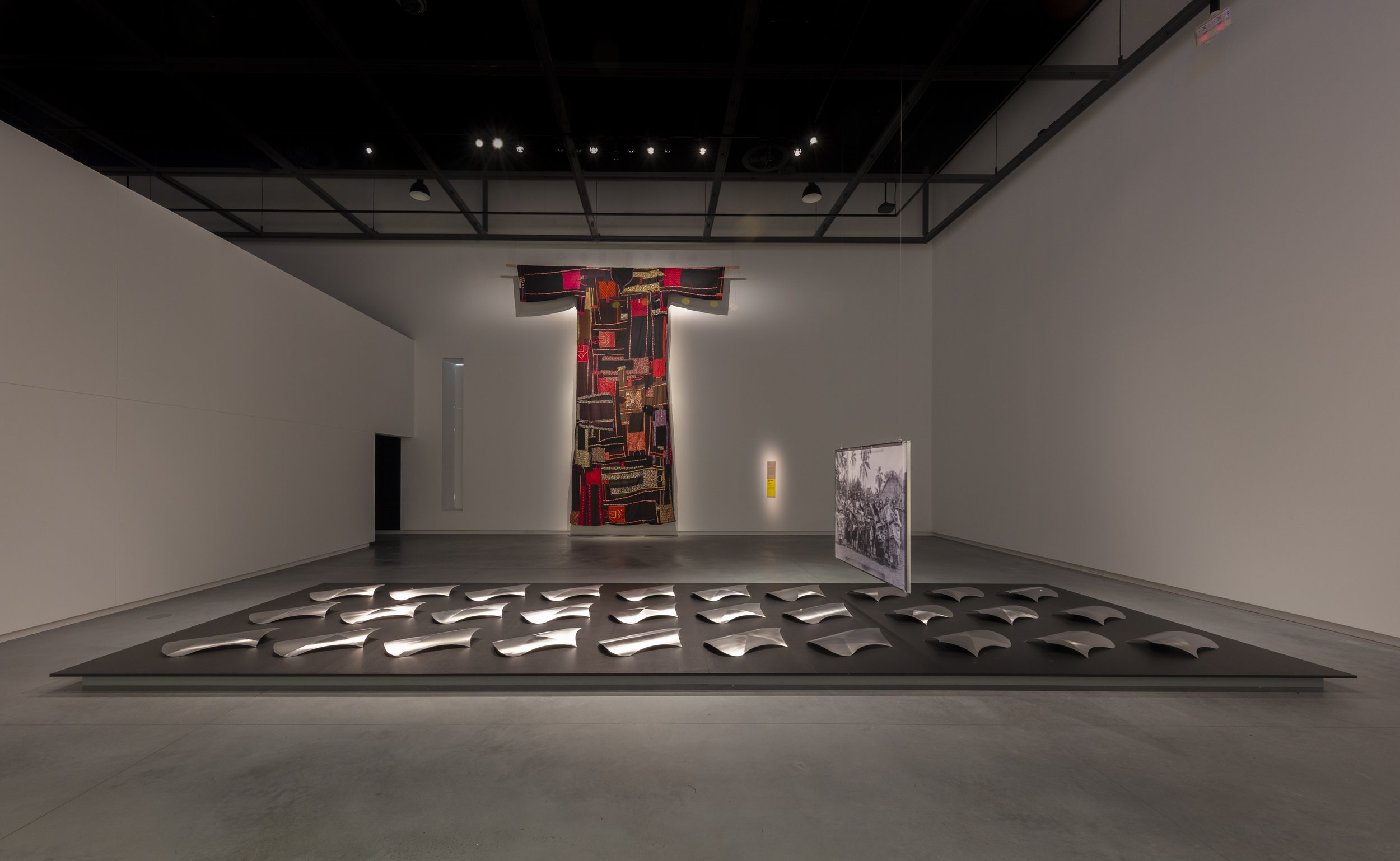
Image: Benjamin Work, Papaaki, 2025, CCWM, David James.Benjamin Work, Papaaki (2025): Benjamin Work’s installation Papaaki mediates memories of 1863, when Sydney convict turned whaling captain Thomas James McGrath shifted from hunting whales in the Pacific Ocean to hunting people of Pacific Oceania for the Peruvian slave trade. The work centres on the raids through which McGrath deceived around half the population of the Tongan island of ʻAta, and then 30 men from Niuafoʻou, or Tin Can Island, ultimately selling all of them into slavery. In the wake of this violent rupture, the remaining community of ʻAta was relocated by the Tongan monarch HM King Tupou to other islands, and ʻAta has remained uninhabited ever since.Drawing on nineteenth century archival records connected to Work’s own ancestry, the installation traces how colonial influence reshaped the visual and material life of Tonga and its neighbours. The photographs show new garments and adornments combining with traditional Tongan dress, together with imported materials and material cultures previously unfamiliar to the region. These images are suspended over paki (dance paddles) made not from customary timbers but from tin, steel, aluminium and whale bone: sleek, shield-like forms that are sharply made and almost industrial in their simplicity. Their polished surfaces catch and refract what little light there is in the dim gallery, so that the paddles glint and flash as you move around them. There are 30 of these paddles, echoing the 30 Niuafoʻou men taken and folding that number into the work’s physical form.What these photographs and objects make clear is that, although Tonga was never formally colonised during the height of imperial expansion in the Pacific, it did not escape the orbit and impact of colonial power. From material culture and clothing to trade, labour, and belief, the work charts how external forces entered local life and helped shape the economic and sociocultural position of the region that followed. Papaaki tells a story of ongoing negotiation between colonial and post colonial histories and of the way those histories remain active for the islands and for large Tongan diasporic communities, holding together histories of migration, loss, and arrival as it asks how memory is carried across oceans and generations in the very materials that surround us.Where to see it? Chau Chak Wing Museum at the University of Sydney
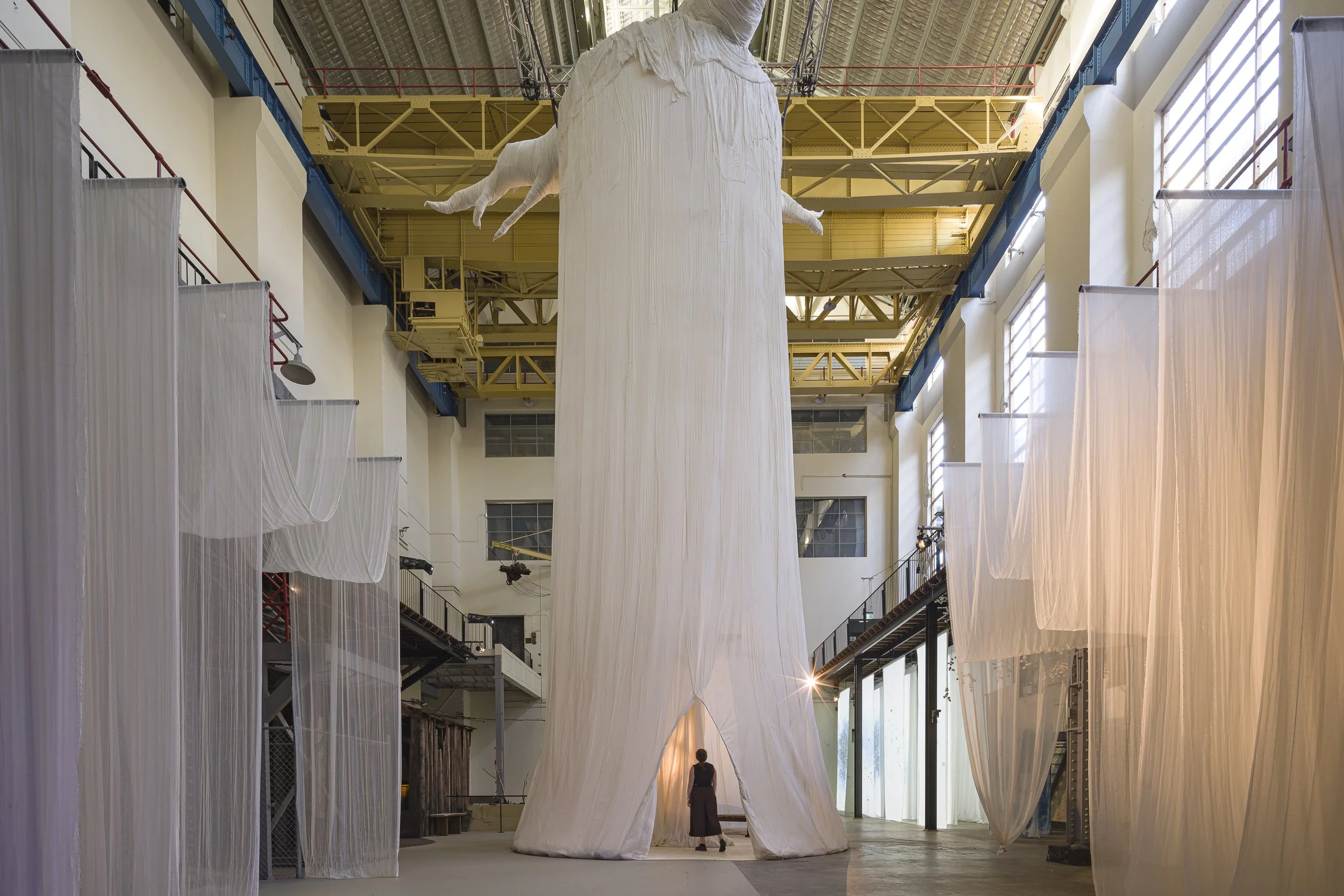
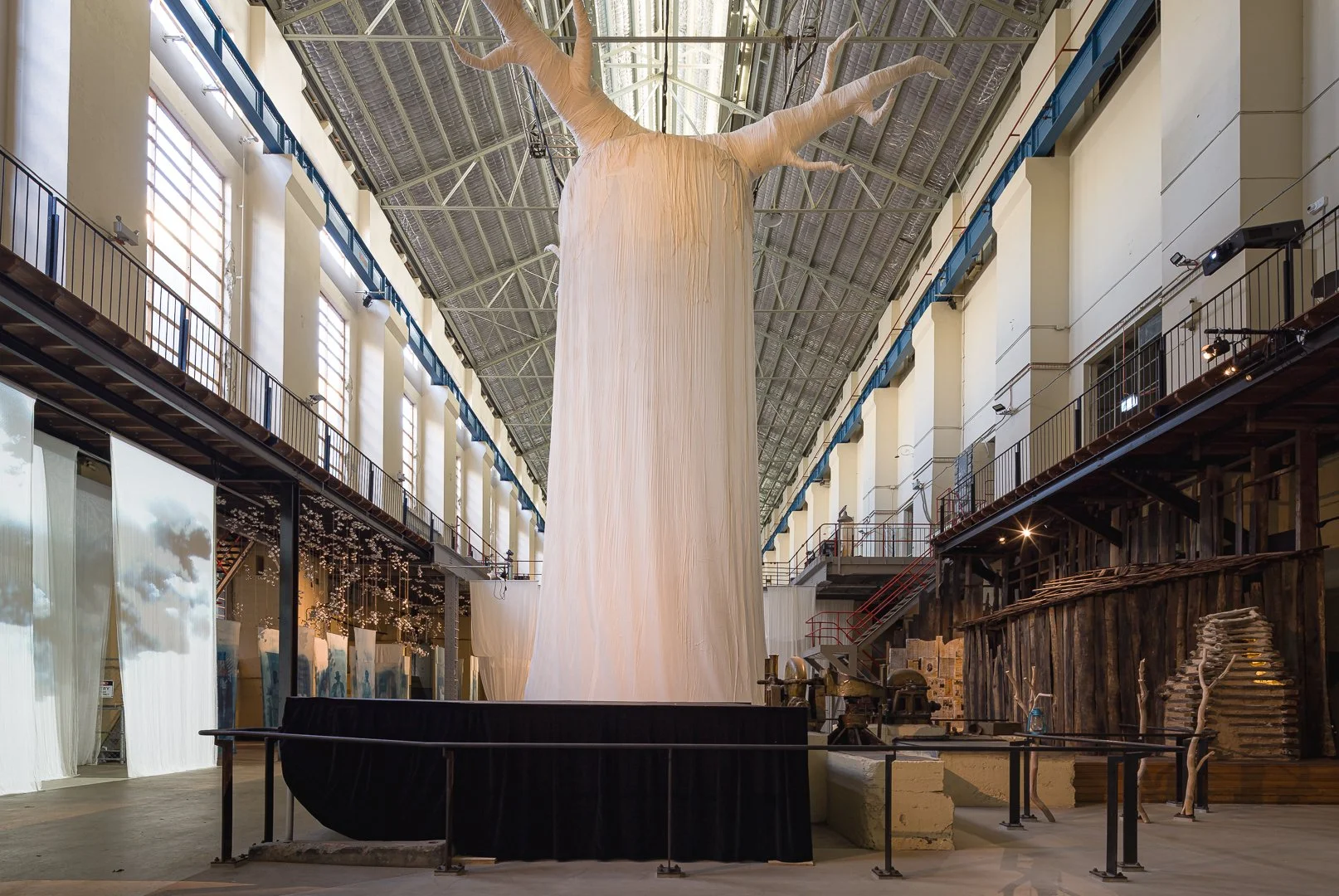
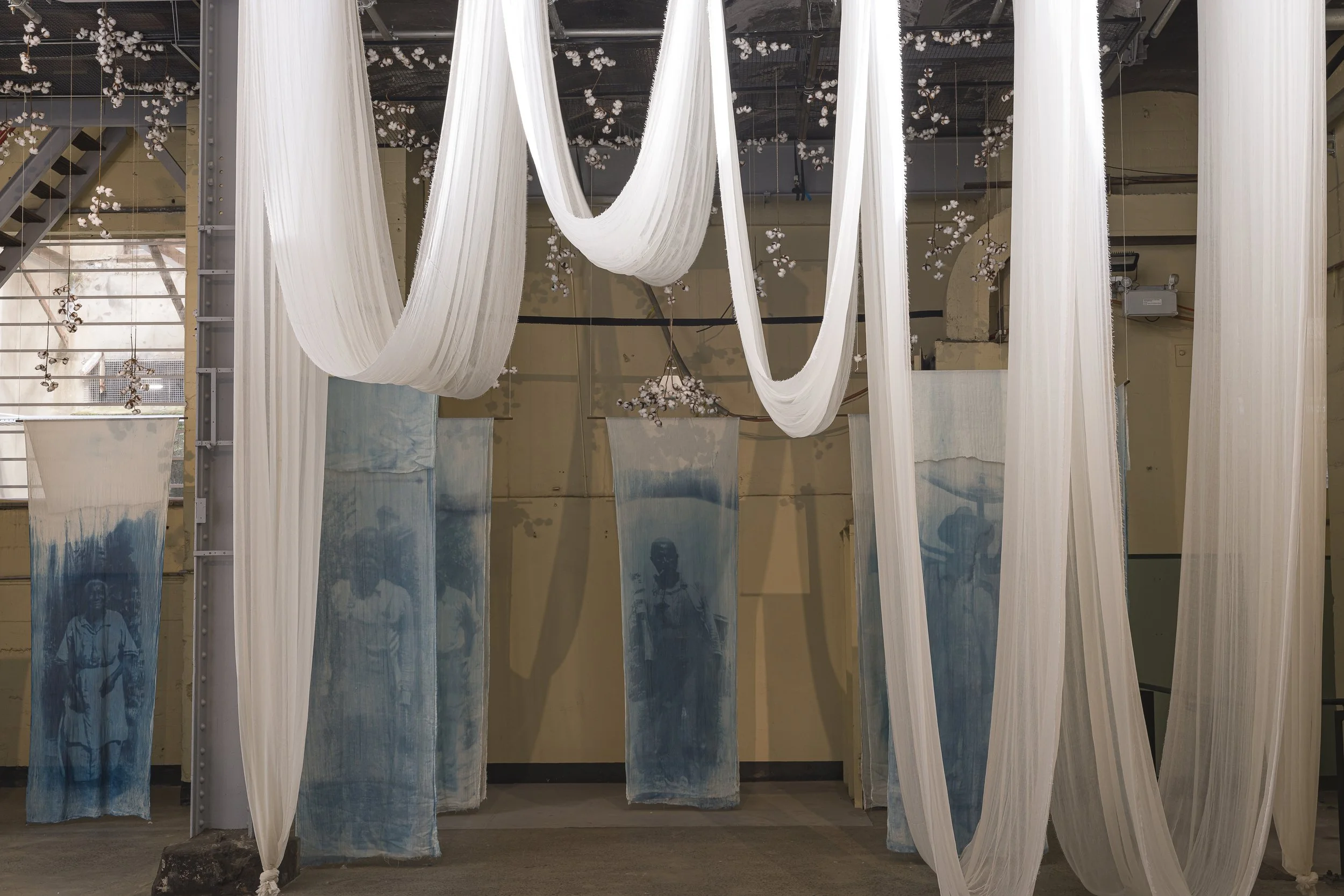
Image: Nikesha Breeze, Living Histories, 2026, WBPSNikesha Breeze, Living Histories (2026): At the back of the former White Bay Power Station, now a cultural space, a large open hall is anchored by the gargantuan figure of a tree, clothed in cream coloured cotton and linen. It rises as an arborescent form that both erupts into the room and settles gently within it, demanding to be seen while inviting a slower, almost contemplative gaze. Around it, a larger installation unfolds: cotton plants, cyanotype portraits of African Americans, and other sculptural elements quietly make the work’s concerns legible without insisting on them. Living Histories is an immersive constellation of sculptures and installations that reanimates the experiences of African American elders who lived through enslavement as children, drawing on the 1930s US Federal Writers’ Project “Born Into Slavery” archive of more than 2,500 first hand accounts.The tree’s materiality is drawn from cotton, the crop that underwrote plantation economies and enslaved labour, but here that history is held in a form that feels surprisingly gentle. The figure evokes ancient baobab trees, appearing as a place to gather, to pause, and to linger rather than a monument to be viewed at a distance. Its trunk is hollow and vast enough to enter and sit inside, enclosing you in a pale, fabric canopy where the light softens and the sounds of voice and music move around you in slow currents.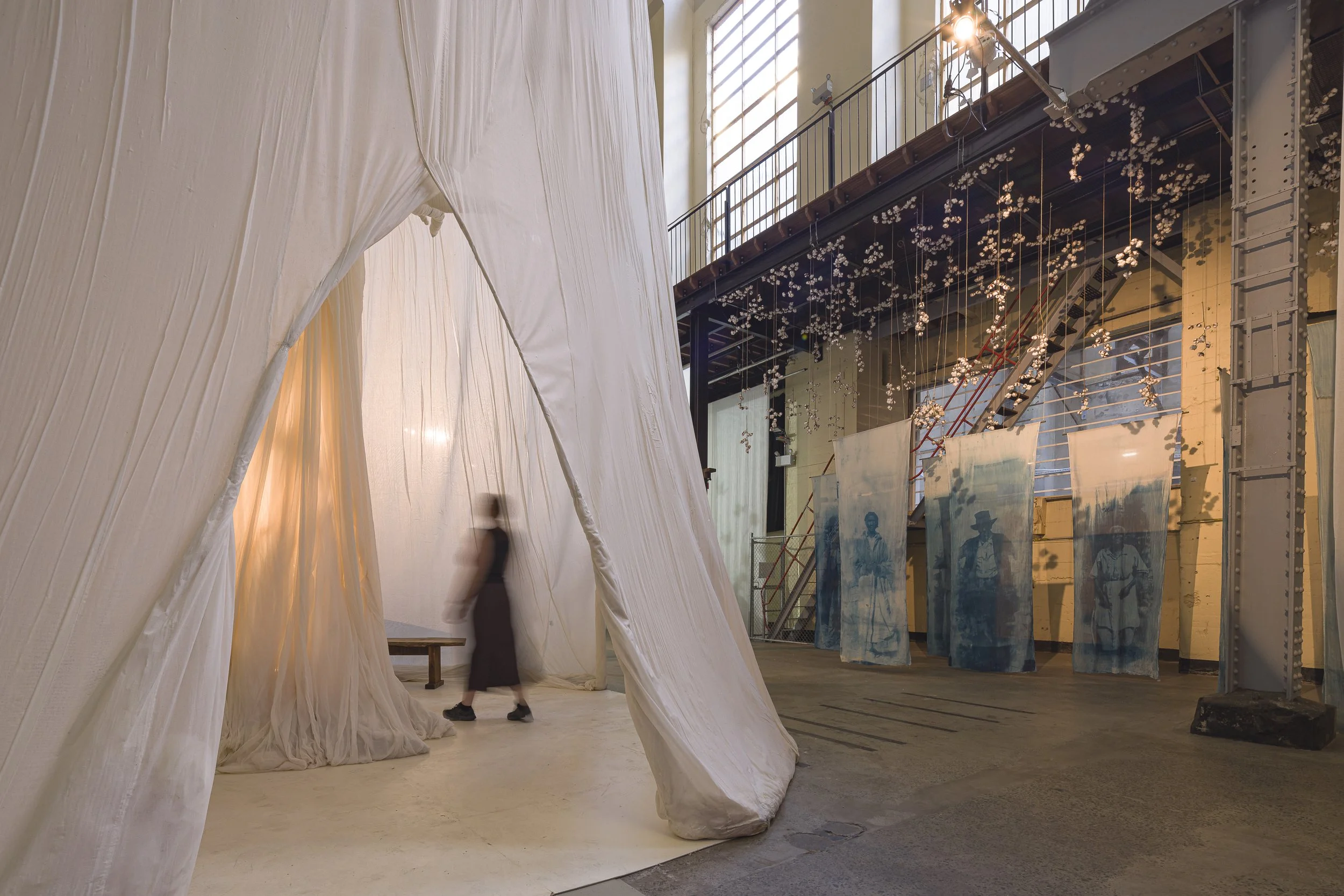
As you move in and out of the tree, the installation shifts in tone: from within, the cyanotypes and cotton plants register as distant echoes; from the surrounding hall, the tree reads as a quiet centre of gravity around which these histories circulate. The work’s strength lies in this balance between ambience and attention. In this quiet way, the piece hints that remembrance might sometimes be less about recounting the past than about staying with it, long enough for new connections to gently emerge.Where to see it? White Bay Power Station
Memory, Politics, and the Art World Ecology: Insights
The Biennale, vast in both scale and footprint, resists any attempt at a total reading. To try and comprehensively unpack it, or even to account for every work that deserves attention, would be an impossible task. Instead, these five works offer one way into its concerns, tracing how memory is staged, contested, and felt across different geographies and histories.“ReMemory” is not an isolated theme. It is a concept that has been circulating for some time across contemporary art, theory, and academia, and when I first encountered it as the title of this Biennale, I felt some scepticism. The language of memory, return, and revisiting the past is by now thoroughly practised, and the terrain can feel well trodden as both concept and curatorial frame; at moments, the theme risks smoothing over the particularities of very different histories under a single, familiar rubric.Yet despite, and perhaps because of, that over familiarity, it was still a genuine delight to see how the artists gathered here took up and stretched the frame. Rather than simply illustrating a curatorial slogan, they deliver works that make “rememory” feel specific and grounded, from cinematic restagings that probe when memory hardens into expectation, to materially precise installations that track the afterlives of colonial violence, to quiet, immersive spaces for sitting, drifting, and listening. Across these practices, memory is not treated as neutral content but as a site where power, representation, and desire are continually negotiated, often by championing minoritarian perspectives that have long sat at the edges of dominant narratives.Seen together, these works also tell us something about the wider ecology into which they are released. They mark an art world reckoning with how histories of empire, migration, and racialised violence, to name only a few, remain active in the present. They imagine institutions not just as display spaces but as forums, places charged with holding, telling, and working through these histories and pasts rather than simply hanging them on the wall. At the same time, they sit within a market in which collectors, institutions, and audiences appear increasingly interested in forms of engagement that reach beyond material and aesthetic value alone, asking for context, narrative, and ethical stakes. On one level this can slide into posture, a kind of ethical branding or virtue signal; yet it also points to a real appetite for work that carries complex histories and lived experience into both so called commercial collecting and more public facing contexts.The subjects that surface here, offshore detention, racialised riots, Balkan war memory, Pacific labour exploitation, the afterlives of slavery, align with a broader global moment in which geopolitical tension, conflict, and uncertainty are reshaping how art is made, circulated, and valued. In that sense, these works are not outliers but symptomatic of a cultural field in which overtly political art has moved from the margins to the centre, becoming one of the key ways artists, institutions, and markets register a world in crisis.It is not profound to say that all art is political. What feels more telling here is the insistence with which politics steps forward as explicit subject matter, and the degree to which memory, narrative, and minoritarian histories are treated as central material rather than background condition. In a time when uncertainty and turmoil sit at the forefront of the global imagination, these works suggest that the spaces of contemporary art, from biennales to galleries to collections, are increasingly expected to hold that turbulence, to sit with it, and to let it shape what comes next.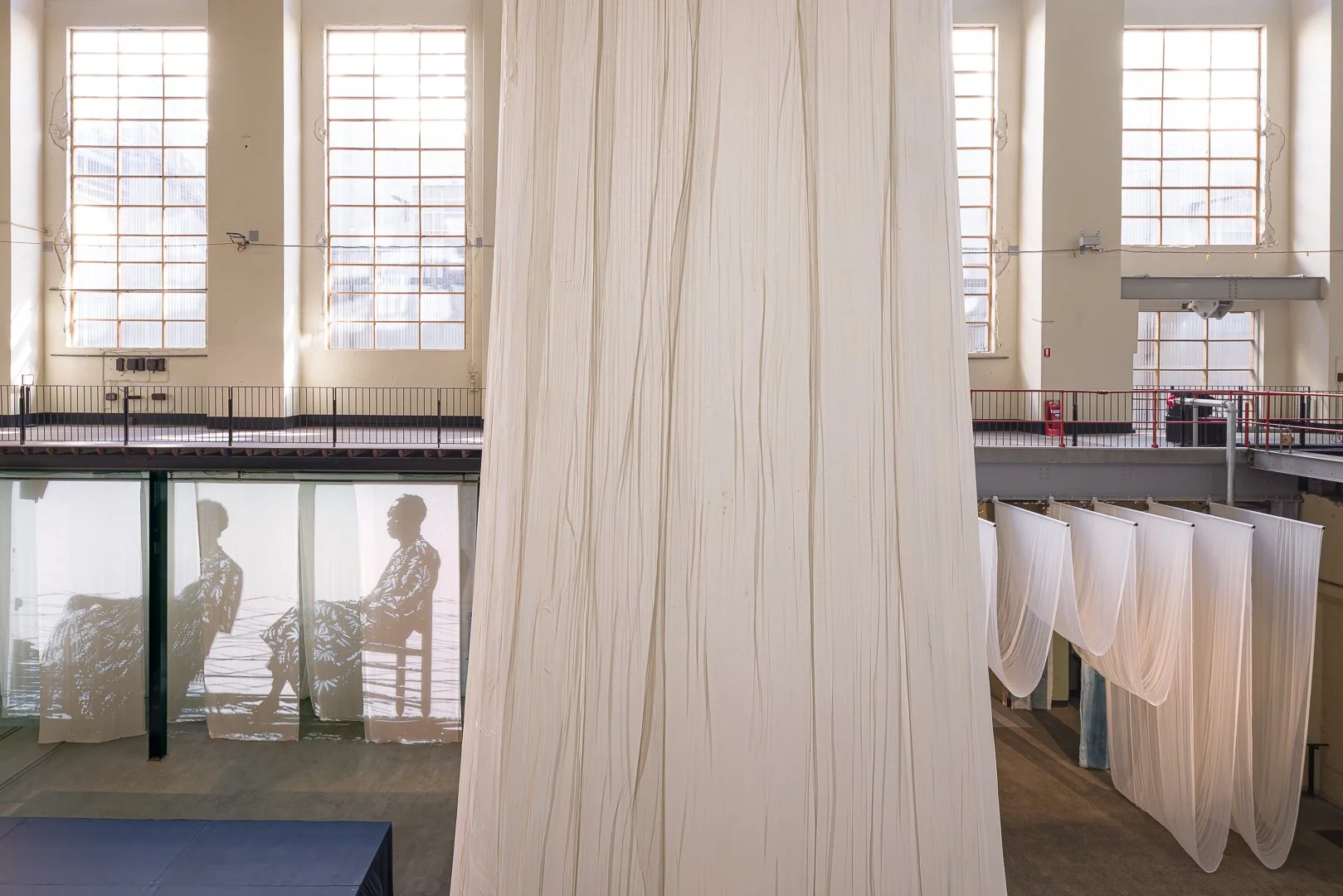
Author Christian Sirois is a curator, researcher, and sessional academic working internationally across contemporary art and the cultural sectors. His practice engages the intersections of contemporary art, geopolitics, ecology, and art–science collaboration, with a current hyper-fixation on two areas in particular: queer experiences, and the Balkans. Based between Croatia and Australia, he works with creative, multisensory, and curatorial approaches to examine how cultural, environmental, and spatial narratives are produced, contested, and preserved, often in marginal and politically charged contexts. Recent notable projects include curating the Queer Pavilion at the 2024 Canberra Art Biennial and co-organising the “New Geographies of the Image” sessions with the Royal Geographical Society with the Institute of British Geographers (2025).